
Magic Rack vs Accu-Rack vs Turtle Rack
Template racks changed how seriously players take the break. Before them, a bad rack was an accepted part of the game and everyone argued about whether the balls were frozen. After them, a rack is repeatable, tight and identical every time, which means break results become a matter of skill rather than luck.
Three names dominate: Magic Rack, Accu-Rack and Turtle Rack. They work on the same principle and differ in material, durability, tightness and price. Here is how they compare and which to buy for your table.
How template racks work
A template rack is a thin sheet, usually plastic or a similar material, with cut-out holes positioned exactly where the balls should sit. You lay it on the cloth at the foot spot, drop the balls into the holes, and break with the template still in place. The balls sit in contact with each other because the holes hold them precisely.
Two things follow. First, the rack is genuinely tight, which is difficult to achieve consistently with a wooden or plastic triangle on worn cloth. Second, the rack is identical every time, which means the break becomes repeatable and players can learn what a particular speed and contact point produces.
The thickness of the sheet does affect the break slightly, since balls sit fractionally above the cloth surface and the template absorbs a small amount of energy. Competitive players accept this trade because consistency matters more.
Templates are single-use in the sense that they wear. The break drags balls across the material, and over enough racks the holes distort. How long one lasts depends on material thickness and how hard people break.
Magic Rack
The best known of the three, and the one most widely seen in competition. Magic Rack established the category and is what many people mean generically when they say template rack.
Strengths: a very tight rack, thin material so it interferes minimally with the break, wide availability, and versions for 8-ball, 9-ball, 10-ball and other games. Its ubiquity means opponents recognize it and rarely dispute it.
Weaknesses: the thin material that helps the break also means it wears faster than thicker alternatives, particularly under heavy breaking. Expect to replace it periodically rather than treating it as permanent equipment.
Best for: competitive players, league use where the rack needs to be recognized and accepted, and anyone who wants the standard.
Accu-Rack
The main direct competitor, working on the same principle with its own design and material choices.
Strengths: comparable tightness, similar price, and a devoted user base. Some players report it holds up slightly differently under use, and preferences between the two often come down to feel and availability rather than measurable performance.
Weaknesses: less universally recognized than Magic Rack, which occasionally matters in casual competitive settings where someone questions unfamiliar equipment.
Best for: players who have tried both and prefer it, and anyone buying on price or availability. Functionally the two are close enough that flipping a coin is a defensible strategy.
The honest summary of Magic versus Accu is that both do the job well and the argument between them generates more heat than it deserves. Buy whichever you can get, and if you dislike it after a season, the other one costs twenty dollars.
Turtle Rack
The thicker, more durable option, positioned as a longer-lasting alternative.
Strengths: more robust material that survives more racks before the holes distort, which appeals to home table owners who do not want to reorder regularly. Some players also prefer how the balls sit.
Weaknesses: the additional thickness means the balls sit slightly higher above the cloth, which some players feel affects the break more than the thinner templates do. Less common in competitive settings.
Best for: home tables where longevity matters more than matching what tournaments use, and players who break hard enough to wear out thin templates quickly.
Practical considerations before buying
Match the game. Templates are game specific. An 8-ball template will not rack 9-ball, and 10-ball needs its own. Many players buy a two-pack covering their main games.
Check your league rules. Some leagues permit template racks, some require them, and some prohibit them. Do not assume. Turning up with equipment your league bans is an awkward conversation.
Match your table size and cloth. Templates are designed for standard ball sets. Oversized bar table cue balls do not affect racking, but non-standard ball sets might.
Expect wear. All templates wear. Inspect the holes periodically; when balls no longer sit tight, replace it. A worn template is worse than a triangle because it looks tight and is not.
Cloth marking. Templates sit on the cloth and can leave a mark over time at the rack area. That area gets worn on any table, and it is not usually a reason to avoid them, but it is worth knowing.
One last note: if your table has significant roll-off, a template rack will not save you. Level the table first, since a rack that sits perfectly on an unlevel bed still produces inconsistent breaks.
Our picks
Links open the current selection and price on Amazon so you can compare real reviews before buying.

Magic Rack
The competitive standardThe best known template rack, thin enough to interfere minimally with the break and recognized everywhere. Available for 8, 9 and 10-ball.
Check price on AmazonAccu-Rack
The close alternativeComparable tightness and price with its own following. Functionally close enough to Magic Rack that availability can decide it.
Check price on AmazonTurtle Rack
Home tables and hard breakersThicker material that survives more racks before the holes distort. Sits slightly higher, which some players notice on the break.
Check price on Amazon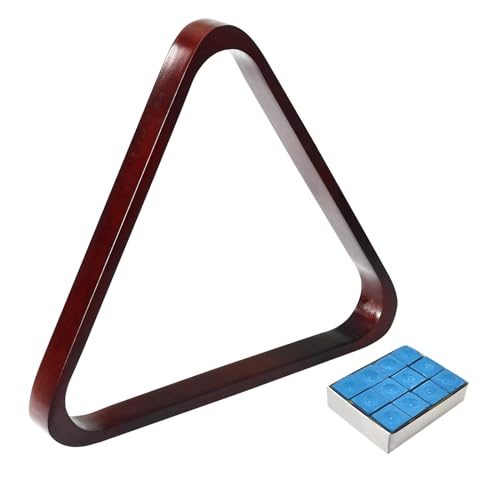
Traditional triangle rack
Leagues that ban templatesStill needed where templates are prohibited. A rigid, well-made triangle racks far tighter than a warped plastic one.
Amazon price: $14.99 as of 1:26 AM EDT. Price and availability can change; Amazon’s price at purchase applies.
Check price on AmazonFrequently asked questions
Which is better, Magic Rack or Accu-Rack?
They are close enough that preference usually comes down to feel and availability. Magic Rack is more widely recognized in competition, Accu-Rack is comparable in tightness and price. Both produce a far more consistent rack than a triangle.
Do template racks wear out?
Yes. Breaking drags balls across the material and the holes distort over time. Inspect them periodically and replace when balls no longer sit tight, since a worn template looks tight and is not, which is worse than a triangle.
Are template racks legal in league play?
It depends on your league. Some permit them, some require them and some prohibit them. Check your specific rules before relying on one, and carry a traditional triangle as a backup.
Does a template rack affect the break?
Slightly. Balls sit fractionally above the cloth on the template material, which absorbs a small amount of energy. Thicker templates like Turtle Rack raise the balls more. Competitive players accept this because consistency matters more than the small energy loss.
Related guides
LeaguePool is reader-supported. When you buy through links on this site we may earn an affiliate commission at no extra cost to you. As an Amazon Associate we earn from qualifying purchases.