Best Cue Tip Tools and Shapers
A cue tip that will not hold chalk is a miscue waiting to happen. Keeping it in shape takes a few small tools and about a minute of care. Here is what each tool does and which ones actually belong in your case.
Scuffers: Bring Back the Grip
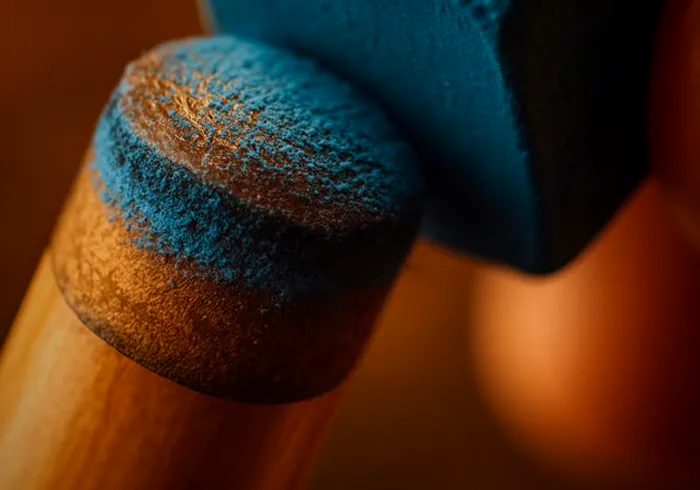
Tips glaze over with use. The surface goes smooth and shiny, chalk stops sticking, and the miscues start. A scuffer is an abrasive surface, usually a small grinding disc or a piece of grade abrasive, that roughens the top of the tip so chalk grabs again. Use it sparingly. A few light passes do the job, and over-scuffing eats a tip faster than playing with it does.
Shapers: Keep the Dome Right
A cue tip should hold a curved dome, usually described as the radius of a nickel or a dime. The dime radius is more aggressive and grips the cue ball longer, which suits players who use a lot of spin. A nickel radius is flatter and a little more forgiving. A shaper is a curved abrasive block or ring that puts the dome back as the tip mushrooms flat with play. Rotate the cue as you work so the dome comes out even.
Picks, Tappers, and Burnishers
A tip pick, sometimes called an aerator, has small points that poke tiny holes in the surface so chalk sits deeper and stays put longer. A tapper does much the same thing by lightly indenting the surface. Go gently with both. Aggressive picking tears a tip apart.
A burnisher does the opposite. It smooths and hardens the sides of the tip and seals the edges so the tip will not mushroom or fray. Burnishing the sides after shaping leaves a clean, professional finish and buys the tip more life.
Combination Tools vs Individual Pieces
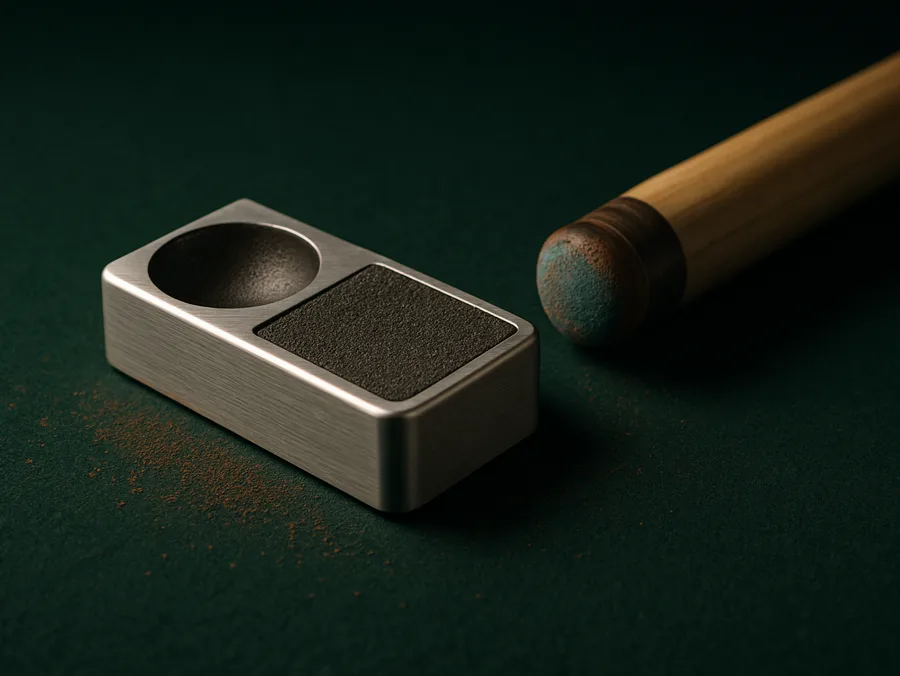
For the simplest kit, a combination tool packs a scuffer, shaper, and pick into one puck or clip that fits in your case. Perfect for league nights and travel. Dedicated individual tools give you more control, and players who work on a lot of cues or want a very specific radius tend to prefer them. For most people, one good combo tool plus a separate leather burnisher covers the whole job.
Our picks
Links open the current selection and price on Amazon so you can compare real reviews before buying.
All-in-One Tip Tool
Players who want one pocket toolCombines a scuffer, dome shaper, and aerator pick in a compact puck that lives in your cue case.
Check price on Amazon
Nickel and Dime Radius Shaper
Dialing in a precise tip domeA curved abrasive tool that puts a consistent nickel or dime radius back on a tip that has worn flat.
Check price on AmazonLeather Tip Burnisher
Sealing tip sides against mushroomingA simple burnishing tool that smooths and hardens the tip edges for a clean finish that lasts.
Check price on AmazonFrequently asked questions
How often should I scuff my tip?
Only when it glazes over and starts refusing chalk, which for a casual player might be once every few sessions. Scuffing more often than that just wears the tip down. One quick light pass is all it takes.
Should I shape my tip to a nickel or a dime radius?
A dime radius grips the ball longer and suits players who use heavy spin. A nickel radius is flatter and more forgiving. Plenty of players start with a nickel and experiment from there.
Do I really need a burnisher?
Optional, but helpful. Burnishing the sides keeps the tip from mushrooming and fraying, so it stays neat and lasts longer between replacements.
Related guides
LeaguePool is reader-supported. When you buy through links on this site we may earn an affiliate commission at no extra cost to you. As an Amazon Associate we earn from qualifying purchases.