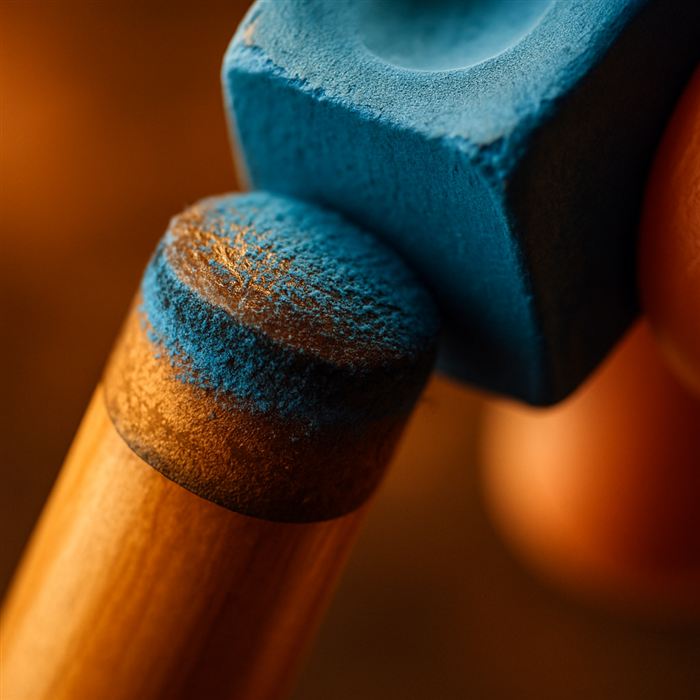
Phenolic vs Leather Break Tips
Break cues live a hard life. Every rack, they slam into a fifteen-ball pack at close to thirty miles per hour, and the tip is where all of that violence happens. The material on the end of your break shaft changes how much energy reaches the rack, how much control you keep over the cue ball, and in some cases whether your cue is even legal for league night. The phenolic versus leather debate has been running for twenty years, and the honest answer is that each side gives up something to get something.
How Tip Hardness Affects the Break
When a soft tip strikes the cue ball, it compresses and stays on the ball a fraction longer, absorbing some of the energy your arm generated. A phenolic tip barely compresses at all. Contact time drops, less energy is lost in the tip, and more of your stroke speed shows up as cue ball speed. Players switching from a worn leather tip to phenolic typically pick up one to two miles per hour on the break without changing anything about their stroke.
That extra pop is real, but it is not free. The same rigidity that transfers energy also makes the tip unforgiving. A slightly off-center hit that a leather tip would shrug off can send a phenolic-tipped cue ball flying off the table.
The Control Tradeoff
Leather grips the cue ball. Even on a break shot, that grip lets you put a touch of draw or follow on the ball so it squats in the middle of the table instead of wandering. Phenolic is closer to hitting the ball with a marble. Miscue limits shrink, applying intentional spin becomes difficult, and controlling the cue ball after contact takes more precision from your stroke.
This is why plenty of strong players break with hard leather on purpose. A controlled eighteen mile per hour break that parks the cue ball beats a wild twenty-four mile per hour break that scratches. If your break is already accurate and square, phenolic rewards you. If it is streaky, phenolic will make it streakier.
League Legality: Check Before You Buy
This part trips people up. The APA bans phenolic tips on break cues in its national championship events and many local divisions follow suit. The reasoning is that hard tips accelerate wear on cue balls and cloth, and some operators simply do not want them on their equipment. BCA and most open tournaments still allow them, and jump cues are treated differently again, with phenolic widely permitted for jumping.
The practical advice is simple. Ask your league operator before you spend money. If you play APA, buy a hard leather or hybrid tip and never think about it again.
Hybrid Tips: The Middle Ground
Hybrid break tips try to give you most of the power with most of the control. The White Diamond is the best known example, a hard resin-infused tip that holds chalk far better than pure phenolic and passes the legality test in leagues that ban phenolic. Layered hard leather tips like the Samsara break tip take the opposite route, stacking compressed leather until it approaches phenolic hardness while keeping leather feel.
For most league players, a hybrid or hard layered leather tip is the right call. You lose maybe a half mile per hour of break speed compared to pure phenolic and gain chalk retention, legality everywhere, and a cue ball that ends up where you meant to leave it.
Maintenance Differences
Phenolic tips essentially never mushroom, never need scuffing, and can last the life of the cue. Their one quirk is that they hold chalk poorly, so chalk before every break and expect the surface to glaze over time. A light pass with fine sandpaper restores it. Hard leather break tips need occasional shaping and will eventually compress and wear down like any leather tip, though far slower than a soft playing tip. Either way, a break tip is a once-every-few-years expense, so buy the one that fits your rules and your stroke rather than the cheapest option.
Our picks
Links open the current selection and price on Amazon so you can compare real reviews before buying.
White Diamond Break Jump Tip
Legal power with chalk retentionThe go-to hybrid tip, hard enough to add real break speed but it holds chalk and stays legal in leagues that ban pure phenolic.
Check price on AmazonSamsara Break Jump Tip
Hard leather feel and controlA compressed layered leather break tip that approaches phenolic hardness while keeping the grip and feedback of leather on off-center hits.
Check price on AmazonPhenolic Break Jump Tip with Ferrule
Maximum energy transferA one-piece phenolic tip and ferrule delivers the most pop per stroke and never mushrooms, best for open tournament players with a square, repeatable break.
Check price on AmazonFrequently asked questions
Are phenolic tips banned in the APA?
Phenolic break tips are banned in APA national championship events, and many local APA divisions apply the same rule. Hard leather and hybrid tips like the White Diamond remain legal. Always confirm with your league operator.
Do phenolic tips damage cue balls?
Over thousands of breaks a phenolic tip wears cue balls and cloth faster than leather, which is part of why some rooms and leagues restrict them. For a home table the effect is minor. Chalking before every break reduces it further.
Can I play regular shots with a phenolic tip?
You can, but you should not. The miscue limit is much smaller, so any meaningful spin becomes risky. Phenolic belongs on a dedicated break or jump cue, not a playing cue.
Related guides
LeaguePool is reader-supported. When you buy through links on this site we may earn an affiliate commission at no extra cost to you. As an Amazon Associate we earn from qualifying purchases.