How Much Does It Cost to Retip a Pool Cue?
A retip with a standard leather tip (Le Pro, Triangle, Elk Master) costs $15 to $30 at US cue shops that publish their prices. A layered tip installed runs $30 to $65, with Kamui at the top of that range. If you bring your own tip, labor alone is $15 to $30. Those are the same shop lists behind our pool cue repair costs table; this page goes deeper on the retip alone.
The spread is almost all tip. A Le Pro bought in a box of 50 works out to about $1.17 a tip, while a single Kamui Black sells for close to $29 at PoolDawg. The shop's labor barely moves. So the real question is which tip you want on the cue, and whether you should pay someone to put it there.
Retip prices at US cue shops
These are installed prices from shop and factory price lists we read in October 2026. They match the tip lines in our repair cost guide, because they come from the same lists.
| Job | Typical published price | Examples |
|---|---|---|
| Standard one-piece leather tip, installed | $15 to $30 | Southern Billiards (Atlanta) $15, Monarch $20, Proficient and Billiard Bill's $25, Prather $30 |
| Mid-priced layered tip, installed | $30 to $45 | Tiger or Talisman jobs ran $35 to $40; Billiard Bill's layered $30 to $40 |
| Kamui or another premium layered tip, installed | $40 to $65 | On Cue Kamui Clear $55, Southern Billiards Kamui $65 |
| Labor only, your tip | $15 to $30 | McDermott $15, Predator $20, Seybert's $20, Monarch and Prather $30 |
| Break tip, installed | About $30 to $55 | Monarch's break tip range |
| Trim, reshape and clean the ferrule (no new tip) | About $10 | Southern Billiards and Hightower |
None of these lists has a date on it, and some are clearly a few years old, so treat the low ends as the floor. Monarch's own care blog gives a wider $15 to $60 for a tip replacement depending on the tip, which fits inside the table.
Bar and pool hall house cues are a different market. Rooms that retip racks of house cues pay much less per cue in bulk, and plenty of house cues wear slip-on tips that cost about a dollar. That is not a price a shop will quote you for one cue.
Where the money goes: tip versus labor
Split a retip bill into its two parts and the price ranges stop looking random. Labor sits in a narrow band. The tip swings from pocket change to the price of a pizza.
| Tip | Retail tip price (PoolDawg, Oct 2026) | Construction |
|---|---|---|
| Elk Master | Under $1 each in a box of 50 | One-piece leather, soft |
| Le Pro | About $1.17 each in a box of 50 | One-piece vegetable-tanned leather |
| Moori | $19 single | 8 layers of pigskin |
| Tiger Everest | $21 single | 10 layers of pigskin |
| Kamui Black | $28.80 single | 8 layers of pigskin |
Put those next to the shop table and the math is plain. A $20 Le Pro job is almost all labor. A $55 to $65 Kamui job is about half tip. If the shop's labor-only rate is $15 to $20 and you buy the Kamui yourself, you land in the same place or a few dollars under. Ask first, though: some shops charge more to install a customer's tip than their own (Monarch lists $30 for yours against $20 for a basic tip of theirs), and some guarantee only the tips they sell.
Which tip is worth it is its own question. Our best pool cue tips guide picks by hardness and budget, and cue tip brands compared covers what the layered brands do differently.
What a proper retip includes
For $15 to $30 of labor, a good tech should:
- Cut or turn the old tip off without nicking the ferrule.
- Face the top of the ferrule flat and square to the shaft, so the new tip seats with no gap.
- Glue the tip on centered (most shops use a cyanoacrylate tip glue).
- Trim the sides flush with the ferrule on a lathe.
- Shape the crown to a dime or nickel radius, or whatever you ask for.
- Burnish the sides so they don't fray or mushroom early.
Many shops fold a shaft cleaning in. Pete's Billiards, Billiard Bill's and On Cue all include one with a retip, while Monarch charges $5 extra. Ask, since a clean shaft is worth having and you shouldn't pay twice.
The ferrule is the part to watch. Every facing cut takes a little off its height, and a careless trim scores its sides. If the ferrule already has a hairline crack, the honest answer is a ferrule job ($40 to $50 plus the tip at most shops; see cue ferrules explained), not another tip glued onto a part that's failing.
Turnaround
A tip job is the one repair most shops do while you wait. Monarch and Southern Billiards say so outright, and On Cue says most of its work is done within 24 hours. Seybert's quotes one to two days for shipped cues. Factory service is slower: Predator quotes 4 to 7 business days for a tip.
If a tech hands it back in ten minutes, that's normal. Cyanoacrylate tip glue sets in seconds (Tiger lists 5 to 15 seconds for its glue), and the lathe work goes fast. A shop that wants your cue for a week for a plain retip is just busy.
What it costs to retip at home
Doing it yourself makes sense once you retip more than one cue a year, or you play enough to change tips often. The start-up cost:
| Item | Rough cost | Why you need it |
|---|---|---|
| Tip clamp (Porper or similar) | About $19 to $23 | Holds the tip centered under pressure while the glue sets |
| Tip glue | About $5 to $16 | A gel super glue or a cue-specific CA glue (which glue) |
| Shaper and scuffer | About $13 to $17 | Puts the radius on the new tip and keeps it holding chalk |
| Sharp razor blade, fine sandpaper | A few dollars | Trimming the sides and facing the ferrule |
| Tips | About $1 (Le Pro) to $29 (Kamui) | Your choice; see the table above |
Call it $45 to $60 for the tools. With shop labor at $15 to $30 a job, you're even after two or three retips. A lathe or a dedicated tipping machine runs into the hundreds and only pays off for someone retipping a lot of cues, like a league's go-to tech.
The catch is quality. Without a lathe, facing the ferrule flat and trimming flush by hand are where home jobs go wrong, and a scored ferrule costs more than a dozen shop retips. Practice on an old shaft first. Our how to replace a pool cue tip guide walks through the steps, and cue tip tools compares the shapers.
Our call: a cue worth more than a couple of hundred dollars, a low-deflection shaft, or anything carbon goes to a shop. Some shops (Home Billiards in Vancouver, for one) won't retip carbon fiber shafts at all, and Predator says outside work can void its warranty, so carbon and Predator shafts may need to go back to the maker.
What retipping costs you per year
How often you pay depends on how often you play. Shop guidance we read clusters around a year: Monarch says replace at least once a year, and Home Billiards says every 6 to 12 months, or every few months for league and frequent players. (Lifespan in detail, and the wear signs, are in how long do cue tips last.)
| Player | Retips a year | Shop, basic tip | Shop, layered tip | DIY (after tools) |
|---|---|---|---|---|
| Plays a few times a month | About 1 | $15 to $30 | $30 to $65 | $1 to $29 |
| Weekly league player | 1 to 2 | $15 to $60 | $30 to $130 | $2 to $58 |
| Plays most days | 3 to 4 | $45 to $120 | $90 to $260 | $3 to $116 |
That last row is where DIY or a cheaper tip earns its keep. The first row is where it doesn't: one shop retip a year costs less than the tools.
Scuff first, retip second
A lot of retips are bought for problems a thirty-second scuff fixes. If the tip still has height above the ferrule but has gone shiny and slick, rough it up and reshape it before you pay anyone (how to scuff and shape a cue tip). Shops charge about $10 to trim and reshape if you'd rather not.
Pay for the retip when the tip is worn down near the ferrule (Home Billiards uses about the thickness of a dime as the line), when it's cracked or lifting at the edge, or when it won't hold chalk even after scuffing. Running a tip down to nothing exposes the ferrule to hits it wasn't built for, and that turns a $20 job into a $60 one.
Break cue tips cost more and last longer
A break tip installed runs roughly $30 to $55 at Monarch, and phenolic ferrule-and-tip combos for break cues ran $45 to $60 on the lists we read. The upside is that a hard break tip compresses far less than a playing tip, so you replace it much less often. Which material to pick, and whether your league allows it, is covered in phenolic vs leather break tips. A dedicated break cue also keeps the hardest hits off your playing tip; our break cue picks start cheap.
And if you meant what a pool stick costs
A whole cue is a different budget. Seybert's puts entry cues at about $50 to $150, mid-range at $150 to $500, and high-end above $500. Our pool cue cost guide breaks that down by tier. One useful number from this page: on a cue under $50, a premium layered retip can cost more than the cue, so a basic tip is the sensible fix.
Sources
Read October 15, 2026:
- Monarch Billiards cue repairs and Monarch cue care
- McDermott Cue repairs
- Predator repairs information
- Seybert's pool cue repair
- Southern Billiards cue services
- Proficient Billiards cue repair prices
- Prather Cue repair services
- Billiard Bill's cue repair
- On Cue Billiards cue repair
- Pete's Billiards cue tip replacement
- Home Billiards: when to replace a cue tip
- PoolDawg tip listings: Kamui Black, Tiger Everest, Moori, Le Pro box of 50
- Seybert's: how much do pool cues cost
Our picks
Links open the current selection and price on Amazon so you can compare real reviews before buying.
Tweeten Le Pro 13mm Cue Tips, 12 Pack
The cheapest good retipTweeten rates the Le Pro medium hard and makes it in the USA. A dozen in the case means the next retip costs you labor and nothing else, and it's the tip many shops install at their lowest price anyway.
Check price on Amazon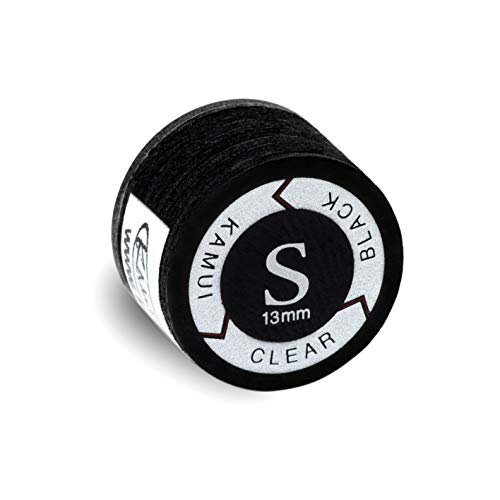
KAMUI Clear Black Soft Layered Tip, 13mm
Bringing a premium tip to the shopThe tip behind the $55 to $65 retips. Kamui says the Clear version limits how much glue soaks into the bottom layer and needs no sanding underneath, which makes for a cleaner install. Buy it yourself and pay only labor.
Amazon price: $30.90 as of 8:42 AM EDT. Price and availability can change; Amazon’s price at purchase applies.
Check price on AmazonJoe Porper Cue Tip Clamp
Home retipsAn aluminum C-clamp that holds the tip centered while the glue sets. It's the piece that decides whether a home retip comes out straight, and it costs about what one shop job does.
Check price on Amazon
Cue Cube 2-in-1 Tip Shaper and Scuffer
Putting off the next retipSolid metal with a silicon carbide face, made in the USA, in nickel or dime radius. The scuffer side brings back a slick tip that would otherwise get replaced early, and the shaper side finishes a new one.
Amazon price: $12.95 as of 8:44 AM EDT. Price and availability can change; Amazon’s price at purchase applies.
Check price on AmazonTiger Glue, 1 oz
Gluing the tipA cyanoacrylate tip glue that Tiger says bonds in 5 to 15 seconds. The 1 oz bottle covers hundreds of tip jobs, so a league tech never runs out mid-season.
Check price on AmazonFrequently asked questions
How much does it cost to retip a pool cue?
At US cue shops that publish prices, a standard leather tip installed costs $15 to $30 and a layered tip $30 to $65. Labor on a tip you bring is $15 to $30. Break tips run about $30 to $55.
Why does a Kamui retip cost so much more than a Le Pro?
The tip. Labor is about the same for both. A Le Pro costs around $1 in a box of 50, while a single Kamui Black sells for close to $29, so the Kamui job lands at $40 to $65.
Is it cheaper to bring my own tip?
Sometimes. If the shop's labor-only price is $15 to $20 and you buy a premium tip yourself, you can come out a few dollars ahead. Some shops charge more to install a customer's tip, so ask first.
How long does a retip take?
Most shops do it while you wait, and tip glue sets in seconds. Factory service is slower; Predator quotes 4 to 7 business days.
Is it worth retipping a pool cue myself?
If you retip more than once or twice a year, yes. Tools run roughly $45 to $60, which equals two or three shop jobs. Practice on an old shaft, because a scored ferrule costs more than the tools saved.
How often should I retip my cue?
Most shop guidance says once a year for a regular player, and every few months if you play most days. Replace it sooner if it's worn near the ferrule, cracked, lifting, or won't hold chalk after scuffing.
How much does a pool stick cost?
Entry cues run about $50 to $150, mid-range $150 to $500, and high-end cues more than $500. See our pool cue cost guide for the tiers.
Related guides
LeaguePool is reader-supported. When you buy through links on this site we may earn an affiliate commission at no extra cost to you. As an Amazon Associate we earn from qualifying purchases.