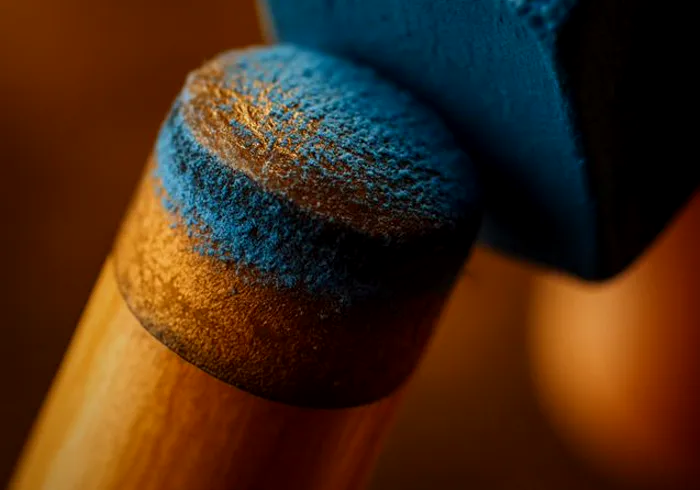
How to Scuff and Shape a Cue Tip
A well-shaped, properly scuffed tip holds chalk, grips the cue ball, and plays consistently. Both are quick maintenance tasks you can do in a minute with the right tool. Here is how, and how to pick your radius.
Scuffing vs. shaping: what is the difference
They are two separate jobs and people mix them up.
- Shaping sets the tip's curved profile (its radius) and trims down any mushrooming over the ferrule.
- Scuffing lightly roughens the tip's surface so it accepts and holds chalk. A glazed, slick tip miscues even when the shape is fine.
Shape occasionally, when the crown flattens or mushrooms; scuff more often, whenever the tip goes glassy.
Dime vs. nickel radius
The classic way to describe tip curvature is to compare it to a coin's edge.
- Dime radius: More curved (tighter). Less of the tip touches the ball, so it is easier to reach off-center contact points and apply spin. Preferred by many players who use a lot of English.
- Nickel radius: Flatter (wider). More forgiving on center-ball and power shots, with a slightly larger contact patch.
Neither is wrong. If you are unsure, a nickel radius is a forgiving starting point; move to a dime if you want easier spin.
How to shape the tip
- Trim any mushroomed leather back flush with the ferrule first.
- Use a dedicated shaper matched to a dime or nickel radius, or fine sandpaper wrapped in a curved holder.
- Rotate the shaft steadily and work the whole crown evenly so the dome stays centered.
- Check often; remove only what you need to reach the shape.
How to scuff the tip
- After shaping (or anytime the tip glazes), pass a scuffer or tip pick lightly over the surface.
- Aim for a slightly rough, matte texture, not deep gouges.
- Blow off the dust and chalk up; the tip should grab chalk immediately.
Over-scuffing wears the tip out faster, so use a light touch and stop as soon as it holds chalk.
Our picks
Links open the current selection and price on Amazon so you can compare real reviews before buying.
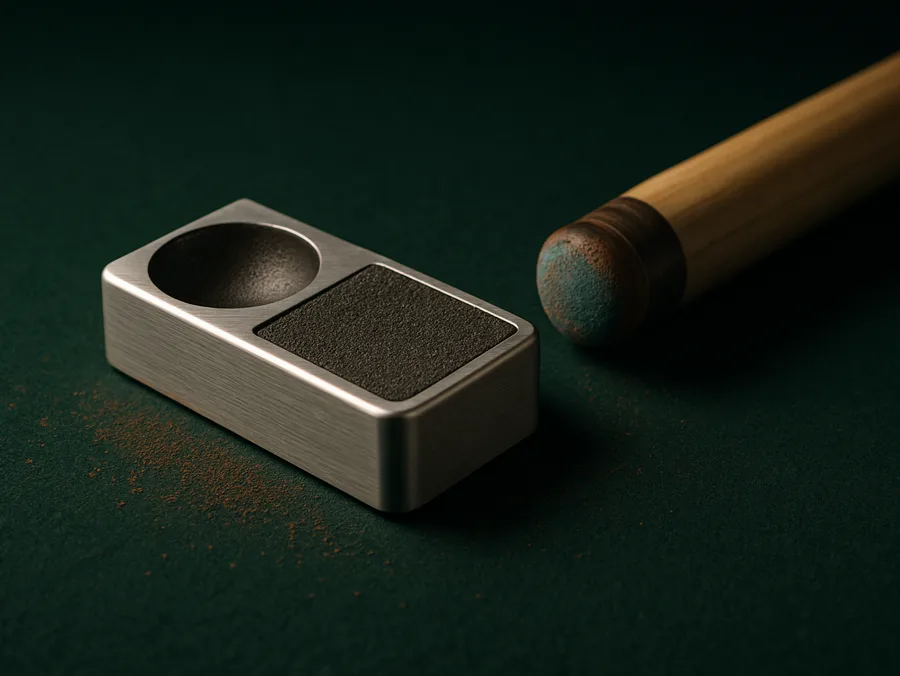
Dual dime/nickel tip shaper
Setting the radiusA shaper with both radii lets you dial in a dime or nickel crown consistently without guesswork.
Check price on Amazon
Tip scuffer / pick tool
Restoring chalk gripLightly roughens a glazed tip so it takes chalk again, the fastest cure for a slick tip.
Check price on Amazon
All-in-one tip tool
Carry-everywhere maintenanceCombines shaping, scuffing, and mushroom trimming in one pocket tool for quick upkeep between racks.
Check price on AmazonFrequently asked questions
Should I use a dime or nickel radius?
Use a dime radius if you want easier spin and reach on off-center hits, and a nickel radius if you want a flatter, more forgiving contact for center-ball and power shots. Many players are happy with either; pick one and stay consistent.
How often should I scuff my tip?
Whenever the tip glazes over and stops holding chalk well, which for regular players can be every few sessions. Scuff lightly; you only need to restore a matte, grippy surface.
Can I shape a tip with just sandpaper?
Yes, fine sandpaper works, especially wrapped around something curved to match your radius. A dedicated shaper simply makes it faster and more consistent to keep the dome centered.
Related guides
LeaguePool is reader-supported. When you buy through links on this site we may earn an affiliate commission at no extra cost to you. As an Amazon Associate we earn from qualifying purchases.