Pool Cue Accessories: What Every Cue Owner Needs
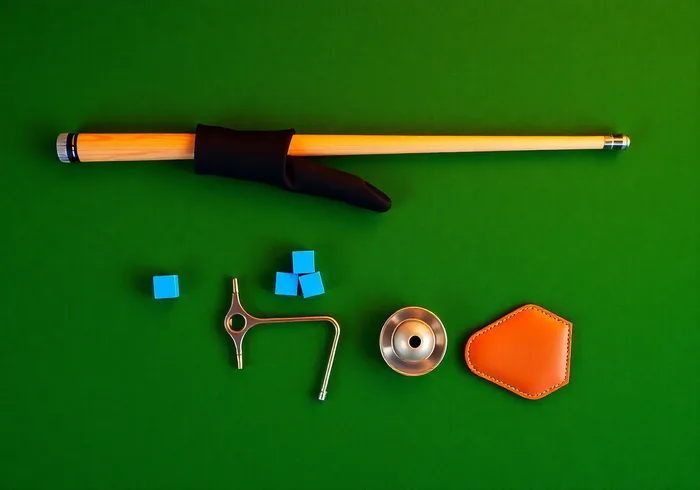
A cue owner has six jobs to cover, and each takes one cheap accessory. Chalk grips the tip. A tip tool keeps it shaped. A shaft cleaner lets the cue glide. Joint protectors save the threads, a bridge stick handles the long shots, and a glove helps the bridge hand. Skip anything past those six until you own them.
The rest of the "pool cue accessories" aisle is duplicates and bundles padded with parts you will never use. Below, each job gets what goes wrong without it, the one product we would buy, and what to skip.
The starter kit at a glance
Each row is one job, the product we picked for it and the guide that goes deeper.
| Job | Without it | Our pick | Deep dive |
|---|---|---|---|
| Grip on the tip | Miscues on off-center hits | Master chalk, 12 cubes (or Predator) | Chalk and holders |
| Tip care | A glazed, flat or mushroomed tip | 3-in-1 tip shaper | Tip tools |
| Shaft care | A sticky shaft that drags in your bridge hand | Q-Wiz cleaner and burnisher | Shaft cleaners |
| Joint protection | Dirty, dinged threads | McDermott 3/8 protector set (for 3/8 pins) | Joint protectors |
| Reach | Awkward, shaky long shots | Skylety retractable bridge, plus an extension for long cues | Extensions |
| Bridge hand | Friction and sweat on the shaft | FITFIV 3-finger glove | Pool gloves |
Grip and chalk
You use chalk on every shot, so it is the one accessory worth buying well. A tip with no chalk slips off the ball on any hit away from dead center. That slip is a miscue.
Our pick is Master chalk. The listing describes a smooth coat that will not cake or flake, 12 cubes in a protective box, made in the USA. It also says the chalk comes in several colors, so you can match your felt and leave less of a mark on the cloth. The link opens a blue box, so choose the color that fits your table. Predator is the one to test if you want a chalk whose listing claims longer on-tip life.
The insider edge: chalk the tip lightly before every shot, not heavily once in a while. A thin, even layer holds better than a thick one, and it keeps blue dust off the cloth and your shirt. See how to chalk a pool cue and our chalk holder picks. Skip novelty chalk and the single cube from a bar counter.
Tip care
Chalk only works if the tip can hold it. After enough hits a tip glazes smooth, flattens or mushrooms past the ferrule, and chalk stops sticking.
Get a 3-in-1 shaper. The listing describes a steel flat file to level the top, an arc-shaped sander to round the edge, and a needle to loosen the leather so chalk takes better. It works on tips from 9 to 14 mm and is 2.6 inches long. New players overlook this and experienced players insist on it: a tip shaped to a gentle curve holds chalk on the part that touches the ball. Our scuff and shape guide shows the motion, and the tip tool roundup compares more.
To change the tip yourself, consider the 11-in-1 Vefungyan kit: 20 tips at 13 mm, 5 chalk cubes, 5 ferrules, a box cutter and an 11-function shaper. Check your shaft's tip diameter first, and read how to replace a pool cue tip before you buy.
Skip a coin or a sanding block as a permanent stand-in for a shaper. Skip the kit if you will not retip. Many players never do.
Shaft care
Chalk residue and sweat build up where your bridge hand slides. The shaft grabs your hand, and a smooth stroke feels sticky.
The Q-Wiz is our pick. It is a double-sided disc: the unmarked side cleans and the printed logo side polishes. The listing says you glide it along the shaft in long, light strokes, rinse it to reuse it, and it will not reduce the shaft diameter. It is 2-3/4 inches wide, made in the USA, and fits in a cue case.
The edge: clean the shaft before you play, not after you notice the drag. See how to clean a pool cue and the shaft cleaner roundup. Skip sandpaper, and any "conditioner" you would not put on bare wood. For a deeper polish, try burnishing.
Joint protection
The threads are the one part of the cue that wears from normal use. Dirt in them or a bump on the pin can make the joint wobble or fail to seat flush. Protectors cap both halves when the cue is broken down.
The McDermott set is a 2-piece plastic set in 3/8. The listing says it fits McDermott cues with a 3/8 joint, guards against thread damage and keeps dirt out. Read that twice: match it to your joint before you buy, and if your cue has another pin, find a protector made for it. Our joint types guide shows how to tell which you have, and the protector guide has more sizes.
Skip any protector that does not match your pin. A loose cap rattles around the case, and a set cut for a different thread can damage yours.
Reach: bridge stick and extension
Two accessories handle reach, and they solve different problems. A bridge stick (a mechanical bridge) supports the cue when the cue ball is too far to reach by hand. An extension makes the cue itself longer, which helps tall players or anyone on a big table.
For the bridge, we like the Skylety retractable stick. The listing says it extends from 14 to 59 inches, with a removable polished brass head that has five shot positions, rubber feet that protect the table, and a stainless steel handle with a sponge cover. It collapses to fit in a case. The link opens the low bridge head version. Technique is in how to use a mechanical bridge, with more models in our bridge stick picks.
The extension we picked is the Watris Veiyi, a 12.6-inch telescopic aluminum alloy tube with a rubber-textured surface. The listing says it locks onto the end of the cue by rotating and fits most cues, so check the fit on your butt end first. Our extension guide explains how they attach and who needs one.
Don't reach for the bridge first. A hand bridge is more accurate when you can reach, so save the stick for shots that need it. Skip an extension if your cue already feels the right length.
The bridge hand: a glove
A glove goes on the hand that forms your bridge, not the one that holds the cue. When sweat or a sticky shaft makes your fingers drag, the glove gives you back a consistent slide.
The FITFIV is a 3-finger glove with a Lycra back, a breathable mesh palm and an adjustable hook-and-loop wrist strap. It is a single glove, sold for the left hand only. The listing says to confirm your bridge hand before buying. A right-handed shooter who bridges with the left hand wants it, and a left-handed shooter should look for a right-hand glove. The link opens the Large. More in our glove guide.
Skip the glove if your hand is dry and your shaft is clean.
Starter kit by budget
Buy in this order. The first tier prevents miscues, the second adds reach, and the third protects your gear and your hand. Price bands cover the items listed as we checked them, and prices move.
| Budget | What you get | Best for |
|---|---|---|
| Under $30 | Master chalk, Q-Wiz shaft cleaner, 3-in-1 tip shaper | Any cue owner, and a good first gift |
| Under $40 | The kit above plus the Skylety bridge stick | Home tables and anyone who plays long shots |
| Under $75 | All of the above plus the McDermott protector set (if you have a 3/8 pin) and the FITFIV glove | League players who carry their cue every week |
| Under $100 | Everything, with the Watris Veiyi extension | Tall players, big tables, a full gift bundle |
For gifts, stick to the Q-Wiz, chalk or bridge stick, since none depend on the cue brand. The protectors and glove need a joint pin and bridge hand you know.
Once the kit is in the case, how to store a pool cue covers the habit that protects the cue itself.
Sources
- Manufacturers' Amazon listings for each product above (features, dimensions, materials, fit, contents), read November 2026
- Our own guides, linked in each section
Our picks
Links open the current selection and price on Amazon so you can compare real reviews before buying.

Master Billiard/Pool Cue Chalk, 12 Cubes
The everyday chalk for every cueTwelve cubes in a protective box, made in the USA, with a smooth coat that will not cake or flake. The link opens blue; other colors are sold to match your felt. Chalk lightly and one box lasts a long time.
Check price on Amazon
Predator Cue Chalk
A step-up chalk to tryA 5-count pack. The listing claims longer on-tip chalk life and better coverage. If you want a more consistent hit on spin shots, it is a cheap test against your usual cube.
Check price on Amazon
3-in-1 Pool Cue Tip Shaper
Keeping a tip shaped and holding chalkA steel flat file, an arc sander and a leather needle in one pocket-size brushed steel tool for 9 to 14 mm tips. Shape the tip to a gentle curve and it holds chalk where the ball is struck.
Check price on Amazon
Vefungyan 11-in-1 Cue Tip Replacement Kit
Players who will retip their own cueTwenty 13 mm tips, 5 chalk cubes, 5 ferrules, a box cutter and an 11-function shaper. Check your shaft's tip size first, since these are 13 mm. Skip it if you will not retip.
Check price on Amazon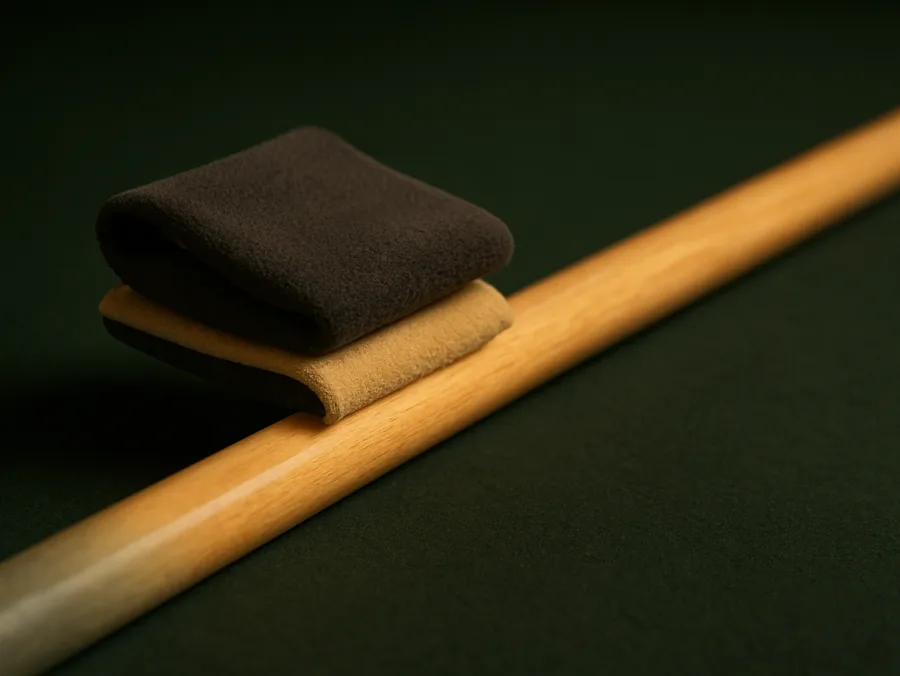
Q-Wiz Shaft Cleaner & Burnisher
A smooth, consistent bridge-hand glideA double-sided disc: the unmarked side cleans, the logo side polishes. Rinse it and it is ready again. At 2-3/4 inches wide it lives in a cue case, so you clean before the first rack, not after the first sticky shot.
Check price on Amazon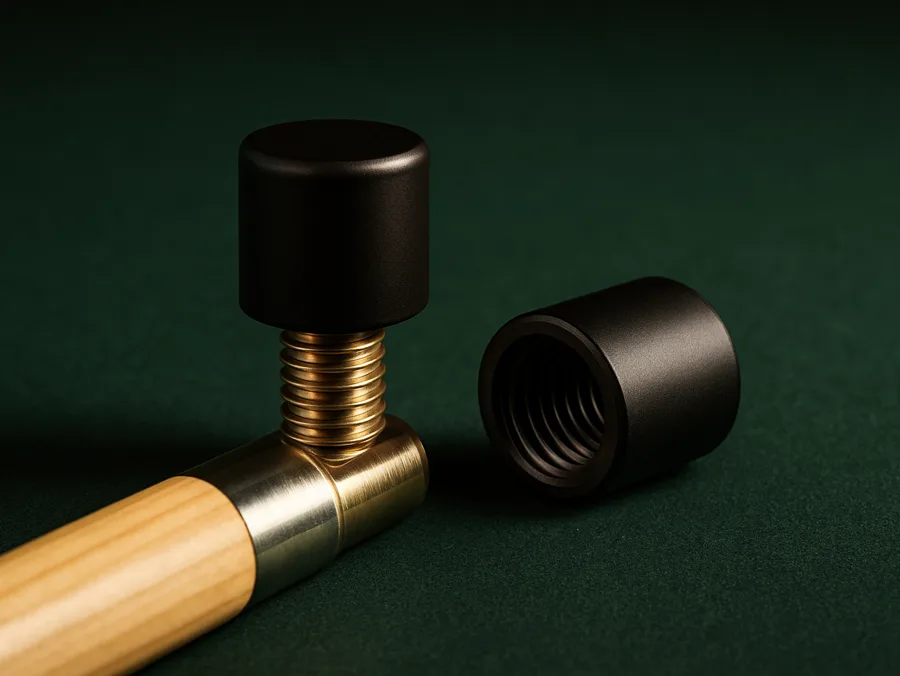
McDermott Joint Protector Set, 3/8
Protecting 3/8 joint threadsA 2-piece heavy-duty plastic set with the McDermott clover logo. It suits cues with a 3/8 joint, so match it to your pin before you order. It keeps dirt out of the threads and guards them from knocks.
Check price on Amazon
FITFIV 3-Finger Billiard Glove, Left Hand
Players with a sweaty or sticky bridge handOne glove, left hand only, with a Lycra back, breathable mesh palm and an adjustable wrist strap. Buy it for the hand you bridge with. The link opens the Large, so check sizing first.
Check price on Amazon
Watris Veiyi 12.6 Inch Pool Cue Extender
Tall players and big tablesA telescopic aluminum alloy extension with a rubber-textured surface that locks onto the end of the cue by rotating. It adds reach without a second cue. Check the fit on your butt end first.
Check price on Amazon
Skylety Retractable Bridge Stick, Brass Head
Long shots on home tables and in the caseExtends from 14 to 59 inches and collapses to fit a cue case. A removable polished brass head gives five shot positions, and rubber feet protect the table. The link opens the low bridge head version. A cheap fix for every shot you cannot reach by hand.
Check price on AmazonFrequently asked questions
What accessories do I need for a pool cue?
Six cover almost everything: chalk, a tip shaper, a shaft cleaner, joint protectors, a bridge stick and a glove for your bridge hand. Chalk matters most because you use it on every shot.
Do I need a pool cue glove?
No. A glove helps if your bridge hand sweats or your shaft drags, and many players do fine with a clean shaft alone. If you buy one, buy it for the bridge hand, not the hand that holds the cue.
How do I keep my cue tip in good shape?
Use a tip shaper to level the top, round the edge and loosen the leather so it holds chalk. Chalk lightly before each shot. Our scuff and shape guide has the steps.
Which joint protector do I need?
The one made for your joint pin. The McDermott set here is for 3/8 joints, so match it to your cue before buying. If the pin is a different size, buy a protector made for it.
What is the difference between a bridge stick and a cue extension?
A bridge stick supports the cue head when the ball is out of hand reach. An extension adds length to the back of the cue. Most players want the bridge first.
What makes a good gift for someone who owns a cue?
Chalk, a shaft cleaner or a bridge stick, since none of them depend on the cue brand. Wait on protectors and gloves until you know the pin and the bridge hand.
Related guides
LeaguePool is reader-supported. When you buy through links on this site we may earn an affiliate commission at no extra cost to you. As an Amazon Associate we earn from qualifying purchases.