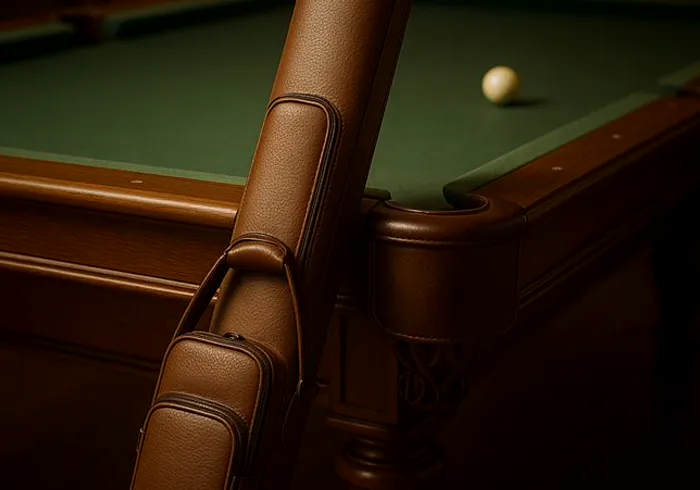
Pool Cue Travel Case: Best Cases and Travel Bags
The best pool cue travel case is a hard case with full-length tubes, a strap you can take off, and a length that fits inside the bag you'll pack it in. On US flights the cue can't ride in the cabin at all: TSA's pool cue page lists carry-on bags as No and checked bags as Yes. So a travel case has to survive checked baggage and car trunks, not an overhead bin.
For most trips that means a hard 2x2 or 2x4, packed inside a padded travel bag or duffel when it flies. Below: what to look for, a length and weight chart, what a cue case travel bag is, and the cases we'd travel with.
Flying: the cue goes in checked baggage
No case changes this..... Pool cues are not allowed in carry-on bags and are allowed in checked bags, per TSA, and the officer at the checkpoint has the final say. Predator, which makes cue cases, says cues haven't been allowed as US carry-on since September 11, 2001. If a listing calls a case "TSA approved," that doesn't make the cue carry-on legal; it still gets checked.
So the travel case question is really about checked bags. Predator's advice is not to check a cue case by itself, because handling scuffs the finish and hardware and straps can catch and tear. Packing the case inside a hard-shell suitcase or padded duffel, snug, with clothes around it, is what Predator recommends! Airline sizes, fees, damage claims and the step-by-step packing list live in our flying with a pool cue guide.
What to look for in a pool cue travel case
| Feature | Why it matters on the road |
|---|---|
| Hard shell | Checked bags get stacked and dropped. Padding alone can't stop a load from bending a shaft. |
| Full-length tubes or dividers | A bag dropped on end slams loose pieces into each other at the bottom of the case. |
| Removable or tuckable strap | Straps catch and tear in airport handling, Predator warns. Its own Roadline cases have removable straps. |
| Latches or a metal zipper | The closure is the part most likely to fail. Some box cases add combination locks, PoolDawg notes. |
| Length that fits your bag | A 34 inch case won't go in a suitcase with a 30 inch interior. See the chart below. |
| Feet or a hard base | Instroke's Premier cases, for example, have plastic feet to reduce wear when the case stands on hotel and pool room floors. |
| Room for joint protectors | Protectors keep threads clean in transit, but some slim cases can't close with them on. |
| Backpack straps on 3x5 and up | Ozone Billiards notes they spread the weight on long walks. Worth it in big airports and convention centers. |
Case length and weight: will it fit, can you carry it?
| Case | Capacity | Length | Weight |
|---|---|---|---|
| GSE 1x1 box | 1x1 | 32 in | Not listed |
| HAN'S DELTA 2x2 Oval | 2x2 | 32 in | Not listed |
| Action AC22 tube | 2x2 | 34 in | Not listed |
| Adhafera 2x2 | 2x2 | 34 1/4 in | Not listed |
| Predator Urbain 2x4 soft | 2x4 | Not listed | 2.95 lb |
| JB Cases rugged 1x2 | 1x2 | 35.5 in | About 3 lb |
| JB Cases rugged 2x3 | 2x3 | 35.5 in | About 4.5 lb |
| JB Cases rugged 3x6 | 3x6 | 35.5 in | About 6 lb |
| JB Cases rugged 4x8 | 4x8 | 35.5 in | About 7 lb |
Lengths and weights come from each maker's listing or FAQ. Predator's size guide puts most two-piece cases at about 30 to 32 inches. Measure the inside of your suitcase or duffel corner to corner before the trip; that number decides more than any feature list. Weight is never the problem with airline limits (a loaded 4x8 is nowhere near 50 pounds), but it is on a long walk through a terminal.
Cue case travel bags: what they are and when you need one
A cue case travel bag is an outer bag for the case itself: a long padded sleeve or duffel that the whole hard case slides into for checked baggage. JB Cases, for example, sells a Travel Bag (listed at $110 when we checked) alongside its cases. It does three things a bare case can't. It keeps scuffs off the case finish, it hides the straps and handles that catch on belts, and it gives you one more layer of padding.
You don't have to buy a cue-specific one. Predator recommends a hard-shell suitcase or a padded travel duffel. A ski or snowboard bag is often the easiest fit for a 34 or 35 inch case, with room for clothes packed around it as padding.....
Skip the travel bag if you only drive. For road trips the hard case alone is enough, as long as it doesn't spend the night in the trunk.
Tube, box or oval for travel?
Tube cases give each piece its own rigid sleeve, which is the best protection when a bag lands hard. Predator calls top-opening tube cases the style that favors protection. Box cases are slim and flat, so they pack easily inside a duffel; the trade-off is that pieces sit in channels without tubes. Oval hard cases with full-length dividers sit in between and are the common budget choice.
For flights, our order is tube, then oval with full-length divaders, then box. For road trips, any hard case with full-length separation does the job.
How much case to bring
Travel light. On a trip where you'll play a few sessions, a 1x1 or 1x2 with just your playing cue is shorter, lighter and less to lose; borrow a house break cue at the venue. Bring the 2x4 or 3x5 for tournamants where you'll use the break and jump cues. Every extra cue in the bag is one more thing exposed if it goes missing.
For a cue you couldn't replace, don't check it at all. Ship it ahead insured, or travel with a backup ; the flying guide covers both.
Road trips and tournament weekends
Most cue travel is by car, and the car is the bigger risk to the cue. A trunk swings hot and cold every day, and cue makers say temperature swings are what warp shafts. A case slows that down; it doesn't stop it. Carry the case into the hotel every night, and when the cue has been somewhere cold, let it warm up zipped in the case before you open it. how to store a pool cue has more.
At the venue, a case that stands on its own keeps the cue off sticky floors and out of walkways. Put your name and phone number inside the case, not just on a tag, because tags tear off.
What goes in the pockets for a trip
- Joint protectors on both pieces (check the case still closes)
- Two cubes of your own chalk and a tip tool
- A spare tip, glue and a small file in case one pops off away from home
- A glove and a microfiber cloth
- A tracker, if the case will be checked
- A card with your name and phone number
For the gear itself, see our joint protectors guide and the league night checklist.
Warranties don't cover the baggage hold
Read the fine print before you count on a case maker. JB Cases offers a lifetime warranty on defects it caused, but its FAQ says that shipping a case unprotected through the airlines is on the owner. Predator's case warranty is one year against defects in material and workmanship. Neither is insurance against a baggage handler. What an airline will pay for depends on the carrier; the flying guide has American's hard-sided case rule.
Sources
- TSA: What can I bring? Pool cues
- Predator: traveling with your pool cue case
- Predator: cue case size guide
- Predator: warranty
- JB Cases: FAQ (case lengths, weights, warranty)
- JB Cases: travel bags
- Ozone Billiards: hard cue cases and case FAQ
- Case dimensions: the manufacturers' Amazon listings for the products below, checked October 15, 2026.
Our picks
Links open the current selection and price on Amazon so you can compare real reviews before buying.
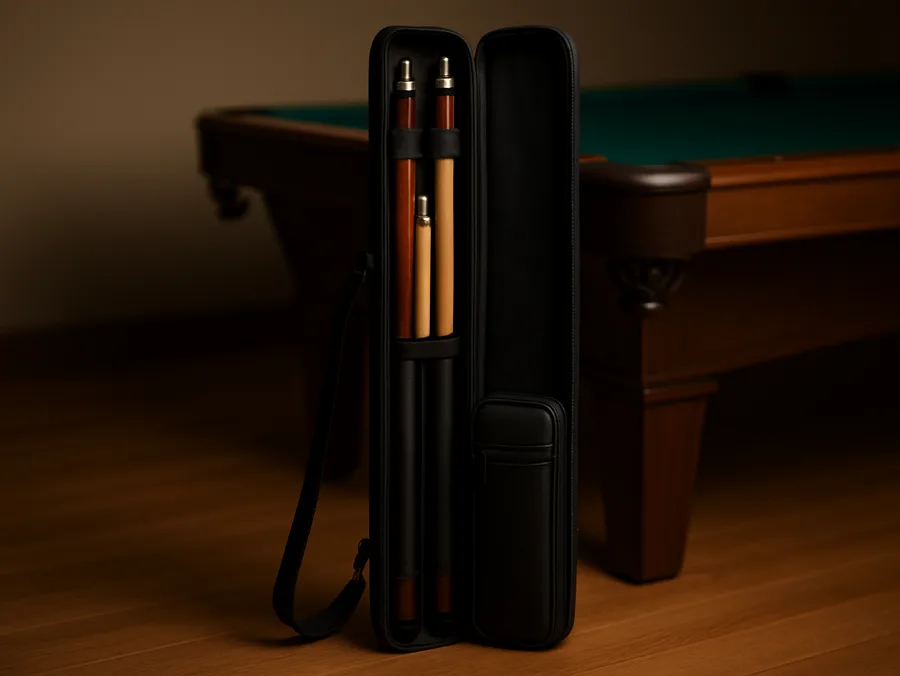
Casemaster Q-Vault Classic 2x2 Hard Cue Case
Best travel case for most playersThe hard resin shell runs the full length of the case, so a hit on the end of a dropped bag goes into the shell. A moisture-repelling leatherette outside, a soft cloth lining and two large pockets for chalk, spare tips and repair tools. The shoulder strap and handle carry two cues through a terminal.
Check price on Amazon
HAN'S DELTA 2x4 Hard Oval Cue Case
Tournament tripsA hard oval case with room for two butts and four shafts: playing cue, break cue and spares for a weekend event. It has an adjustable shoulder strap; tuck it inside the outer bag when the case is checked, and measure the case against your duffel before you fly.
Check price on Amazon
GSE 1x1 Hard Cue Case Box
Travel light with one cueA slim briefcase-style box, 32 by 2.5 by 2 inches, with metal reinforced corners, double latches and a soft-lined interior. Flat and narrow, so it slides into a duffel beside your clothes. Its listing says it won't close with joint protectors on, so pack them separately.
Check price on Amazon
Joint protector set
Threads and shaft ends in transitScrew-on protectors for the butt and shaft keep grit out of the threads and stop the pin from chewing up the tube lining. Match them to your cue's joint; our joint protector guide lists the common pin types.
Check price on Amazon
Apple AirTag
Tracking a checked caseDrop one in the case pocket and the case shows up in Find My on your iPhone. If a checked bag goes missing, you can share its location with participating airlines, which gives the baggage desk something to work with.
Check price on AmazonFrequently asked questions
Can I carry a pool cue on a plane in a travel case?
No. Per TSA, pool cues are not allowed in carry-on bags and are allowed in checked bags, even broken down in a hard case, so check it. A padded duffel or travel bag around the case is best.
Is there a TSA approved pool cue case?
No case makes a pool cue allowed in the cabin. TSA's rule is about the cue, not the case: checked bags only. Any case labeled TSA approved still goes in checked baggage.
What features should I look for in a cue case for travel?
A hard shell, full-length tubes or dividers, a removable or tuckable strap, latches or a metal zipper, room for joint protectors, and a length that fits inside your luggage.
What is a cue case travel bag?
An outer bag the whole cue case slides into for checked baggage. It protects the case finish, hides the straps and adds padding; a ski bag or long padded duffel does the same job.
Can I check a soft cue case?
We wouldn't. Predator calls soft cases the highest-risk option for air travel. Use a hard case and pack it inside another bag.
Will a cue case fit in my suitcase?
Often not. Cue cases run about 32 to 35.5 inches long, longer than many suitcases. Measure the inside of the bag first; a ski bag or long duffel usually works.
What size case is best for travel?
The smallest that carries what you'll play with. A 1x1 or 1x2 for casual trips, a 2x2 or 2x4 for leagues and tournaments where you need a break cue.
Related guides
LeaguePool is reader-supported. When you buy through links on this site we may earn an affiliate commission at no extra cost to you. As an Amazon Associate we earn from qualifying purchases.