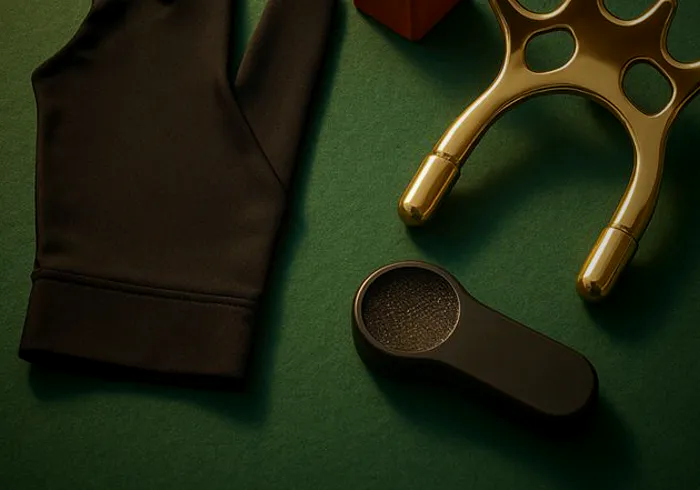
Best Pool Gloves
Look at the bridge hand of almost any pro and you will find a glove on it. It is there for one reason. The glove gives the cue a slick, even surface to slide over, so the stroke stays smooth when your hands are damp or sticky. If your cue ever grabs or stutters coming through the bridge, nothing else you can buy fixes it this fast.
Why a glove smooths your stroke
The cue slides across your bridge hand on every shot. Dry skin drags. Damp skin grabs and stutters, and it does that right at contact, the worst possible moment. Put a glove on and the changeable patch of skin becomes smooth fabric, so the cue glides the same way on every stroke.
What you get out of it is a repeatable stroke. You notice it most on long follow-through shots and on draw, where one hitch turns into a miss. Plenty of players find their consistency jumps the moment the cue stops catching on skin.
Humid hands and playing conditions
The glove earns its money when conditions turn bad. Warm rooms, August humidity, nervous match sweat. All of it makes skin sticky, and that is exactly when a bare bridge drags worst. With a glove the slide stays the same no matter the weather or your nerves.
Hand talc was the old answer. Loose powder is a mess, though. It dusts the cloth, gets on everything, and can slow a ball where it lands on the bed, which is why leagues and tidy players moved to gloves. Same slick feel, none of the cleanup. A glove also keeps skin oil off the shaft, so the cue stays cleaner between wipe-downs.
Fit and choosing a hand
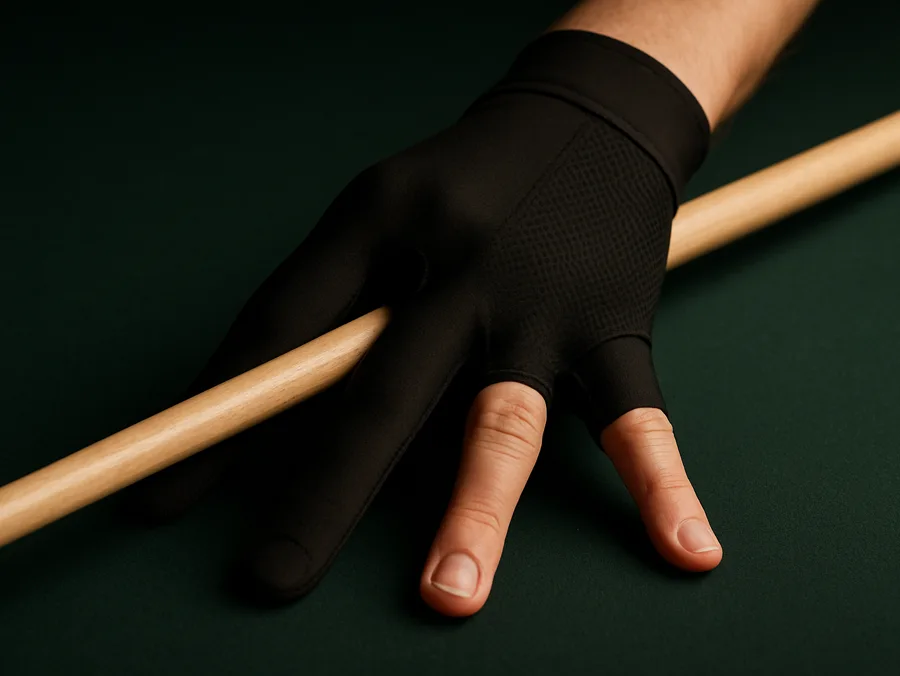
Fit is the whole game with a glove. Snug, no loose folds. Bunched fabric under the cue defeats the point of wearing one. Most gloves are a four-way stretch material sized small through extra large, and plenty are cut so either hand of that size can wear them.
Wear it on your bridge hand, the one that forms the bridge and that the cue rides over. Not the grip hand. A right-handed player bridges with the left, so a left-hand or ambidextrous glove is what you want. After that, look for breathable mesh across the back to keep the hand cool, open fingertips if you like some bare feel, and slick panels on the palm and fingers where the cue actually travels.
Our picks
Links open the current selection and price on Amazon so you can compare real reviews before buying.
Four-Way Stretch Billiard Glove
All-around smooth strokeSnug stretch fabric, a slick palm, a breathable back. The cue slides the same way shot after shot.
Check price on Amazon
Open-Fingertip Mesh Glove
Humid rooms and sweaty handsVentilated mesh and open fingertips keep the hand cool and dry, and the slick panels take care of the cue glide.
Check price on Amazon
Ambidextrous Pool Glove
Fitting either handA symmetric cut that fits the bridge hand of a lefty or a righty. Handy when a household shares gear.
Check price on AmazonFrequently asked questions
Which hand does a pool glove go on?
Your bridge hand, the one the cue slides over. A right-handed player bridges with the left, so the glove goes there. Never the grip hand, which needs bare feel on the butt of the cue.
Is a glove better than hand talc?
For most players, yes. You get the same slick slide with no loose powder to dust the cloth, coat your clothes, or slow a ball where it settles on the bed. The shaft stays cleaner too.
Do I really need a pool glove?
You can play fine without one. But if the cue drags or stutters through your bridge, especially in a humid room or when the nerves hit, a glove makes the stroke noticeably smoother and more consistent.
Related guides
LeaguePool is reader-supported. When you buy through links on this site we may earn an affiliate commission at no extra cost to you. As an Amazon Associate we earn from qualifying purchases.