
How to Clean and Maintain a Pool Cue
A pool cue is a precision tool, and a dirty shaft is the fastest way to ruin how it plays. Chalk, hand oil, and sweat build into a sticky film that grabs your bridge hand, and the cue drags on every stroke. A few minutes of regular cleaning keeps the shaft smooth, protects the wood, and keeps the cue feeling new for years.
Everyday cleaning after you play
The habit worth building: wipe the shaft down with a clean, dry, lint-free cloth every time you finish playing. That gets fresh chalk and hand oil off before they harden into grime. Run the cloth up and down the shaft with light pressure until it slides smoothly. Microfiber or a cotton towel works well. Skip paper towels, which leave lint and fine scratches.
Wipe the ferrule and the area around the tip too, but keep moisture off the tip itself. A soaked tip can come loose from the ferrule.
Deep cleaning a dirty shaft
When the shaft feels sticky no matter how much you wipe it dry, it is time for a deeper clean. Dampen a lint-free cloth with a little water, wring it out until it is barely moist, and rub the shaft along its length. The cloth will come away grey. Work in sections and re-wet the cloth as needed, but never let water pool or soak into the wood.
For stubborn buildup, dedicated cue shaft cleaners and cleaning pads are made for this and lift grime without over-wetting. Some players use a very light touch with ultra-fine paper made for cues. Coarse sandpaper is a mistake, though. It takes wood off and thins the shaft over time.
The moment you finish, dry the shaft completely with a clean cloth. Standing water is the enemy of a straight cue.
Burnishing for a fast, slick finish
After cleaning, burnishing seals and smooths the wood so your bridge hand glides. Simplest method: rub the dry shaft briskly with a piece of leather or a dedicated burnishing pad until friction warms the wood and it takes on a slight sheen. That closes the grain cleaning can raise and gives you the fast, glassy feel a good shaft should have.
Skip oils and waxes unless they were made for cue shafts. Ordinary furniture products leave a tacky residue that pulls in more chalk.
Caring for the tip, ferrule, and butt
Scuff and shape the tip with a proper tip tool so it holds chalk, but do not overdo it. Keep the ferrule clean and dry, and wipe a stained one with a barely damp cloth. The butt and wrap want attention too. Wipe a linen wrap with a slightly damp cloth and dry it, and clean a leather wrap gently with a leather-safe product.
What not to do
- Do not soak the shaft or run it under a tap; water warps wood.
- Do not use household cleaners, alcohol in quantity, or furniture polish.
- Do not use coarse sandpaper, which permanently thins the shaft.
- Do not store a damp cue; dry it before it goes in the case.
- Do not leave the cue in a hot car or against a heat source, which can warp it.
Our picks
Links open the current selection and price on Amazon so you can compare real reviews before buying.
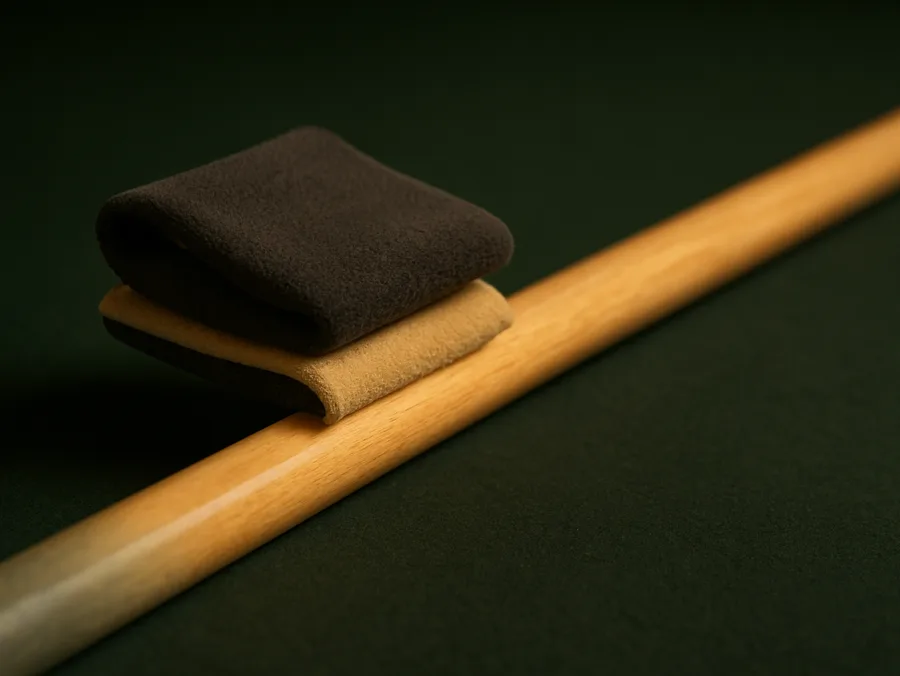
Cue Shaft Cleaning and Conditioning Kit
A complete, cue-safe deep cleanA shaft cleaner and conditioner mixed to lift chalk and oil without over-wetting the wood, so you can rescue a sticky shaft without risking warp.
Check price on Amazon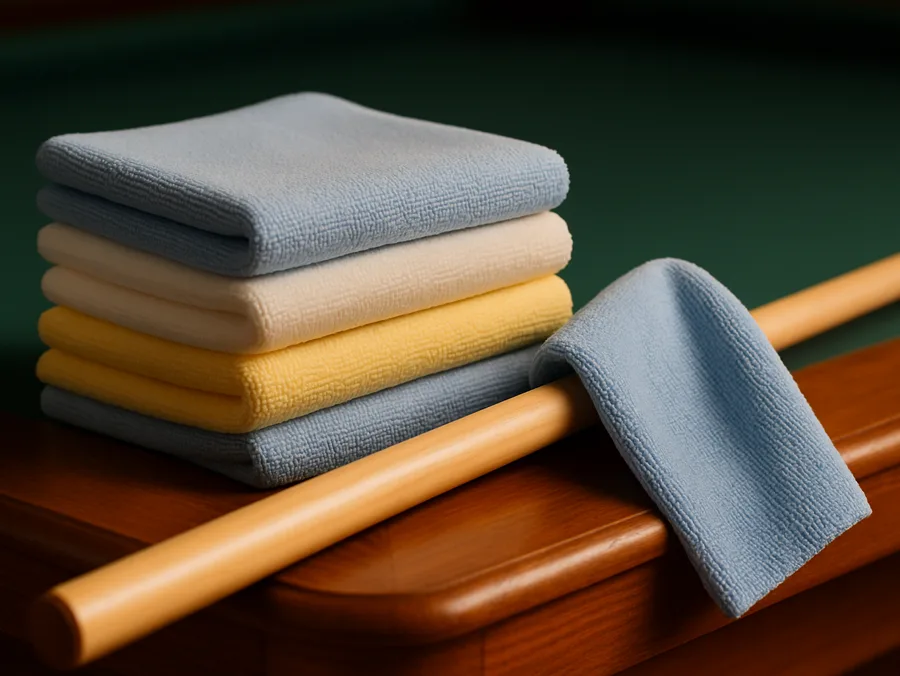
Microfiber Cue Cloth (lint-free)
Everyday wipe-downs after playA soft, lint-free cloth for the daily dry wipe that keeps chalk and hand oil from ever building up.
Check price on Amazon
Leather Shaft Burnisher
Sealing and slicking the shaft after cleaningA leather burnishing pad that smooths raised grain and gives the shaft a fast, glassy glide for your bridge hand.
Check price on AmazonFrequently asked questions
How often should I clean my cue shaft?
Wipe it dry after every session, and do a deeper damp clean whenever the shaft starts to feel sticky rather than smooth. For regular players that deep clean might be every few weeks; for occasional players, every couple of months is plenty.
Can I use sandpaper on my shaft?
Avoid ordinary sandpaper. It takes wood off and thins the shaft over time, which permanently changes how it plays. If you have to smooth a rough spot, use ultra-fine paper or a burnishing pad made for cues, and use it sparingly.
Is it safe to use water on a pool cue?
A barely damp, well-wrung cloth is fine for cleaning, but never soak the shaft or let water stand on it. Dry the wood completely right after cleaning, since trapped moisture is the main cause of a warped cue.
Related guides
LeaguePool is reader-supported. When you buy through links on this site we may earn an affiliate commission at no extra cost to you. As an Amazon Associate we earn from qualifying purchases.