How to Re-Wrap a Pool Cue
The wrap is the one part of a cue your hand lives on for hours, and it wears accordingly. Irish linen goes grimy and frayed, leather goes slick and loose, and eventually every played cue needs its grip redone. Re-wrapping is genuinely doable at home, but it sits right at the edge of what hand work can do well, which is why it is worth understanding the job before deciding whether to tackle it or ship the cue to a tech.
Removing the old wrap
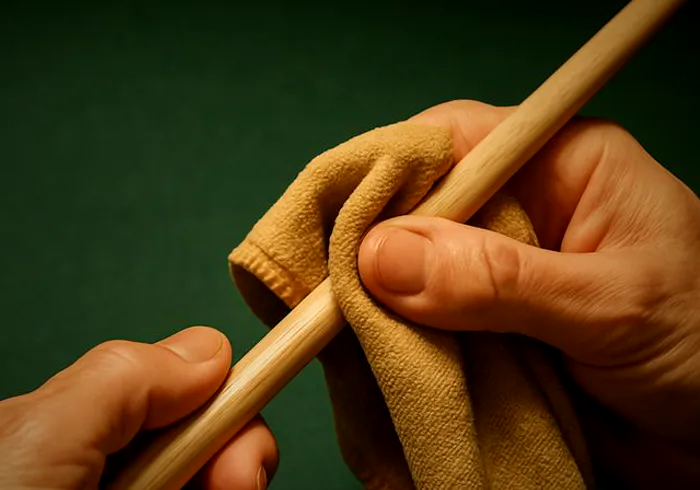
Start by slicing the old wrap with a sharp blade, cutting along the cue axis just deep enough to get through the material without scoring the wood underneath. Linen usually unwinds once you get an edge started; leather peels in strips. Old adhesive stays behind, and it all has to go. Soften stubborn glue with a barely damp cloth and gentle scraping, then let the channel dry completely.
What you are left with is the wrap channel, a recess machined into the butt exactly deep enough that the finished wrap sits flush with the cue surface. Inspect it. Gouges, cracks, or a loose forearm joint discovered now are reasons to stop and involve a repair shop, since the wrap will faithfully telegraph every defect under it.
Winding a new Irish linen wrap
Linen goes on as one continuous thread wound edge to edge down the channel. Anchor the starting end in a thin bed of glue at the channel shoulder, then wind with constant, moderate tension, each pass laid tight against the last with no gaps and no overlaps. Most installers run a thin layer of white glue or dedicated wrap adhesive in the channel as they go, pressing the linen down into it. At the far shoulder, the end gets tucked and glued so nothing can unravel.
Tension is the entire game. Loose spots become bumps and rattly sections; uneven tension shows as visible banding. This is exactly why professionals chuck the cue in a lathe: the cue spins at steady speed while they feed thread, giving perfectly even tension, and afterward they press the wrap with a smooth tool while it spins, which flattens the thread into that seamless factory surface. By hand, rotate the cue slowly and patiently, and press the finished wrap hard with a smooth burnisher or bottle. It will feel good, if not quite showroom.
Installing a leather wrap
Leather is more forgiving of hand installation, which makes it the better first project. Quality leather wraps come as a pre-cut panel sized for standard wrap channels. Dry-fit first: wrapped around the channel, the edges should meet in a clean butt seam with zero overlap, trimmed with a straightedge if needed. Apply contact-style wrap adhesive to the channel, roll the leather on smoothly, and work the seam closed so it nearly disappears along the back of the cue.
Press out air bubbles from the center toward the edges, wrap the whole thing snugly with an elastic bandage or plastic wrap, and let it cure overnight. A good leather install feels tacky and secure in a sweaty hand, which is exactly why so many players convert from linen.
The no-wrap option
Some players skip the wrap entirely and prefer bare wood, the way many custom sneaky petes are built. Converting a wrapped cue to wrapless is not just leaving the channel empty, though; the recess has to be filled and built up flush, usually with layers of finish or a fitted wood sleeve, then blended and sealed. That is lathe work, not kitchen-table work. If you love the wrapless feel, ask a cue tech to quote the conversion, or simply choose a wrapless cue next time and keep this one dressed.
DIY or cue tech?
A professional linen wrap typically costs $40 to $80 installed, leather more like $60 to $120 depending on the hide, and it comes back pressed, even, and flush. Against that price, DIY makes sense when you enjoy the craft, the cue is a beater, or you are installing a forgiving leather kit. Send it out when the cue is valuable, when you want pressed linen that matches factory feel, or when the old wrap is hiding damage. There is no shame in it; even many cue builders send their wrap work out to specialists who do nothing else all day.
Our picks
Links open the current selection and price on Amazon so you can compare real reviews before buying.
Cortland Irish Linen Cue Wrap
Traditional linen re-wrapThe classic wrap thread in the traditional spec colors, enough on a spool to wrap a standard channel with room for mistakes.
Check price on AmazonLeather Cue Wrap Kit
Easiest DIY upgradeA pre-cut embossed leather panel with adhesive included, sized for standard wrap channels and forgiving to install by hand.
Check price on AmazonCue Wrap Adhesive
Securing linen or leatherA wrap-specific glue grabs fast without soaking through linen or staining leather the way generic contact cement can.
Check price on AmazonFrequently asked questions
How much does it cost to re-wrap a pool cue?
A professional Irish linen wrap usually runs $40 to $80 installed, and leather runs $60 to $120 depending on the leather. DIY materials cost $15 to $40, so the savings are modest unless you plan to wrap multiple cues.
How do I know when my cue needs a new wrap?
Fraying threads, dark grime that cleaning will not lift, loose or shifting sections, and slick shiny patches on leather are the usual signs. A wrap that spins or slides under your grip is past due, since it is actively costing you a consistent hold.
Can I put a leather wrap over an existing linen wrap?
No. The wrap channel is recessed to a specific depth, and stacking materials leaves a raised, lumpy grip. Strip the old wrap and glue completely, then install the new wrap directly in the clean channel so it finishes flush with the cue.
Related guides
LeaguePool is reader-supported. When you buy through links on this site we may earn an affiliate commission at no extra cost to you. As an Amazon Associate we earn from qualifying purchases.