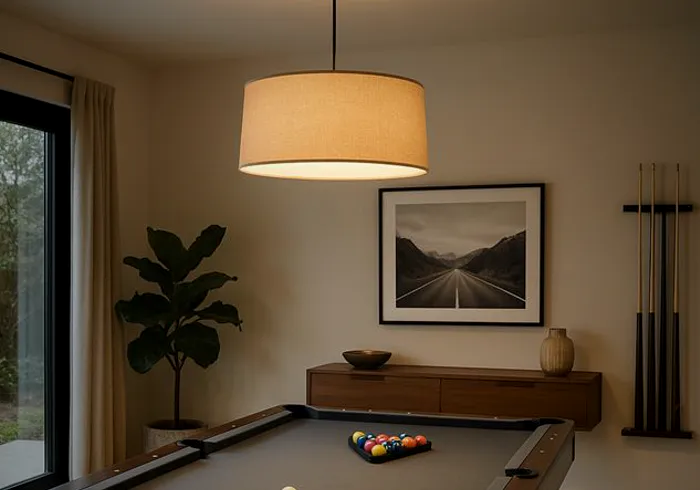
How to Level a Pool Table
If your cue ball drifts toward one rail on its own, or a slow roll curves like a banana, your table is not level. A pool table that is even slightly off turns every straight shot into a guessing game. The good news is that checking and correcting level is something a patient owner can often do at home with the right tools.
The tools you need
A regular hardware-store bubble level will get you close, but pool tables demand better. The playing surface must be flat to within a fraction of a millimeter across its whole length, which is finer than a short torpedo level can reliably show.
- A long carpenter level of at least 24 inches for spanning wide areas.
- A machinist level for final precision, sensitive enough to read a tiny tilt.
- Shims made of thin hardwood, plastic, or metal to slip under legs.
- A wrench if your table has threaded leg levelers.
Work on the bare slate if possible, or on the cloth if you cannot remove it, and take readings on a table that has settled in place for a day or two.
Shimming and adjusting
Set the level on the slate near the center, then move it around. Check lengthwise, crosswise, and diagonally, and record which direction drops. Most tables tilt because the floor is uneven or a leg has settled.
If your table has adjustable leg levelers, turn them to raise the low corner in small increments and re-check after each turn. If it has fixed legs, slide thin shims under the low foot instead, adding or removing layers until the bubble centers. Change one thing at a time, because raising one corner affects the readings everywhere else. This is slow, iterative work, so be patient and keep re-checking every spot after each adjustment.
The roll test
A level confirms the slate, but the real proof is how the ball behaves. Roll a ball slowly from one end to the other along several lines, then across the width, then diagonally. On a true table the ball tracks straight and dies without drifting. If it consistently curves the same way, that side is still high or low.
Roll gently, because a hard roll masks small tilts that a slow roll reveals. Repeat from different start points to rule out a bad spot in the cloth or a stray fleck of chalk. When slow rolls run true in every direction, the table is level.
Our picks
Links open the current selection and price on Amazon so you can compare real reviews before buying.
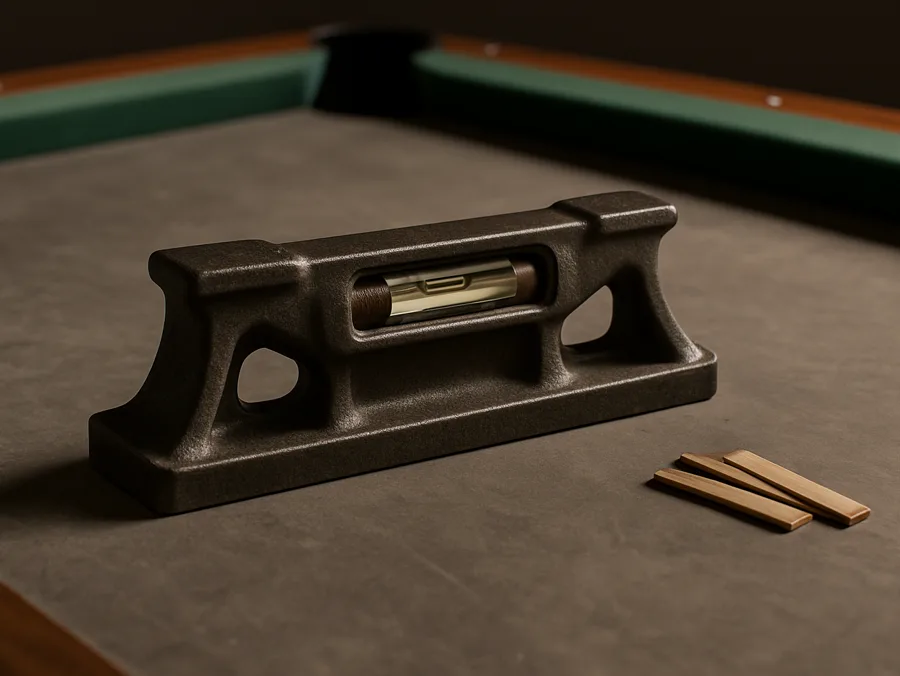
Machinist Precision Level
Final fine-tuningA sensitive vial reads tilts a carpenter level misses, making it the tool serious owners reach for on the last pass.
Check price on Amazon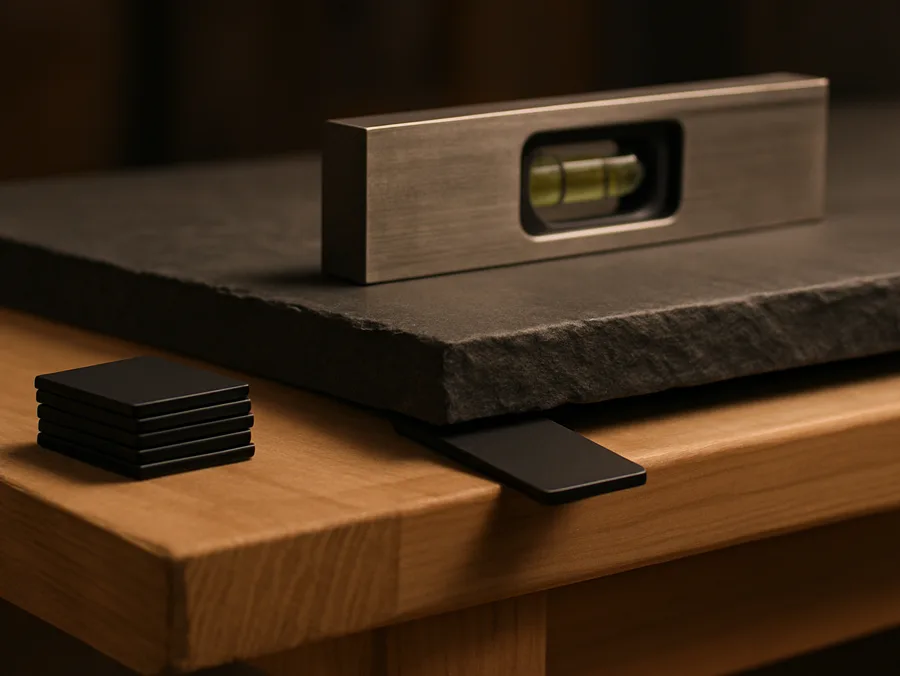
Assorted Shim Pack
Raising low legsA variety of thin composite and wood shims lets you dial in the exact height under each foot without guesswork.
Check price on Amazon24-Inch Box Beam Level
Spanning the slateA long straight level bridges wide sections of the bed so you catch dips a short level would step right over.
Check price on AmazonFrequently asked questions
How often should I level my pool table?
Check it once or twice a year, and any time you notice balls drifting. Tables on wood floors or in basements can shift with humidity and settling, so a periodic roll test is smart even if nothing seems wrong.
Can I level a pool table with a smartphone app?
An app is fine for a rough first pass, but phone sensors are not precise enough for a true playing surface. Use it to find the low side, then finish with a real machinist or carpenter level and a roll test.
Why does my ball still curve after leveling?
Either a leg has shifted since you checked, the cloth has a worn or dirty patch, or the slate seams are not flush. Re-check level in all directions, clean the cloth, and inspect the seams if the drift persists.
Related guides
LeaguePool is reader-supported. When you buy through links on this site we may earn an affiliate commission at no extra cost to you. As an Amazon Associate we earn from qualifying purchases.