Can You Put a Pool Table on Carpet?
Plenty of pool tables live on carpet, and most of them play just fine. The question is not whether you can do it, it is what the carpet does to the table over the first few months and what the table does to the carpet over the next few years. A thousand pounds of slate parked on soft fiber behaves differently than the same table on concrete, and if nobody tells you that up front, you find out the hard way when your lag shots start drifting left.
Why carpet pile matters more than the carpet itself
A slate table concentrates its weight on four or six small leg feet. On low-pile commercial-style carpet, those feet crush the fiber down to something close to solid within days, and after that the table sits almost as firmly as it would on hardwood. That is why bars and pool halls run carpet under tables without a second thought.
Plush residential carpet with a thick padded underlayment is another story. The foam pad keeps compressing unevenly for weeks, and it never fully stops flexing. Walk heavily past the table and the surface can shift a hair. If your room has deep soft carpet, the table will still function, but expect more frequent leveling and slightly less consistent roll than you would get on a firm floor. Some owners cut out carpet squares under each leg or set the legs on broad rigid pads to bypass the pad entirely.
The settling period and re-leveling
Here is the part most first-time owners miss. Your installer levels the table on day one, the carpet compresses over the following three to six weeks, and the table slowly goes out of level as each leg sinks a slightly different amount. This is normal and it happens on nearly every carpeted install.
Check the table with a machinist level after about a month, and again a couple of months later. Most tables have leg levelers you can adjust with a wrench, or you can shim under the feet with hardwood or plastic shims. Once the carpet finishes compressing, the table generally stays put, and you are back to annual touch-up leveling like anyone else.
Use a machinist level, not a carpenter level, for the check. The slope that ruins a slow roll is far smaller than a bubble vial can show, and a machinist level set on the slate in both directions finds it in seconds. Some installers will also come back once for a post-settling touch-up if you ask when booking, which is worth requesting on any carpeted install.
Protecting the carpet under the table
The table will leave permanent dents in carpet no matter what you do, so accept that the flooring under those legs is committed for the life of the install. What you can prevent is fiber damage and pad crush spreading beyond the footprint.
- Leg coasters or caster cups spread the point load over a wider circle and stop the feet from grinding into the fiber when the table gets bumped.
- Rigid pads such as thick HDPE furniture pads give the levelers a flat, stable base, which also makes leveling easier.
- Avoid sliding the table to reposition it. Dragging a slate table across carpet can tear fiber, stress the frame, and knock the slate seams out of alignment. Lift or use professional movers.
Laminate, LVP, and floating floors
These questions travel together, so here is the short version for hard floors. Laminate and luxury vinyl plank handle the weight fine in terms of crushing, but floating floors are designed to expand and contract as a single sheet, and pinning them down with a half-ton table can cause buckling at the seams during humidity swings. It usually works out, especially in climate-controlled rooms, but use wide load-spreading pads under the legs and leave it alone after that.
Glued or nailed hardwood is the easiest hard surface, though you should still pad the legs to prevent dents. Concrete, as in a basement, is the gold standard: no settling, no flex, minimal re-leveling.
The bottom line
Carpet is a perfectly acceptable home for a pool table. Low pile is nearly as good as a hard floor, plush carpet demands patience and a level, and either way you should budget one extra leveling session about a month after installation. Put something rigid under the feet, never drag the table, and the carpet question stops mattering the day the felt is stretched.
Our picks
Links open the current selection and price on Amazon so you can compare real reviews before buying.
Heavy Duty Furniture Coaster Cups
Spreading leg weight on carpetWide rigid cups sit under each leg to distribute the load, protect carpet fiber, and give the levelers a stable flat base.
Check price on Amazon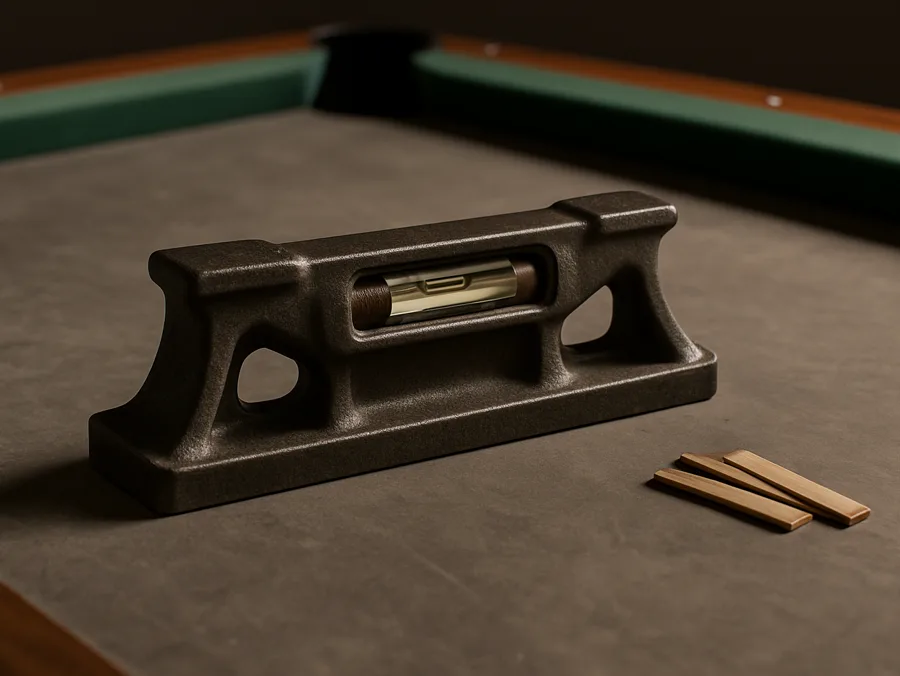
Machinist Level 12 Inch
Re-leveling after settlingA precision machinist level reads the tiny slope a carpet-settled table develops, far beyond what a carpenter level can see.
Check price on Amazon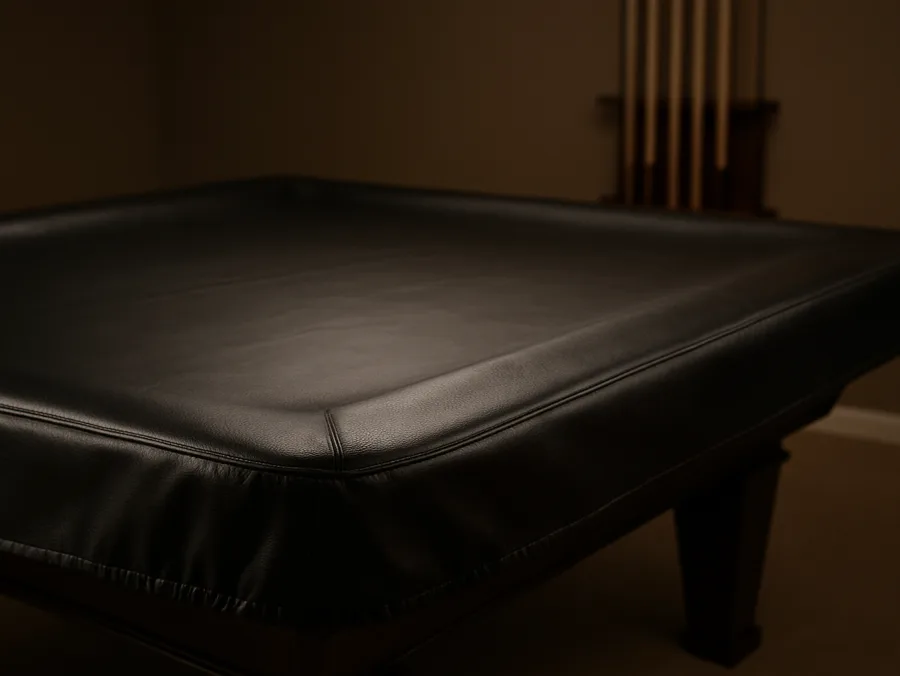
Fitted Pool Table Cover
Protecting the cloth between sessionsA fitted cover keeps dust, sunlight, and spills off the felt, which matters in living areas where the table shares space with daily life.
Check price on AmazonFrequently asked questions
Will a pool table ruin my carpet?
It will leave permanent leg dents in the pile and pad, which is unavoidable with that much weight. Rigid coasters under the legs limit the damage to small circles and prevent fiber tearing. Beyond the dents, carpet under a table generally survives fine.
How long does a pool table take to settle on carpet?
Most of the compression happens in the first three to six weeks. Check level at the one-month mark and adjust, then check again a couple of months later. After that the table usually holds its level like one on a hard floor.
Can I put plywood under a pool table on carpet?
You can, and on very plush carpet a sheet of three-quarter-inch plywood under the whole footprint creates a stable platform. Most installs do not need it. Broad rigid pads under each leg accomplish nearly the same thing with less visual bulk.
Related guides
LeaguePool is reader-supported. When you buy through links on this site we may earn an affiliate commission at no extra cost to you. As an Amazon Associate we earn from qualifying purchases.