
How Much Does a Pool Table Weigh?
Pool table weight is one of those numbers people only look up twice: right before buying a table and right before trying to move one. The range is enormous. A toy-grade table a couple of adults can carry weighs less than a couch, while a 9 foot tournament table weighs as much as a grand piano. Here are the real numbers and what they mean for your floor and your back.
Weight by Table Size
Here are typical ranges for common tables. Individual models vary with frame construction, but these hold up well in practice.
- MDF or particleboard bed (any size): 200 to 300 pounds
- 7 foot slate (bar box size): 600 to 800 pounds, with coin-op Valley tables near the top of that range
- 8 foot slate (standard home size): 850 to 1000 pounds
- 9 foot slate (tournament size): 1000 to 1300 pounds
Ornate furniture-style tables with massive hardwood frames and carved legs can run heavier still; some 8 foot models pass 1100 pounds. On the other end, one-piece slate tables like older coin-op bar boxes put all their weight in a single slab, which changes how they move but not what they weigh. If a listing does not state the weight, the bed material tells you which range you are in.
Why Slate Dominates the Number
The playing bed is the story. Quality tables use a bed of quarried slate, usually three pieces, each three quarters of an inch to an inch thick. A single piece of one-inch slate for an 8 foot table weighs around 170 pounds, so the bed alone contributes 450 to 600 pounds before you count the frame, rails, and legs.
That mass is not a bug, it is the point. The weight keeps the playing surface rigid and free of flex, and once leveled it stays leveled. It is also why a slate table plays consistently for decades while a light MDF table develops rolls within a few years.
Will Your Floor Handle It
Almost always yes. A 1000 pound table spread over a 4 by 8 foot footprint works out to about 30 pounds per square foot, and residential floors in the US are built to a 40 pounds per square foot live load. Concrete slabs, first floors, and most second floors are fine. For comparison, a waterbed or a loaded bookcase puts more weight per square foot on the floor than most pool tables do.
A few situations deserve a second look: old houses with undersized or notched joists, mobile homes, and rooms where the table legs would land parallel to and between joists. If your floor already bounces when someone walks across it, have someone qualified look before you order a 9 footer. Adding a leg under a questionable span costs far less than fixing a sag.
What the Weight Means for Moving
You do not slide a slate table to the other side of the room, and you absolutely do not move one to another house in one piece. A proper move means disassembly: rails and pockets off, cloth off, slate out piece by piece, frame broken down. Each slate piece takes two strong people, and at the destination the three pieces have to be re-leveled and the seams refilled.
Professional movers charge roughly $300 to $600 for a local move, more with stairs, and it is money well spent. Dragging an assembled table cracks slate seams, twists frames, and wrecks floors. Furniture sliders under the legs can work for shifting a table a few inches during carpet work, but that is their limit, and even then the table needs re-leveling afterward. Lifting one corner more than an inch or two while the slate is on the frame risks cracking a seam. Jack evenly or do not jack at all.
MDF Tables: Light for a Reason
An MDF table weighing 250 pounds sounds like a win until you see the tradeoff. The light bed flexes, reacts to humidity, and cannot be re-leveled with the precision of stone. Two people can move one, which really is convenient for a kids room or a rental, but the playing experience is a step down and the lifespan is shorter.
If you see a full-size table advertised at a weight under 400 pounds, that number is telling you the bed is not slate, whatever the listing says elsewhere. Shipping weight is the honest spec on any product page. It is worth scrolling to find before you believe the marketing copy above it.
Our picks
Links open the current selection and price on Amazon so you can compare real reviews before buying.
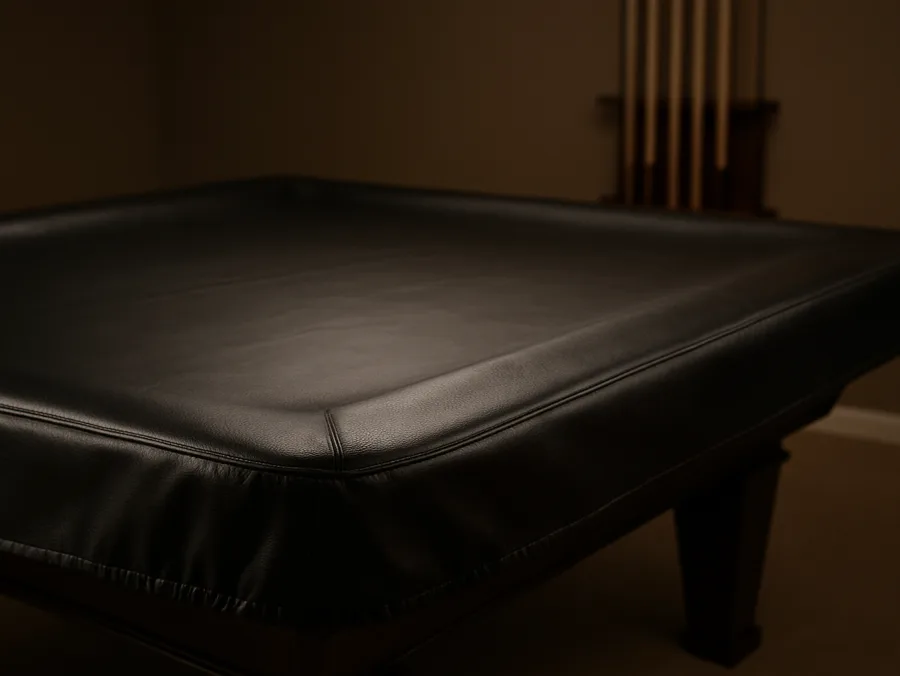
Leatherette Fitted Pool Table Cover
Protecting an installed tableOnce your table is placed and leveled, a fitted cover protects the cloth between sessions, so the table you paid movers to install stays in shape.
Check price on Amazon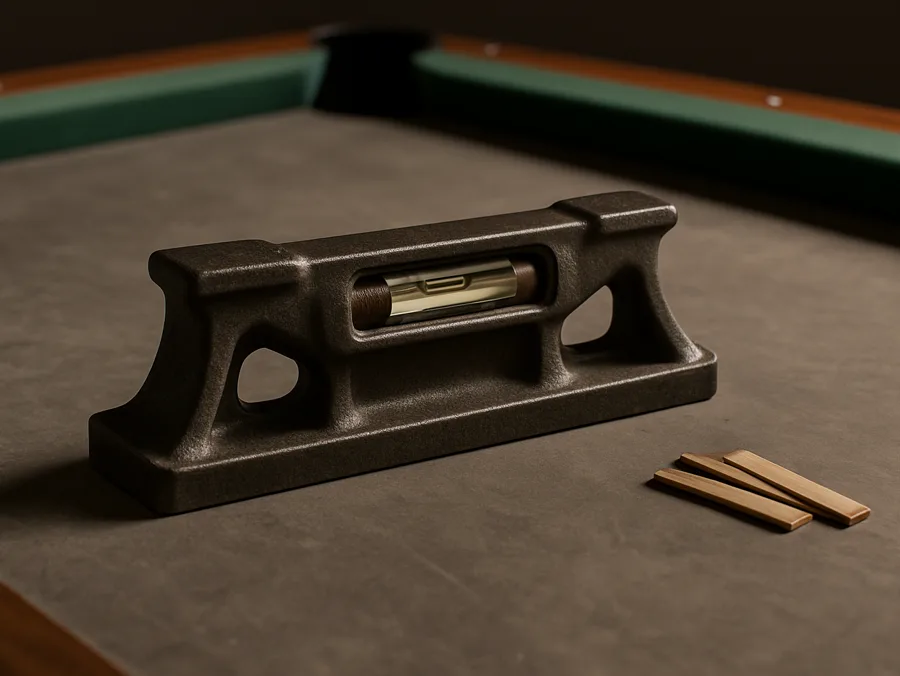
Machinist Bar Level
Checking slate level accuratelyA precision machinist level reads far finer than a carpenter level and shows whether your slate has shifted after settling or a move.
Check price on AmazonPool Table Brush and Cloth Care Kit
Routine cloth maintenanceA basic kit with a horsehair brush and rail brush keeps the cloth fast and clean, which is the maintenance you can actually do yourself.
Check price on AmazonFrequently asked questions
Can I move a slate pool table without taking it apart?
Only a few feet on flat ground with several people and great care, and even that risks the level and the seams. Any move through a doorway or to another building requires full disassembly, which is why most people hire a billiards mechanic.
How heavy is one piece of slate?
A typical piece from a three-piece 8 foot set weighs 150 to 200 pounds depending on thickness. That is a two-person lift with straps, and the awkward flat shape makes it harder than the number suggests. Slate also cracks if a corner takes the load, so it gets carried on edge, never flat.
Do I need to reinforce my floor for a pool table?
Usually not. Even a 1300 pound table loads the floor at less than typical residential design limits. Reinforcement only comes up with damaged or undersized joists, very old construction, or mobile homes.
Related guides
LeaguePool is reader-supported. When you buy through links on this site we may earn an affiliate commission at no extra cost to you. As an Amazon Associate we earn from qualifying purchases.