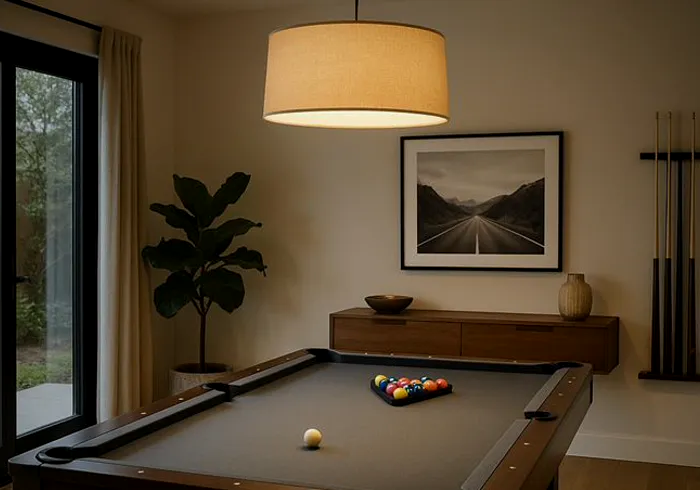
Slate vs MDF Pool Tables
The playing surface under the cloth is what separates a table you will love for decades from one you will regret within a year. That surface is either slate, a quarried stone, or MDF, an engineered wood board. The difference affects flatness, longevity, weight, and price in ways that shape every game you play. Here is a clear, honest comparison to help you decide.
Flatness and roll
Flatness is everything in a pool table, because any deviation makes balls curve and settle unpredictably. Slate is ground to a precisely level surface at the factory, and quality tables use thick slate that resists any flex. The result is a dead flat bed that gives a true roll on every shot. MDF is flat when new but is more susceptible to small imperfections and can develop subtle waves, so even a new MDF table rarely rolls as true as slate.
Longevity and humidity
This is where the gap is widest. Slate is stone, so it is unaffected by humidity and holds its shape essentially forever. A slate table can be recovered and releveled for generations. MDF is wood fiber and glue, which absorbs moisture. In a humid room or basement, MDF can swell, warp, and sag over a few years, permanently ruining the playing surface. Once MDF warps there is no fixing it, whereas slate can be releveled.
| Trait | Slate | MDF |
|---|---|---|
| Flatness | Excellent, factory ground | Good when new |
| Longevity | Decades, relevelable | A few years, can warp |
| Humidity resistance | Unaffected | Absorbs moisture, warps |
| Weight | Very heavy | Light |
| Cost | Higher | Lower |
Weight and installation
Slate is heavy. A full size slate table can weigh several hundred pounds, with the slate bed alone often 400 to 800 pounds depending on size and thickness. That weight is why slate tables need professional installation and leveling, and why they cannot be moved casually. MDF tables are light enough to assemble and move yourself, which is their main practical advantage. If you need a table you can relocate often, that portability is a genuine consideration.
Cost and who should buy which
MDF tables cost less up front, which is their appeal. But a slate table lasts decades and holds resale value, while an MDF table often needs replacing in a few years and has little resale worth, so slate is usually the better long term value. Buy slate if the table is a serious, lasting purchase for regular play. Consider MDF only for occasional casual use, a temporary setup, or a strict budget where portability matters more than roll quality.
Our picks
Links open the current selection and price on Amazon so you can compare real reviews before buying.
Slate Pool Table
Serious, lasting home playA quarried slate bed gives the true, consistent roll and decades of durability that define a real pool table. The right choice for anyone who plays regularly.
Check price on AmazonMDF Pool Table
Budget and portable setupsLighter and cheaper, easy to assemble and move, suited to occasional casual play. Keep it out of humid rooms to avoid warping.
Check price on AmazonFrequently asked questions
Is a slate pool table really worth the extra cost?
For regular play, yes. Slate stays flat for decades, gives a true roll, can be releveled, and holds resale value. MDF is cheaper but can warp within a few years and has little resale worth.
Will an MDF table warp in a basement?
It can. MDF absorbs moisture, so a humid basement can cause it to swell, warp, and sag over time. Slate is stone and is unaffected by humidity, making it the safer choice for basements.
How heavy is a slate pool table?
Very heavy. The slate bed alone can run from about 400 to 800 pounds depending on size and thickness, which is why slate tables require professional installation and leveling.
Related guides
LeaguePool is reader-supported. When you buy through links on this site we may earn an affiliate commission at no extra cost to you. As an Amazon Associate we earn from qualifying purchases.