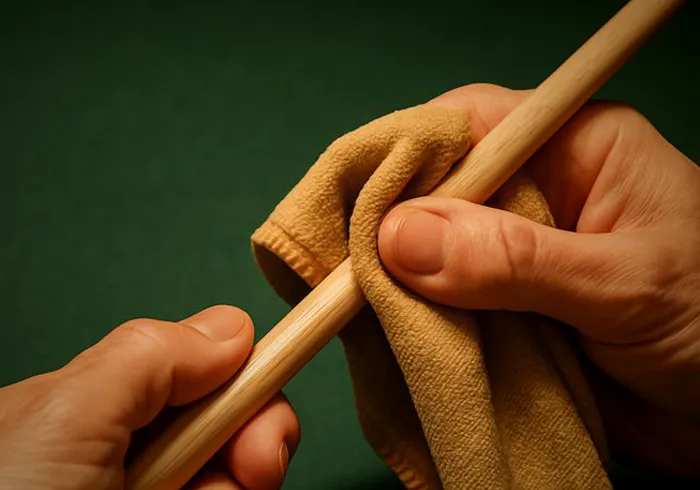
How to Tell If a Pool Cue Is Warped (and What to Do)
A warped shaft is every pool player's worry, and a slightly bent cue can quietly sabotage your game by sending the cue ball off line. The good news is that checking for warp takes about a minute, and a tiny bit of bend is normal and harmless. Here is how to test a cue honestly and what to do if it really is bent.
The roll test, done correctly
Find a surface you know is flat and level, ideally the bed of a slate pool table with the cloth on it, or a machined countertop. Assemble the cue, lay it down, and give it a gentle roll. Watch the shaft, not the butt, and look for the tip and the gap between the wood and the surface. A straight cue rolls smoothly with the tip tracing a steady arc. A warped cue makes the tip hop or shows a gap that opens and closes as it rolls.
Roll it several times and try it in pieces too. Roll the shaft alone and the butt alone, because a wobble in the assembled cue often comes from just one section or from a joint that is not seated tightly.
The sighting test
The roll test can exaggerate a harmless bend, so back it up by sighting. Hold the cue up to your eye with the tip pointing away, as if aiming a rifle, and look down its length. Slowly rotate the cue and watch the line of the shaft against the background. A straight cue stays arrow-straight through the full rotation. A warped one shows a visible curve or a kink, usually most obvious near the joint or the middle of the shaft.
Sighting tells you how much the eye can actually see, which matters more than a dramatic roll, because your stroke is guided by what looks straight.
How much warp actually matters
Wood moves with humidity, and almost every wooden cue has some minute deflection. A barely perceptible wobble on the roll test that you cannot see when sighting will not affect your shots. What matters is severity and location.
| Minor even wobble | Normal, playable, no action needed |
| Visible curve when sighting | Will affect aim, worth addressing |
| Bend or hop near the joint | Most disruptive, hardest to live with |
Remember the cue ball does not know your shaft is bent; only your aim does. If it looks straight when you sight it and rolls reasonably, play with confidence.
What to do about a warped cue
First rule out a loose joint or dirty pin, since a poorly seated joint mimics warp. Clean the pin and threads and reassemble firmly, then re-test. If a wood shaft has a mild warp, storing it hanging vertically or laid flat in a supportive case, away from heat and humidity swings, sometimes lets it relax back over weeks. Never try to force-bend a shaft or apply heat yourself, as you will likely make it worse or crack it.
A badly warped shaft is usually best replaced rather than repaired. If you play often, a low-deflection or carbon-fiber shaft resists warping almost entirely and is a common upgrade for players tired of chasing wood movement.
Our picks
Links open the current selection and price on Amazon so you can compare real reviews before buying.
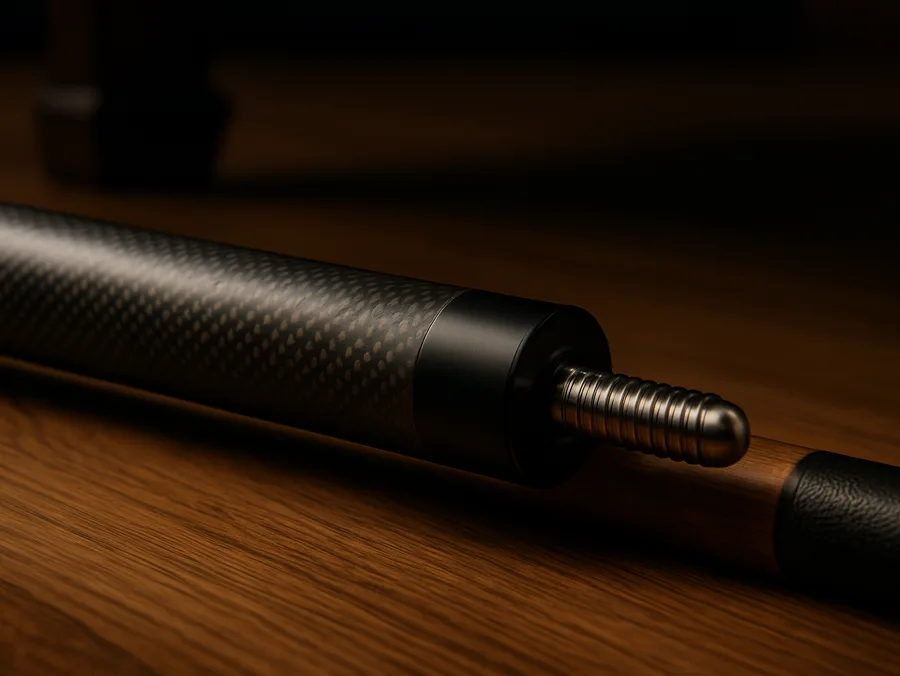
Carbon Fiber Replacement Shaft
Ending warp worries for goodA carbon-fiber shaft that resists the humidity movement that warps wood, offering a consistently straight, low-deflection hit season after season.
Check price on AmazonHard Cue Case (vertical storage)
Protecting a straight cue from warpingA rigid case that supports the cue evenly and shields it from heat and humidity, the storage conditions that keep a shaft from bending in the first place.
Check price on AmazonJoint Pin Cleaner and Cue Care Set
Ruling out a loose joint mistaken for warpCleans the joint pin and threads so the cue seats tightly, since a dirty or loose joint often mimics the wobble people blame on warp.
Check price on AmazonFrequently asked questions
Is a small amount of warp normal?
Yes. Wood reacts to humidity, so nearly every wooden cue has a tiny amount of deflection. If you cannot see a curve when you sight down the cue and it rolls without a noticeable hop, it is perfectly playable.
Can a warped cue be straightened?
Mild warp in a wood shaft sometimes relaxes over weeks with proper flat or vertical storage away from heat and humidity. Do not apply heat or force the shaft yourself, since that usually causes cracks or a worse bend. A badly warped shaft is normally replaced.
Does a warped cue actually change where the ball goes?
Only through your aim. The tip still strikes the cue ball at one point, but if the shaft looks bent it is hard to sight and stroke straight. A warp you can clearly see when sighting will hurt your consistency; one you cannot see will not.
Related guides
LeaguePool is reader-supported. When you buy through links on this site we may earn an affiliate commission at no extra cost to you. As an Amazon Associate we earn from qualifying purchases.