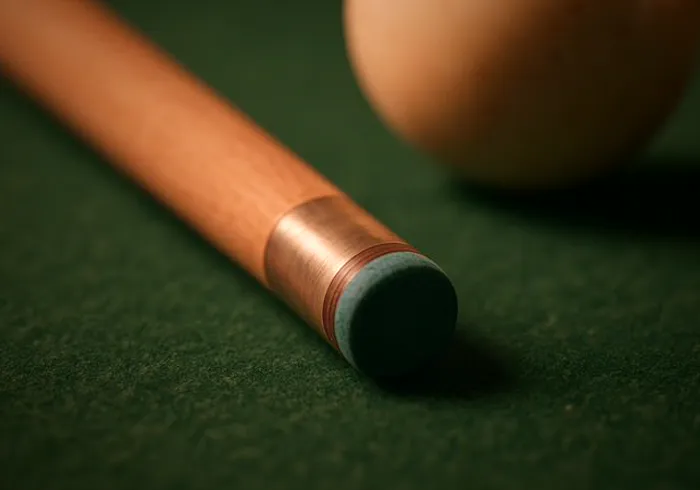
Are Carbon Fiber Cue Shafts Worth It?
Carbon fiber shafts went from novelty to default in about a decade. Walk into any serious pool room and you will see them on half the tables. That kind of adoption usually means something real is happening, but it also means a lot of people bought one because everyone else did.
So here is the useful question, asked properly: for your game, at your level, with your budget, does a carbon shaft return more than the same money spent elsewhere? The answer is genuinely yes for some players and genuinely no for others, and the deciding factors are not complicated.
The three real benefits
1. Low deflection. When you hit the cue ball off center, it squirts away from your aim line. The amount depends mostly on how much mass sits at the front of the shaft. Carbon shafts are engineered to be light up front, so the squirt is smaller. Smaller error, easier to learn, more repeatable across different spin amounts. This matters in direct proportion to how much english you use.
2. Dimensional stability. Carbon does not absorb moisture. It does not warp in a damp basement, does not swell in a humid summer, and does not shrink when the heating comes on. If you have ever had a wood shaft go from perfect to sticky over a season, you know what this is worth.
3. No maintenance. No burnishing, no sealing, no shaft cleaner, no anxiety about sandpaper. Wipe it down and play. Wood shafts lose diameter over years of cleaning; carbon does not.
Notice that only the first is about performance. The other two are about ownership. For a lot of buyers, those two are actually the stronger argument.
What it will not fix
Deflection is one error source. Here are the others, roughly in order of how much they cost the average amateur:
- Stroke consistency - whether the cue goes where you aimed it, repeatedly.
- Contact point accuracy - whether you hit the cue ball where you intended.
- Speed control - whether the cue ball ends up where you planned.
- Pattern selection - whether the shot you chose was the right one.
- Deflection compensation - the thing a carbon shaft helps with.
For a player who misses because of the first two, a carbon shaft changes almost nothing. It will reduce one small error while the large ones continue. That is not an argument against carbon, it is an argument for honest self-assessment about where your misses come from.
The test is simple: if you miss most on straightforward shots without spin, equipment is not your issue. If you miss specifically on shots where you applied english and the cue ball went somewhere unexpected, deflection is part of your problem and a low-deflection shaft is a legitimate answer.
The money question
Compare the alternatives at the same price honestly.
$400 on a carbon shaft: reduces deflection, eliminates maintenance, lasts indefinitely.
$400 on lessons: ten to fifteen hours with a good instructor, which for most amateurs produces a much larger and more permanent improvement.
$400 on table time: dozens of hours of structured practice.
$400 on a low-deflection maple shaft: most of the deflection benefit, none of the stability benefit, at a similar or lower price.
If you have never had a lesson and you are considering a carbon shaft, the lesson is the better buy and it is not close. If you have already put in the work and your equipment is the remaining variable, the shaft makes sense.
Also note the market has changed. When carbon shafts cost $500 and had no competition, the decision was harder. Now that competent carbon shafts exist at half that, the cost of entry is much lower and the calculation shifts accordingly.
The feel objection
The most common reason people sell a carbon shaft is not performance. It is that they do not like how it feels.
Carbon sounds brighter and higher-pitched at contact. Feedback is firmer and more immediate. Some players describe it as sterile or clinical compared with the warmer response of maple. That is a legitimate preference, not nostalgia, and it does not correlate with skill level. Very strong players sit on both sides of it.
If you can, hit with one before buying. A pool room where someone will let you take a few shots, or a dealer with a demo cue, is worth the trip. If you cannot, know that the used market for carbon shafts is active, so a shaft you dislike is resellable at a real fraction of what you paid.
Give it more than one session either way. Everything feels wrong at first with new equipment, and that initial reaction is not a reliable verdict.
The verdict, by player
Worth it: league and tournament players who use english constantly, players who travel with a cue, anyone in a humid climate who has fought a wood shaft for years, and players who simply do not want to maintain equipment.
Borderline: intermediate players with reasonably consistent strokes who play a few times a month. A cheaper carbon shaft or a low-deflection maple shaft probably makes more sense than the flagship option.
Not worth it: beginners, casual players, center-ball players, and anyone who has never had a lesson. Spend the money on instruction and table time, and revisit the equipment question in a year when you know exactly what you want from it.
One final point that gets lost. Whatever you decide, the tip on the shaft matters more day to day than the shaft material does. A great shaft with a glazed, badly shaped tip plays worse than a maple shaft with a fresh, well-shaped one. Get that right before spending hundreds on carbon.
Our picks
Links open the current selection and price on Amazon so you can compare real reviews before buying.
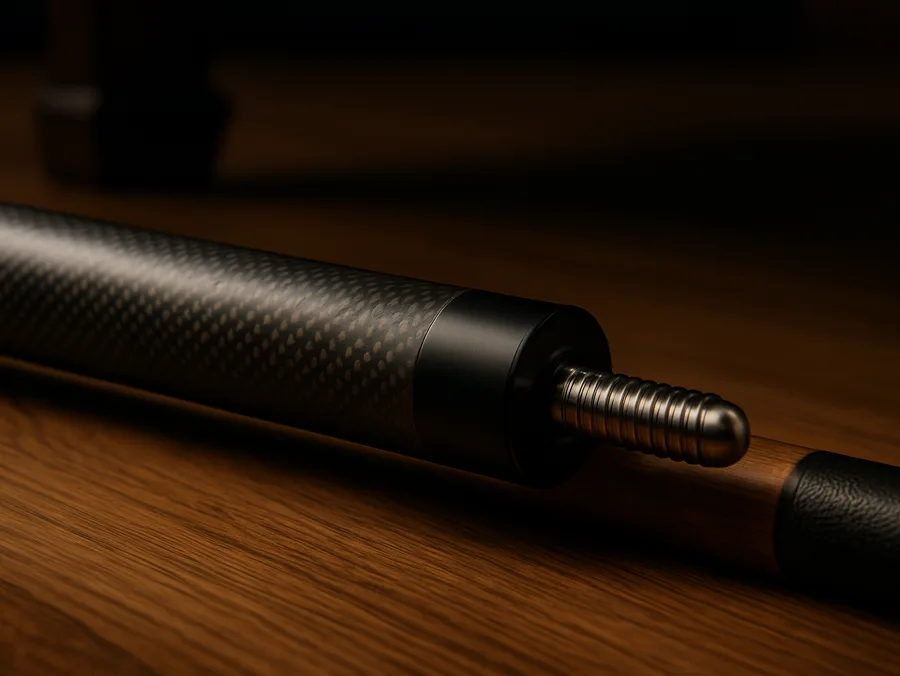
Mid-priced carbon fiber shaft
Carbon without flagship pricingThe category matured and prices fell. A competent carbon shaft delivers the same core benefits for considerably less than the flagship options.
Check price on Amazon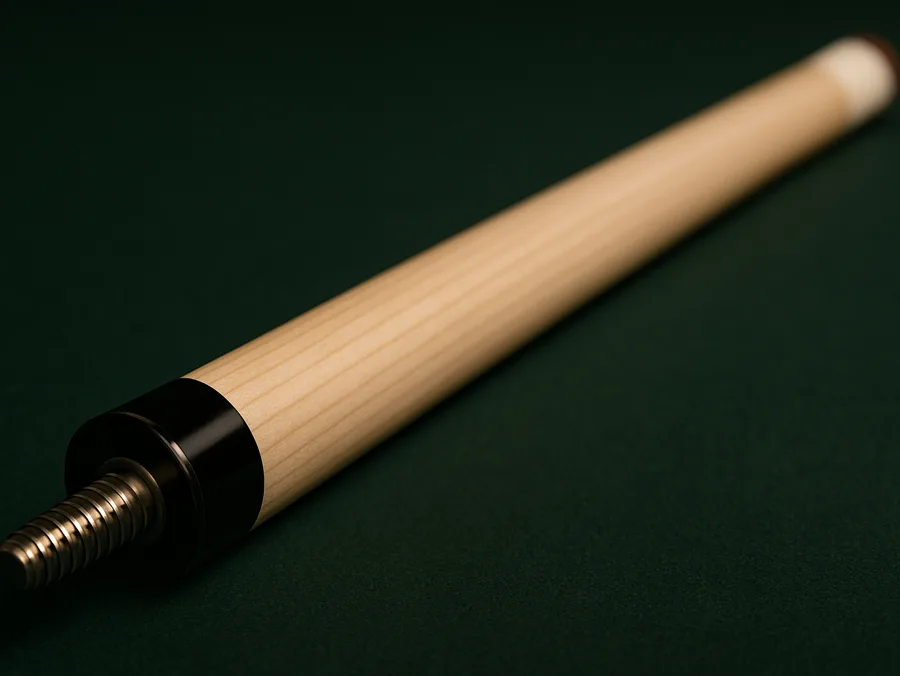
Low-deflection maple shaft
The deflection benefit, cheaperIf low deflection is what you actually want and you like wood feel, a low-deflection maple shaft delivers most of the benefit for less money.
Check price on Amazon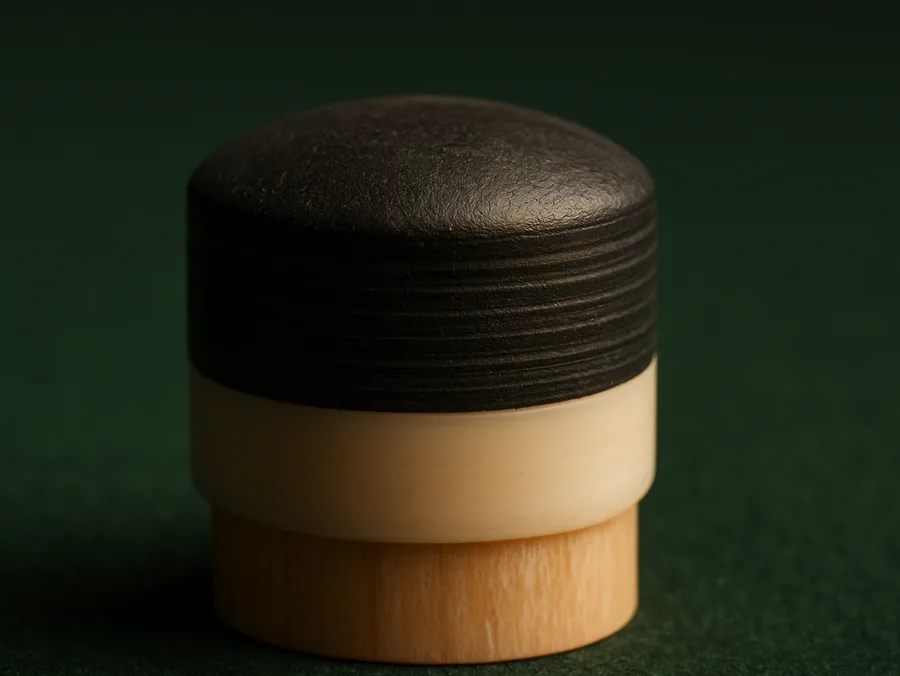
Layered leather tip
The upgrade to do firstA fresh, well-shaped quality tip changes daily play more than shaft material does. Do this before spending hundreds on carbon.
Check price on Amazon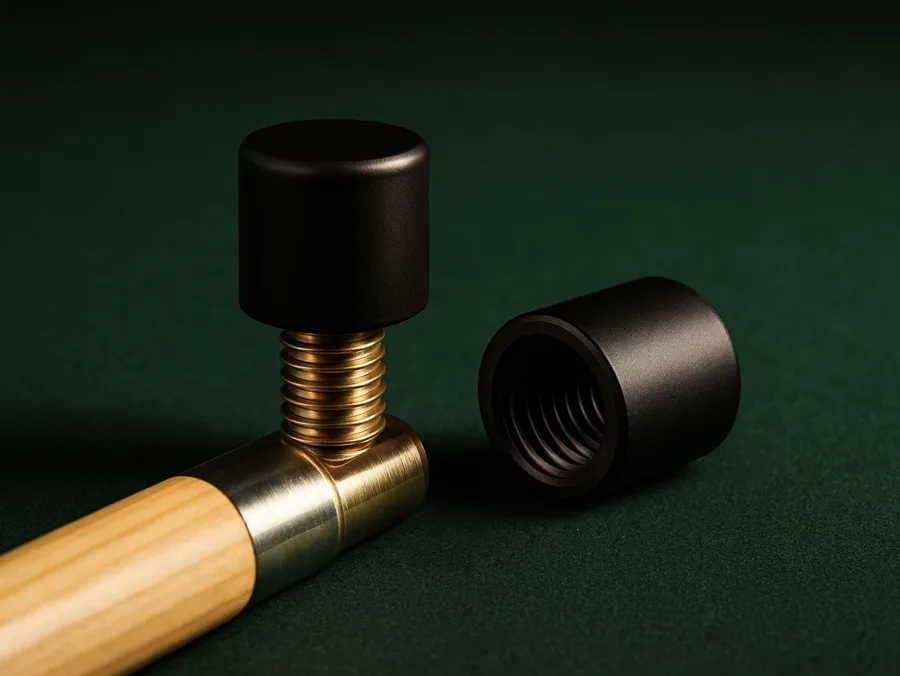
Joint protectors
Protecting an expensive shaftCarbon shafts are tough but their threads are not. Protectors matched to your pin type are cheap insurance in a case.
Check price on AmazonFrequently asked questions
Do carbon fiber shafts really improve your game?
They reduce deflection, which reduces one error source on shots with side spin. If that is where your misses come from, the improvement is real. If you miss on straightforward shots without spin, the problem is stroke consistency and no shaft will fix it.
How much do carbon fiber shafts cost?
Roughly $300 to $600 for established brands, with the flagship options at the top of that range. Competent shafts now exist below $300, which has made the category much easier to justify than it was a few years ago.
Do carbon shafts break or wear out?
They are far more durable than wood in normal use and will not warp, swell or need refinishing. Structural damage is generally not repairable the way a wood shaft is, but it is also much harder to cause.
Should a beginner buy a carbon shaft?
No. A beginner's results are governed by stroke consistency and contact point accuracy, neither of which equipment addresses. Lessons and table time return far more at that stage, and preferences about diameter and feel only become clear with experience.
Related guides
LeaguePool is reader-supported. When you buy through links on this site we may earn an affiliate commission at no extra cost to you. As an Amazon Associate we earn from qualifying purchases.