Speed Control: The Skill That Separates Players
Ask a room full of players what they practice and they will say aim. Watch what actually costs them games and it is almost never a missed ball; it is the cue ball sailing three feet past position, or dying on a rail, until a runnable rack turns into a grind. Speed control is the least glamorous skill in pool and the most valuable one. Direction gets the ball in the pocket, but speed decides whether you ever get an easy shot again.
Why Speed Beats Aim for Position
Aiming errors and speed errors are not symmetrical. Miss your aim line by a degree on a normal shot and the ball usually still drops, because pockets forgive small angular errors. Miss your speed by twenty percent and the cue ball stops a foot and a half from where you planned, which on a tight pattern is the difference between a hanger and a hook. Position zones are long and thin: you usually have generous margin across the line of travel and almost none along it. That geometry means the practical unit of position play is distance, and distance is pure speed. Strong players choose routes where the zone lies along the cue ball path, then rely on trained speed to land in it.
The Lag: Your Speed Thermometer
The lag, rolling the cue ball down the table off the far rail and back toward the head rail, is the simplest speed drill and the best. Shoot ten lags trying to leave the ball within a chalk cube of the head rail without touching it. Score yourself. This one exercise measures your stroke repeatability and calibrates you to that day's cloth in about three minutes, which is why smart players lag repeatedly during warm-up on unfamiliar equipment. When your lag groups within a hand span, your position play inherits that precision. When your lags scatter by two feet, no aiming system on earth will save your patterns.
Rail Speed Ladders
Give your speeds names by drilling them separately. From the head string, shoot the cue ball down the table and define one-rail speed as reaching the far cushion and rebounding about a diamond, two-rail speed as crossing back up the table off two cushions, and three-rail speed as touching a third. Cycle through the ladder, calling each speed before you shoot: one, three, two, one. The goal is a distinct physical feel for each rung, so that in a game you can think in table lengths instead of vague soft or hard. Most position errors shrink immediately once a player has even three named, repeatable speeds instead of one all-purpose hit.
Backswing Length Is the Throttle
The repeatable way to change speed is to change stroke length, not effort. Keep grip pressure, tempo, and acceleration the same on every shot, and let a short backswing produce a soft hit, a medium backswing a medium hit, and a long backswing a firm one. Muscling the ball with a fast jerky arm ruins both speed and accuracy, because tension changes your timing shot to shot. A good mental model is a pendulum whose arc you shorten or lengthen while its rhythm stays constant. Practice one straight shot at five different backswing lengths and watch the cue ball travel five distinct, repeatable distances almost by itself.
Reading Cloth and Conditions
Speed does not transfer between tables. New worsted cloth can play two feet longer on the same stroke than fuzzy worn felt, humid rooms slow everything down, and freshly cleaned balls slide farther before rolling. Rails age too: lively cushions return the ball with pace while dead ones absorb it. None of this is an excuse, it is information you gather in the first ten minutes. Lag twice, roll a soft shot down a rail, hit one two-rail position shot, and adjust your ladder accordingly. The player who recalibrates in warm-up is playing that table; everyone else is playing the one back home.
Keep recalibrating during the match, too. Cloth speeds up as chalk dust burns off and slows down as humidity climbs through the night, and every safety or lag your opponent shoots is free data. Watch how their balls die on the rails and quietly update your ladder while you sit. By the deciding game you should know the table better than you did in the first rack.
Our picks
Links open the current selection and price on Amazon so you can compare real reviews before buying.
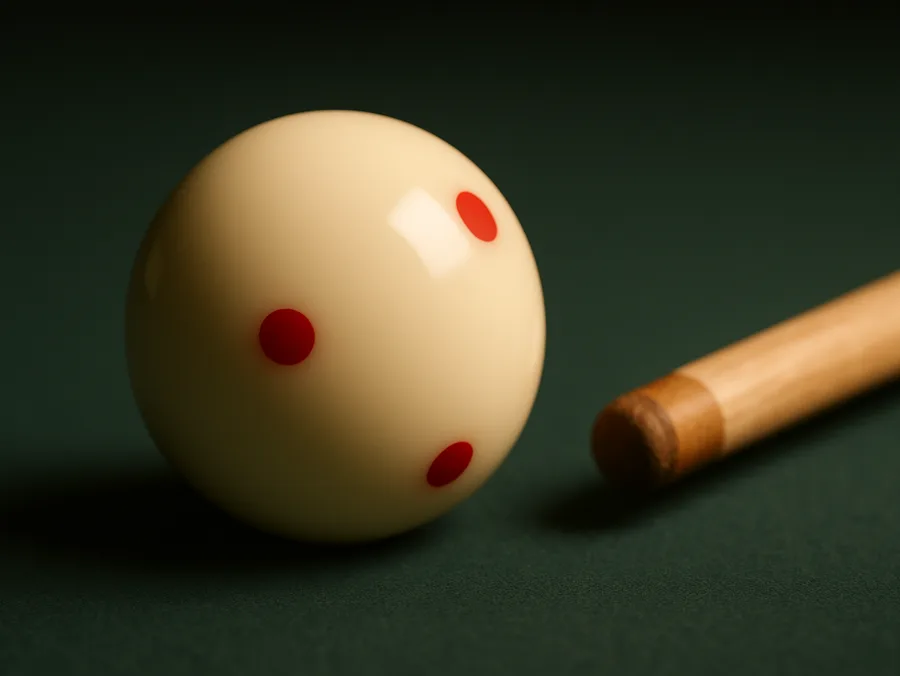
Marked Training Cue Ball
Consistent stroke feedbackA marked training ball shows whether unwanted spin is leaking into your speed drills, since sidespin off rails quietly changes how far the ball travels.
Check price on AmazonPool Drills Workbook
Progressive speed exercisesA structured drill book gives lag variations, target-zone shots, and speed ladders with scoring, turning speed practice into something you can measure week over week.
Check price on AmazonPerformance Cue Chalk
Reliable soft-shot contactSoft speeds demand clean contact because a miscue at low pace ruins the shot entirely, and quality chalk keeps the tip gripping on delicate below-center hits.
Check price on AmazonFrequently asked questions
How often should I practice speed control?
A little every session beats a lot occasionally. Five minutes of lags and one ladder cycle at the start of practice keeps your speeds calibrated, and doing it first sets up everything else you drill that day.
Why is my speed fine at home but terrible on bar tables?
Different cloth, smaller table, often a heavier or dirtier cue ball. Your stroke is fine; your calibration is stale. Spend your warm-up lagging and hitting rail shots on the actual table instead of practicing pocketing.
Should soft shots use a shorter bridge too?
Many players shorten both bridge and backswing on delicate shots, and it helps. A shorter lever is easier to move slowly with control, while keeping your normal tempo and smooth acceleration through the ball.
Related guides
LeaguePool is reader-supported. When you buy through links on this site we may earn an affiliate commission at no extra cost to you. As an Amazon Associate we earn from qualifying purchases.