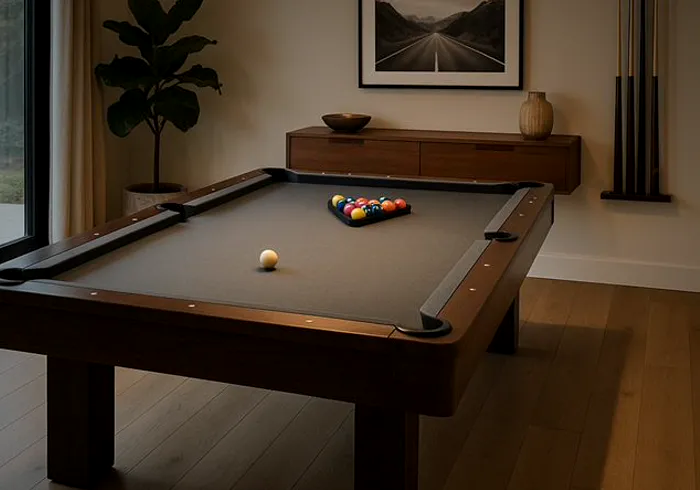
Dead Rails? Pool Table Cushion Replacement Guide
Every old pool table eventually gets the same complaint: the rails are dead. Balls thud into the cushion and stop short, banks come up a diamond shy, and the table plays smaller than it should. The rubber is the culprit, and unlike cloth, it fails slowly enough that owners get used to it. Here is how to confirm your cushions are actually dead, what replacing them involves, and whether it is a job you should take on yourself.
How to Test for Dead Rails
The standard check is the rebound count. Shoot a ball with firm, consistent speed from one side rail straight across into the opposite rail and count the table-width crossings before it stops. Healthy cushions give you roughly 3 to 4 full crossings; tired rubber gives 2, and truly dead rails barely return the ball at all. Test several spots on every rail, because rubber often dies unevenly, especially near pockets and on rails that faced a sunny window.
Sound confirms it. A ball hitting live rubber makes a clean, snappy note; dead rubber answers with a dull thud, like knocking on a sandbag. Pressing a fingernail into the cushion face through the cloth tells you too: live rubber springs back instantly, hardened rubber feels like wood.
Why Cushion Rubber Dies
Cushion rubber is a natural gum blend, and it hardens through slow oxidation. Age alone gets every table eventually; 20 to 30 years is a typical lifespan, less in hostile conditions. Dry climates pull the volatiles out faster, which is why tables in Arizona and Colorado die young, and direct sunlight or a nearby heat vent accelerates the same chemistry. Unheated storage with big temperature swings is another common killer, which is one more reason garage tables need climate attention.
Nothing revives hardened rubber. Products that claim to restore cushions soften the surface briefly at best. Once the rebound is gone, replacement is the only fix.
K-66 vs K-55 and Getting the Right Profile
Cushion rubber comes in standardized profiles, and matching the original matters because the rail bevel and cloth geometry are built around it. K-66 is the common profile on American home and commercial pool tables, including Valley bar boxes. K-55 is the profile used on many commercial tables and most carom tables, with a slightly different face angle and body. Snooker tables use their own L-shaped profiles entirely.
Pull a rail and look at the old rubber cross-section, or measure the base and face height, before ordering. Installing the wrong profile changes the nose height where the ball contacts the cushion, and the table will bank strangely forever after. When in doubt, K-66 is the likely answer for a US home table, but verify.
DIY or Hire a Mechanic
The job itself: remove the rails, strip the old cloth and rubber, scrape the rail liner clean, glue new rubber on straight with contact adhesive, trim the ends and glue the facings, then recover the rails with new cloth and reassemble. None of those steps is exotic, but the gluing has to be dead straight, the nose height has to be consistent, and rail cloth work is the fussiest part of any refelt.
A capable DIYer with patience can do it over a weekend, and the rubber itself costs $60 to $120 a set. Be honest about the stakes, though: a wavy glue line or inconsistent nose height means every bank on that rail is wrong, and you will not fix it without doing the job again. A billiards mechanic typically charges $300 to $500 for cushion replacement including labor, more with premium cloth, and does it in a day.
Plan on New Cloth at the Same Time
Cushion replacement and refelting are a package deal, because the rail cloth cannot come off intact and the bed cloth on a rubber-dead table is usually just as old. Order cushions and cloth together and the table comes back to life in one shot. If the table is 25 plus years old, check the pocket facings and irons while everything is apart; facings cost a few dollars and this is the cheapest moment you will ever have to replace them.
The payoff is real. Fresh rubber and new worsted cloth make a tired table play close to new, and the whole refresh usually lands under $700 even hiring it out, which is a fraction of the price of a comparable new slate table.
Our picks
Links open the current selection and price on Amazon so you can compare real reviews before buying.
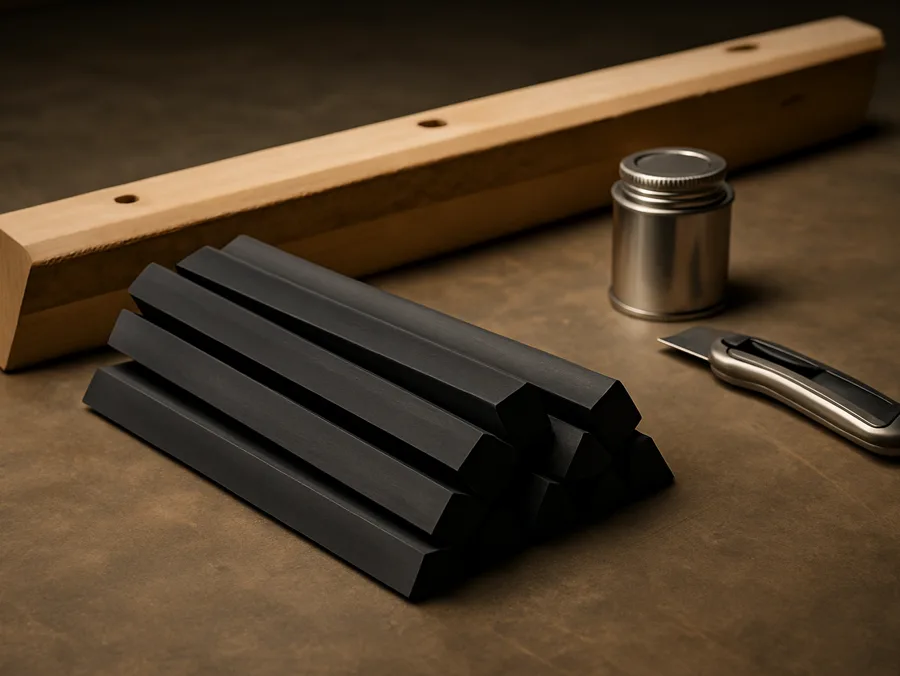
K-66 Cushion Rubber Set
Standard US table replacementA full set of K-66 profile rubber covers all six rails of a 7 to 9 foot table. Verify your profile against the old rubber before ordering.
Check price on AmazonDAP Weldwood Contact Cement
Bonding rubber to railsThe standard contact adhesive for cushion work: coat both surfaces, let them tack, and get the placement right the first time, because contact cement does not allow repositioning.
Check price on AmazonChampionship Saturn II Billiard Cloth
Recovering during the same jobSince re-cushioning means recovering the rails anyway, a fresh cloth kit with rail strips finishes the job. Saturn II is a solid mid-price teflon-treated cloth for home tables.
Check price on AmazonFrequently asked questions
How do I know if my pool table cushions are dead?
Roll a ball firmly into a rail and count the crossings: healthy rubber returns it across the table 3 to 4 times, dead rubber 2 or fewer with a dull thud instead of a crisp bounce. Test every rail in several spots, since rubber dies unevenly.
How much does pool table cushion replacement cost?
Rubber sets run about $60 to $120, and professional installation with new cloth typically lands between $300 and $500 total, more with premium worsted cloth. DIY saves the labor but risks the accuracy of every bank shot if the glue lines wander.
Can dead pool table cushions be restored without replacement?
No. Hardening happens through the full body of the rubber as it oxidizes, and sprays or conditioners only touch the surface briefly. Replacement is the only fix that brings the rebound back.
Related guides
LeaguePool is reader-supported. When you buy through links on this site we may earn an affiliate commission at no extra cost to you. As an Amazon Associate we earn from qualifying purchases.