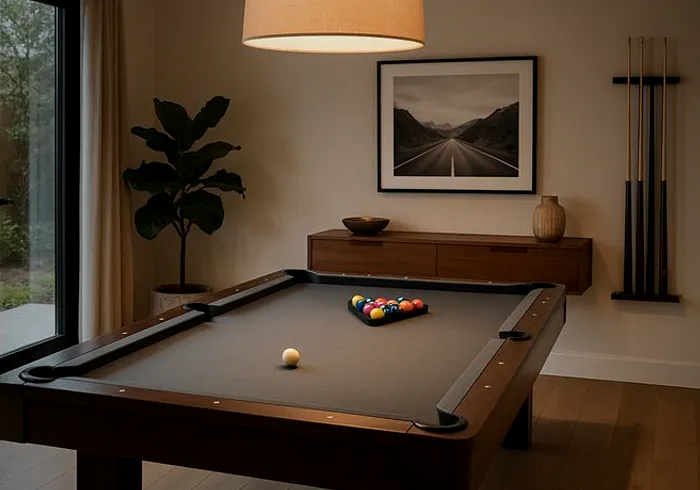
How Much Does It Cost to Refelt a Pool Table?
Sooner or later every pool table needs new cloth. Maybe the felt is worn shiny down the break line, maybe a corner got snagged during a move, or maybe you just bought a used table and the surface looks like it survived a bar fight. Whatever brought you here, the question is the same: what is this going to cost?
The honest answer is that refelting is mostly a labor job with a materials decision attached. The cloth itself might run $100 to $300, but the skill of stretching it drum-tight and re-covering the rails without wrinkles is what you are really paying for.
What a professional refelt costs by table size
Most billiard mechanics price refelting by table size, since a bigger slate means more cloth and more stretching work. Rough national ranges look like this:
- 7-foot table: $280 to $450 with standard cloth included.
- 8-foot table: $320 to $500, the most common home job.
- 9-foot table: $380 to $600, sometimes more in big metro areas.
Those figures usually cover removing the rails, stripping the old cloth, covering the bed and all six rails, and reassembling the table. If the mechanic also needs to re-level the slate or re-wax the seams, expect an extra $50 to $100. Travel fees apply in rural areas, and some shops charge slightly more for tables with hard-to-remove staple jobs from a previous owner.
Cloth choice drives the price
The quoted price almost always includes a basic woolen cloth, the fuzzy nap material you see on most home tables. Upgrading is where the bill grows. A worsted cloth like Simonis 860 or Championship Simonis-style tour cloth plays faster, wears longer, and shows less pilling, but it adds roughly $100 to $200 over standard cloth on most jobs.
Is the upgrade worth it? If you play regularly, yes. Worsted cloth keeps its speed for years, while cheap woolen cloth can slow down and fuzz up within a year of heavy play. If the table is mostly furniture that sees a game a month, standard cloth is a perfectly sensible place to save money. A middle path is a quality teflon-treated woolen cloth like Championship Saturn II, which resists spills and costs less than true worsted.
The rails matter more than people think
A refelt is not just the flat bed. All six rails get stripped and re-covered too, and rail work is the fussiest part of the job because the cloth has to wrap the cushion nose smoothly with no wrinkles at the pockets. Rail covering is included in most full refelt quotes, but confirm it, because a bed-only price can look deceptively cheap.
This is also the moment to inspect the cushions themselves. If the rubber has gone hard or dead, replacing cushions during a refelt adds $200 to $350 but saves you paying a second service call later. A mechanic can tell you in thirty seconds whether the rubber is still lively by bouncing a ball off each rail.
The DIY option and its real risks
Cloth for a do-it-yourself job costs $100 to $300 depending on grade, and kits with staples or adhesive add another $20 or so. The savings are real, but so is the risk. Stretching cloth evenly takes strength, patience, and technique; too loose and balls roll slow and track badly, too uneven and you get drift lines you will notice on every soft shot. Rails are harder still.
If you attempt it, watch several full-length installs first, borrow or buy a staple gun with plenty of staples, and accept that your first job will not look factory-perfect. Many owners do the bed themselves and pay a pro for the rails. And if the slate has to come off for any reason, stop and call a professional, because slate handling is where tables get ruined.
When refelting is worth it
A $400 refelt makes obvious sense on a $2,000 slate table, and no sense at all on a $300 MDF table, where the refelt can exceed the value of the table. The gray zone is the used 7-footer you picked up for $600. In that case, ask what the table would be worth playing well; a solid slate table with fresh cloth and live rails is usually worth more than the sum of what you paid. Worn cloth is cosmetic and fixable. Cracked slate, water damage, and rotten frames are not, so put your money into cloth only when the bones underneath deserve it.
Our picks
Links open the current selection and price on Amazon so you can compare real reviews before buying.
Championship Saturn II Billiard Cloth
Quality DIY refelt clothA teflon-treated woolen cloth that resists spills and plays consistently, sold pre-cut with rail strips for common table sizes.
Check price on AmazonPool Table Felt Installation Kit
Staples, adhesive, toolsBundles the staples, spray adhesive, and trim tools a bed-and-rails job needs so you are not improvising mid-stretch.
Check price on Amazon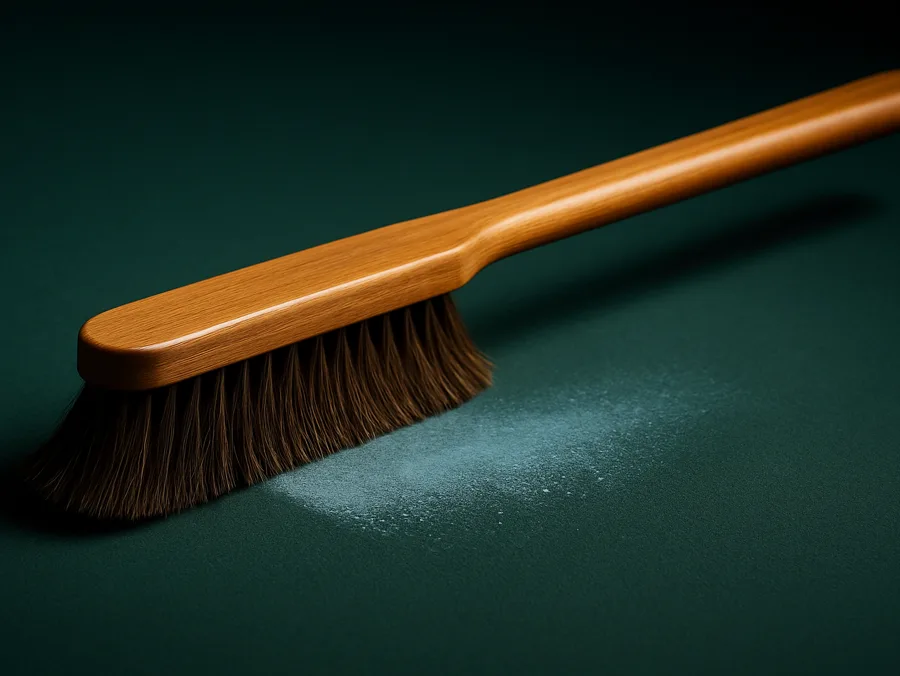
Horsehair Pool Table Brush
Protecting new clothFresh cloth stays fast far longer with a gentle brushing after play, and soft horsehair bristles will not lift the fibers.
Check price on AmazonFrequently asked questions
How often does a pool table need new felt?
A home table with regular play needs new cloth every 5 to 15 years depending on cloth quality and use. Bars refelt yearly or more. Watch for shiny worn tracks, slow rolls, and balls drifting off line as the signs it is time.
Can I refelt just the bed and skip the rails?
You can, and some owners do to save money, but mismatched old rail cloth wears differently and looks patched. If the rail cloth is still tight and clean it is a reasonable shortcut; if it is fuzzy or loose, do it all at once.
Does refelting include leveling the table?
Not always. Many mechanics check level as part of reassembly, but a full slate re-level or seam re-wax is often a separate line item of $50 to $100. Ask for it explicitly when you book, since the cloth is already off and access is easy.
Related guides
LeaguePool is reader-supported. When you buy through links on this site we may earn an affiliate commission at no extra cost to you. As an Amazon Associate we earn from qualifying purchases.