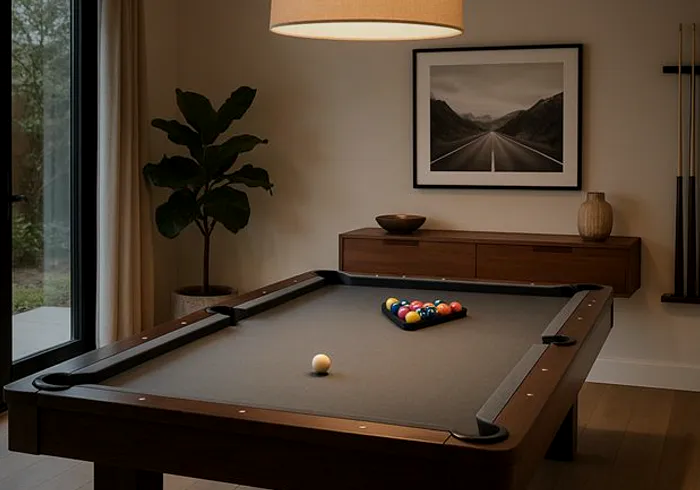
How to Fix Pool Table Felt: Rips, Burns and Bubbles
Small felt damage is usually fixable without new cloth. A flap tear gets glued back down with a thin layer of flexible fabric glue, a burn or hole gets cut out and patched flush with matching cloth, and a bubble or ripple gets fixed by re-tensioning the cloth at the rail, not with glue. A rip across the playing area, bald spots or cloth that won't stay tight means the cloth is done and it's time to refelt.
The goal of every repair is the same: nothing a slow-rolling ball can feel. A lumpy repair can play worse than the tear it covers.
Match the fix to the damage
| What you see | Fix | DIY? |
|---|---|---|
| Pulled or raised threads, no hole | Trim flush with small scissors; don't pull them | Yes |
| Small tear with the flap still attached | Glue the flap back down | Yes |
| Cigarette burn or small hole | Cut out and patch flush | Yes |
| Tear or lifted cloth on a rail or at a pocket | Glue a small lift; recover that rail for anything bigger | Small lifts yes; rail recover is a bigger job |
| Bubble or ripple in the bed | Check humidity, then restretch at the rail | Yes, if you can pull a rail |
| Whole bed slack, won't stay tight | Restretch everything or refelt | Usually a mechanic |
| Pilling and fuzz | Brush; it can't be repaired | Yes |
| Bald or shiny paths, slate showing | Refelt | See the full replacement guide |
| Stains and chalk marks | Clean, don't repair | See our felt cleaning guide |
Before any repair, brush the area clean. Chalk grit trapped under a glued flap leaves a bump.
How to fix a small tear in pool table felt
The best case is an L-shaped or straight tear where the cloth is cut but nothing is missing. Glue the flap back to the slate and it can almost disappear.
- Brush the area, then lift the flap gently. Don't stretch it.
- Put a very thin layer of flexible fabric glue on the underside of the flap with a toothpick or the tip of a small knife. Keep it away from the cut edges so nothing squeezes up through the weave.
- Lay the flap down and line the weave and the cut edges up exactly, nudging with a fingernail.
- Cover it with wax paper and set something flat and heavy on top, like a book.
- Leave it until the glue is fully cured. Tear Mender, for example, is usable within 3 minutes per its listing, but there's no rush on a table: one repair guide (EverythingBilliards) waits 24 hours before play.
Two things decide whether you'll see it afterward: how little glue you used and how exactly the cut edges meet. Too much glue makes the repair sit higher than the cloth around it, and a raised line will nudge slow rolls off line.
If threads are frayed along the cut, trim the loose ends with small sharp scissors. Pulling them can run the weave further.
Patching a cigarette burn or hole
A burn melts the fibers into a hard crater, and there's no flap to glue back.. The fix is a flush patch:
- With a sharp razor blade, cut a neat square just outside the damage. A straight-sided patch is far easier to fit than a ragged circle.
- Lift out the square and clean the exposed slate of any glue, wax or melted fiber.
- Cut a patch from matching cloth. Cut it slightly oversize, then trim it to fit the hole exactly, with the weave running the same direction as the table cloth.
- Spread a thin layer of fabric glue on the slate, press the patch in, and roll a ball lightly over it so the corners bond.
- Weight it under wax paper until fully cured.
The patch cloth counts for more than the method. Offcuts saved from the last refelt are the best patch material, since they're the same cloth, color and age. A patch of wolen cloth in a worsted table (or the reverse) plays and looks different. If you have no offcuts, buy a small piece of the same cloth line and color, or the closest you can find...
A patch near a rail or in a corner barely registers. One in the middle of the table will always be visible, but if it's flush it plays true, which is the point.
Fixing bubbles, ripples and loose felt
A bubble isn't damage to the cloth. It means the cloth has lost tension, and Pool Table Portfolio lists the usual causes: damp air stretching the wool, a cloth that was never pulled tight at install, or undirsized cloth the installer couldn't stretch properly. Glue won't fix any of them.
Check humidity first. Moisture can stretch cloth temporarily and it may tighten again as the room dries. Our humidity guide recommends holding the room at about 40 to 50 percent, and under 60 percent at most. Run a dehumidifier for a few days and see if the ripple goes.
Then do the palm test: press your palm flat on the cloth and push sideways. Properly stretched cloth barely moves. If it shifts or waves, it needs restretching.
- Remove the pockets and the rail nearest the loose area (our felt replacement guide shows how to take rails off).
- Pull the staples along that edge of the bed cloth, a foot or two either side of the problem.
- Pull the cloth toward the edge, working from the center of the loose area outward, and restaple about an inch apart.
- Check the rest of the bed with the palm test before the rail goes back on.
If the whole bed is slack, or the bubble comes back after a restretch, the cloth has relaxed too far to hold tension. That's a refelt, not a repair.
Ironing doesn't fix a bubble either. It doesn't put tension back in the cloth, and none of the cloth makers' care guidance we read calls for heat.
Rail cloth and pocket tears
Rail cloth takes hits from balls, cue tips and bridge hands, and it often lifts or splits at the pocket ends first! A small lifted edge can be glued down the same way as a flap tear. Get it flat: the WPA's equipment spec warns that hidden folds of cloth at the pocket openings can make balls jump off the table, and it allows no folds over the corner pocket facings.
A real tear along a cushion means recovering that rail. It's a contained job (pull the rail, strip it, set the feather strip, stretch and staple), but new cloth on one rail next to old cloth on the others will look different. If the bed is also worn, do the whole table. If the cushion behind the tear feels hard or dead, read our cushion guide before you buy cloth, since new rubber needs new rail cloth anyway.
Which glue to use on pool table felt
| Glue | Use it? | Why |
|---|---|---|
| Flexible fabric glue (for example Tear Mender) | Yes, for flaps and patches | Tear Mender is a natural latex glue that stays flexible and waterproof and needs no heat. Its listing says it dries a tea color, so test it on an offcut first if your cloth is a light color. |
| Super glue | No | It cures hard, and a hard spot in the cloth changes how a slow ball rolls over it. |
| Contact cement | Not for patches | It's for gluing cushion rubber to rails and for tables where the whole cloth is glued down. |
Whatever you use, use less than you think. The thickness of the glue line is the thickness of the bump.
Do pool table felt repair kits work?
A repair kit is just patch material and glue. It works if the patch cloth matches your table's cloth in type and color, and that's the catch: generic kits can't know what's on your table. Saved offcuts from your own cloth beat any kit. If you're buying, the most useful kit is a small cut of your actual cloth line plus a flexible fabric glue. We couldn't find a packaged kit whose contents we could verify well enough to recommend one by name.
When to stop fixing and refelt
Triangle Billiards and Sawyer Twain list the same end-of-life signs: tears or holes in the playing area, thinning or bald spots (sometimes showing the slate), cloth that keeps loosening after it's been tightened, heavy pilling, and balls that roll inconsistently even on a level table. One glued tear or one flush patch is a permanent, playable fix. Several patches, a rip longer than a patch can cover in the main playing area, or a bubble that keeps coming back means each repair is money toward a refelt you'll need anyway.
When you get there, our refelting cost guide has the price ranges, and the felt buying guide helps you pick the replacement cloth. If the problem turns out to be under the cloth (a hop at a seam, a dip), start with our pool table repair guide.
Sources
- WPA Recommended Equipment Specifications (folds at pocket facings, cloth cleaning tools)
- Pool Table Portfolio: cloth not pulled tightly enough (causes of loose cloth, palm test)
- Triangle Billiards: when is it time to refelt (end-of-life signs)
- Sawyer Twain: when should you replace pool felt (replacement signs)
- Brunswick Billiards: table care and maintenance (cloth care, no harsh chemicals)
Our picks
Links open the current selection and price on Amazon so you can compare real reviews before buying.

Tear Mender Instant Fabric and Leather Adhesive
Gluing flaps and patchesA natural latex fabric glue that stays flexible, is waterproof once set and needs no heat or ironing. Flexibility counts on a playing surface: a glue line that stays soft doesn't turn into a hard ridge under the cloth. It dries a tea color, so try it on an offcut first if your cloth is light.
Check price on Amazon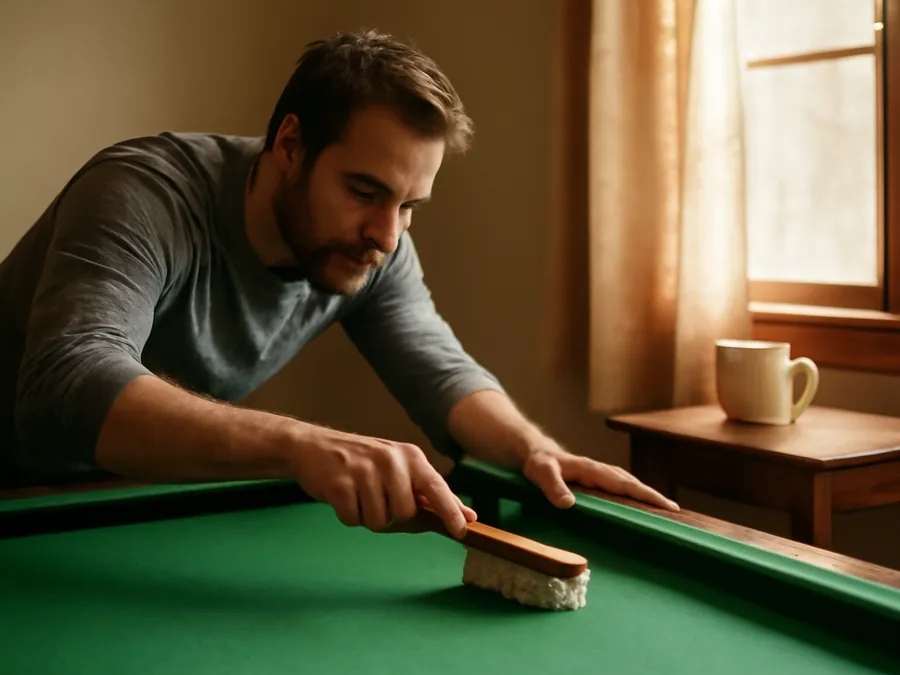
Billiard Cloth Repair Patch Kit
Patching burns when you have no offcutsPatch cloth and adhesive in common table colors. Check the color and cloth type against your table before buying; a patch only disappears when it matches, and offcuts of your own cloth are better if you have them.
Check price on Amazon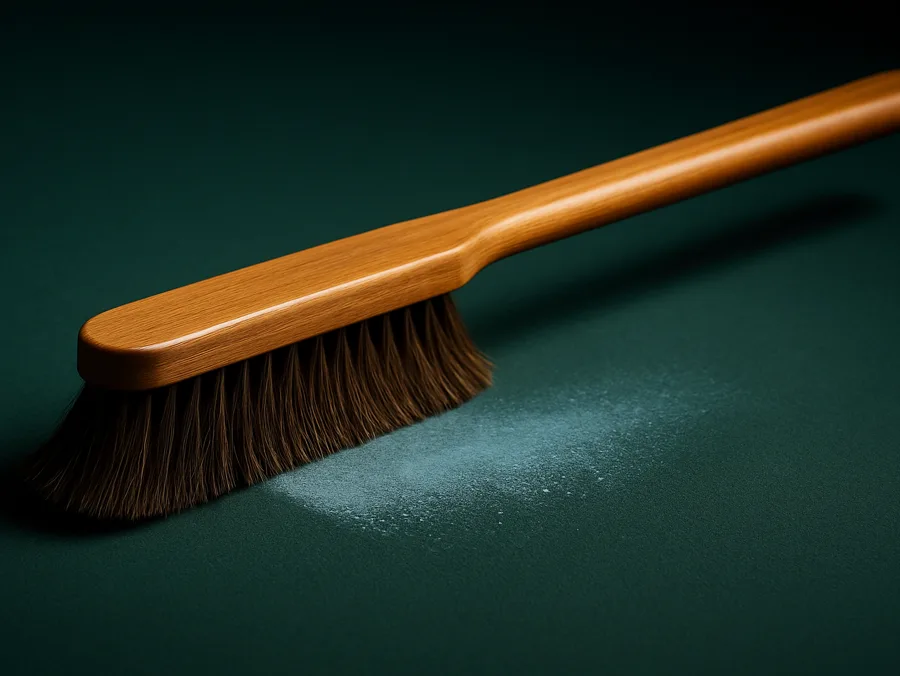
REDECKER Horsehair Billiards Table Brush
Prepping and protecting repairsA wood-handled horsehair brush, the soft brush type the WPA recommends for billiard cloth. Brush the area before you glue anything, and brush in one direction after play so chalk grit doesn't grind at the edges of a patch.
Check price on AmazonFrequently asked questions
Can you fix a rip in pool table felt?
A small rip with the flap still attached, yes: glue the flap down with a thin layer of flexible fabric glue and weight it until it cures. A long rip across the playing area usually means new cloth.
Can I use super glue on pool table felt?
Avoid it. Super glue cures hard, and a hard spot changes how slow balls roll. Use a flexible fabric glue, thinly.
How do I fix a cigarette burn on a pool table?
Cut a neat square around the burn, clean the slate, and glue in a matching patch cut to fit exactly, flush with the cloth. Offcuts from your own cloth match best.
Can you iron pool table felt to remove wrinkles?
It won't fix the cause. Wrinkles and bubbles mean the cloth is loose, and heat doesn't put tension back. Check humidity, then restretch at the rail.
Why does my pool table felt have bubbles?
The cloth has lost tension, from damp air, a loose original install or undersized cloth. Lower the room humidity first; if the bubble stays, restretch and restaple at the nearest rail.
Does a felt patch affect how balls roll?
A flush patch with a thin glue line plays true. A raised patch or a glue ridge will push slow rolls off line, which is why less glue is better.
Can I replace the felt on my pool table myself?
Yes, on most slate tables with a wood liner. Our how to replace pool table felt guide has the steps, including the WPA tension and staple spacing.
Related guides
LeaguePool is reader-supported. When you buy through links on this site we may earn an affiliate commission at no extra cost to you. As an Amazon Associate we earn from qualifying purchases.