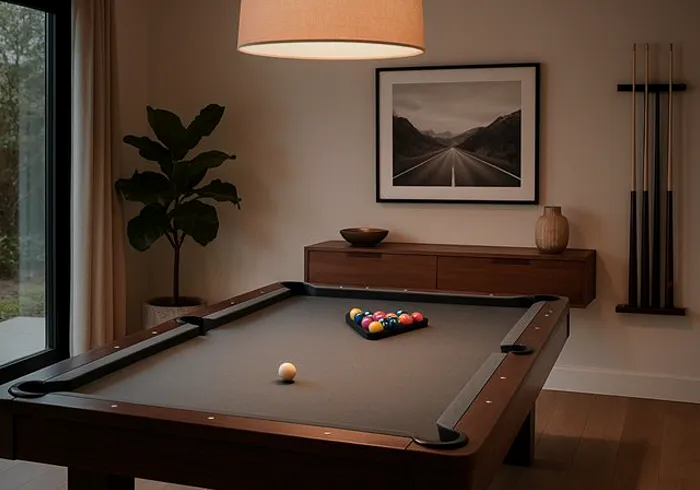
Best Pool Table Felt and Cloth
Nothing changes how a table feels more than the cloth on it. The cloth decides how fast the balls roll, how true they track, and how long the surface lasts before it pills and fuzzes. Call it felt or call it cloth. Picking the right one turns a mushy home table into something that plays like the room down at the hall.
Worsted vs napped cloth
The word felt is a habit, not a fact. Real pool cloth is woven, and it comes in two families. Napped cloth has a fuzzy directional fiber raised on the surface, which slows the ball and gives you that soft billiard-hall look. Worsted cloth is tightly spun with no raised nap at all, so the surface is smooth like suit fabric.
Napped cloth is cheaper and forgiving, but the fuzz sheds, pills, and traps chalk, and the directional grain can bend a slow roll on you. Worsted is faster, tracks dead straight in any direction, resists pilling, and cleans up with a brush. Which is why most tournament and league tables run worsted.
The Simonis standard
Simonis is the name you will hear most, and for good reason. Worsted wool, woven for consistent speed and long life, and a huge share of competitive rooms use it. The common weights are worth knowing.
- 760 worsted: a little slower and more controlled, suited to home players who want more feel.
- 860 worsted: standard tournament speed, the pick for pool leagues and serious play.
- Napped blend: slow, soft, and traditional, for a snooker feel or a tight budget.
Other good worsted brands exist, and the weight and fiber story is the same across all of them. Faster cloth rewards a smooth stroke and punishes a jab, which is part of why it helps players improve.
Speed, durability, and value
Faster is not automatically better. Very fast cloth makes position play easier once you can control it, but a slow cloth is more fun for casual games and gives a beginner more margin. Think about who actually plays on the table.
Durability is not a close call. Worsted shrugs off chalk, cleans with a simple brush, and can go many years of regular play without fuzzing. Napped cloth costs less up front, wears faster, and shows chalk tracks and pills sooner. If you re-cloth rarely, the extra money for worsted often works out cheaper per year of play. Color is personal, though darker cloths hide chalk and wear better than pale ones.
Our picks
Links open the current selection and price on Amazon so you can compare real reviews before buying.
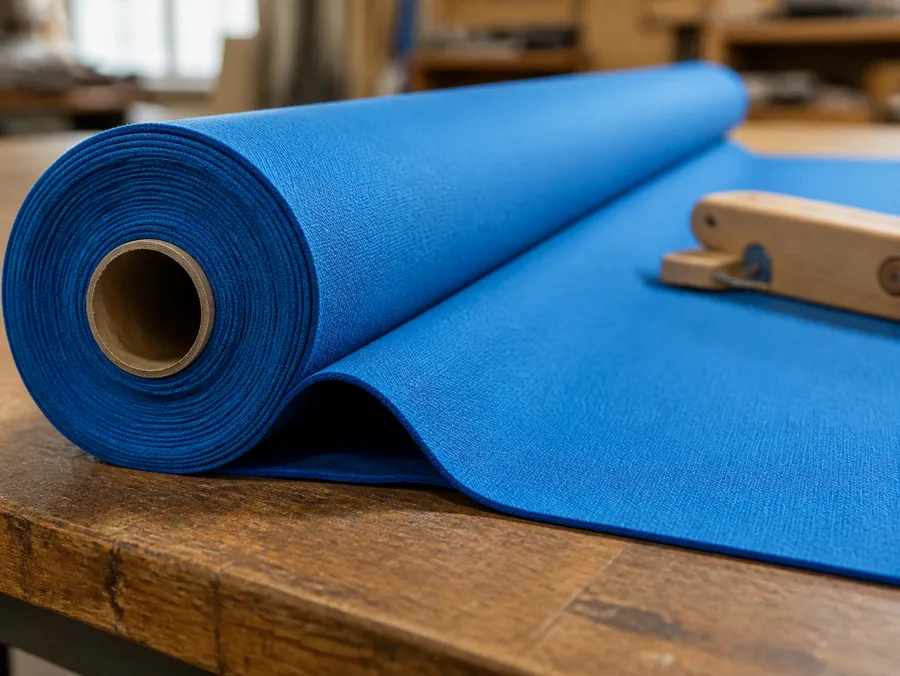
Worsted Wool Tournament Cloth 860
Serious league playStandard tournament-speed worsted wool that plays fast and true, resists pilling, and holds up to years of regular use.
Check price on Amazon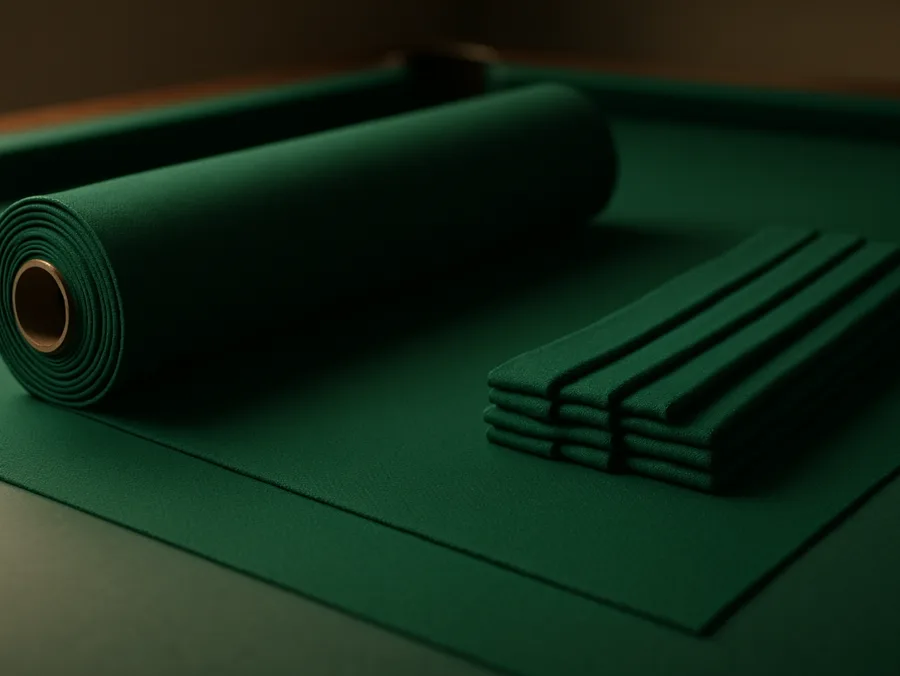
Worsted Wool Cloth 760
Home players wanting controlA slightly slower worsted weave with more feel and more forgiveness, and the same smooth, chalk-shedding surface.
Check price on AmazonNapped Wool-Nylon Blend Cloth
Traditional feel on a budgetA softer, slower napped cloth for players who like the classic billiard-hall roll and want to spend less up front.
Check price on AmazonFrequently asked questions
What is the difference between felt and cloth?
In casual speech they are the same thing. True felt is matted, but pool cloth is woven wool or a wool blend. People say felt out of habit. What matters is whether it is napped or worsted.
How long does pool table cloth last?
A quality worsted cloth can go many years of home play, longer still with light use and regular brushing. Napped cloth wears faster. Heavy league or bar use shortens the life of any cloth considerably.
Does faster cloth make me a better player?
It can help. Fast worsted cloth rewards a smooth accurate stroke and exposes the flaws a slow cloth hides. Position play also gets more predictable once you adjust to the speed.
Related guides
LeaguePool is reader-supported. When you buy through links on this site we may earn an affiliate commission at no extra cost to you. As an Amazon Associate we earn from qualifying purchases.