Pool Table Rail and Cushion Replacement Cost
Rail cushions are the part of a pool table people ignore until the game stops feeling right. Balls come off the rail short, the sound goes dull, and shots you have made for years start hanging up. Cushions are rubber, rubber ages, and eventually every table needs new ones.
Here is what recushioning actually costs, how to test whether your cushions are genuinely dead or just dirty, what else usually gets done at the same time, and whether the DIY route makes sense.
How to tell if cushions are dead
Run this test before spending anything.
The bounce test. Place a ball against one long rail and hit it firmly straight across the table. On a healthy eight-foot table the ball should cross, rebound, and come back past the rail it started from, often approaching three rail lengths of travel in total. If it barely makes it back across once, the cushions have lost their life.
The sound test. Healthy cushions make a crisp, sharp sound. Dead ones sound dull and flat, almost muffled.
The consistency test. Test each rail separately. Cushions often die unevenly, particularly on a rail that gets the most sun or is closest to a heat source. A single dull rail is diagnostic.
The visual check. Peel back the cloth at a corner if you can. Cracked, hardened or crumbling rubber, or rubber separating from the rail wood, means replacement rather than cleaning.
One important caveat: dirty cloth and a dirty table make cushions feel slow too. Clean the table thoroughly and retest before assuming the rubber is finished.
What professional recushioning costs
- Recushioning a home table, rails only: $250 to $500 typically, including rubber, rail cloth and labor.
- Recushioning plus new bed cloth: $400 to $700, which is the common package because the rails have to come off either way.
- Higher-grade cushion rubber: adds $50 to $150 for a premium profile.
- Rail refinishing: $150 to $400 on top if the wood is scratched or the finish is failing.
- Pocket replacement while apart: $60 to $200 depending on style.
- Larger or commercial tables: more, sometimes considerably.
The reason the rails-plus-cloth package makes sense is labor overlap. Removing rails, stripping old rubber, gluing new rubber, trimming, and recovering the rails is most of the job. Adding bed cloth while the table is already stripped costs materials and comparatively little extra labor.
Get the quote itemized. You want to know the rubber profile being used, whether rail cloth is included, and whether the table will be releveled afterward.
What cushion profile you need
Cushion rubber comes in profiles, and the profile has to match your table.
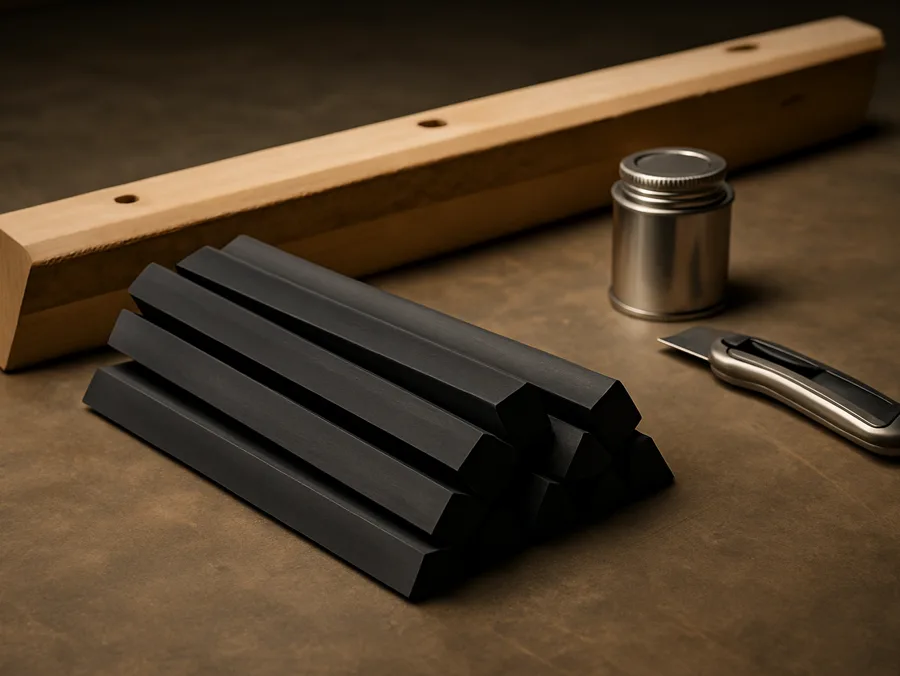
K-66 is the common profile on most home and standard pool tables. It has a triangular cross-section and a specific nose height that determines where the ball contacts.
K-55 is used on some snooker and English tables.
Other profiles exist for specific manufacturers and older tables.
Getting the profile wrong means balls contact the cushion at the wrong height, which produces bad rebound angles and balls that jump. A shop that works on tables regularly will know what your table takes. If you are ordering rubber yourself, measure carefully and confirm with the manufacturer where possible.
Quality matters here too. Cheap rubber hardens faster and can start playing dull within a couple of years, which means paying for the job again. Better rubber from a known manufacturer costs slightly more and lasts far longer.
Doing it yourself
Recushioning is one of the more approachable table jobs, but it is not trivial.
What you need: cushion rubber in the correct profile, contact adhesive, a sharp knife or a rubber trimming tool, a straight edge, rail cloth, a staple gun and patience.
The steps: remove rails from the table, strip old cloth, remove old rubber and clean every trace of old adhesive from the rail groove, glue new rubber precisely aligned along the rail, trim the ends at the correct angle for the pocket openings, then recover the rails with cloth and reattach.
Where it goes wrong: incomplete removal of old adhesive causes the new rubber to sit high or unevenly. Misaligned gluing means inconsistent nose height along the rail. Bad end trimming leaves pocket openings that catch balls. And recovering rails with cloth neatly is a skill that takes practice.
Materials cost is $80 to $200, so you save real money if it goes well. Given that a professional job on a home table is a few hundred dollars, the case for DIY is strongest if you enjoy the work or have a table you are not precious about.
When to replace versus live with it
Replace now if: the bounce test fails badly, the rubber is visibly cracked or separating, or the rails play inconsistently from one to another. Inconsistent rails are worse than uniformly slow ones because you cannot compensate.
Wait if: the table simply plays a bit slow but consistently, and you were planning a recloth in a year or two anyway. Combine the jobs then and save the duplicated labor.
Reconsider the whole table if: it is an inexpensive MDF-bed table. Recushioning a table worth $400 rarely makes sense, and the money is better applied to a better table.
Definitely do it if the table is a good slate table you plan to keep. New cushions on a solid table transform how it plays, often more dramatically than owners expect, and a well-built table with fresh rubber and fresh cloth plays like a new one for a fraction of the price of replacing it.
Our picks
Links open the current selection and price on Amazon so you can compare real reviews before buying.
K-66 cushion rubber set
Standard pool tablesThe common profile for home and standard tables. Confirm your table takes K-66 before ordering, since profile mismatches ruin rebound angles.
Check price on AmazonRail cloth
Recovering railsRails need new cloth whenever cushions are replaced. Matching it to your bed cloth keeps the table looking right.
Check price on AmazonContact adhesive for cushions
DIY installationThe right adhesive and complete removal of the old glue are what determine whether new rubber sits at the correct height.
Check price on AmazonStaple gun and rail tools
Finishing the railsRecovering rails neatly needs a proper staple gun and a straight edge. The finish quality here is what makes a DIY job look professional.
Check price on AmazonFrequently asked questions
How much does it cost to replace pool table cushions?
Professional recushioning generally costs $250 to $500 for a home table including rubber, rail cloth and labor. Combining it with new bed cloth is common and runs $400 to $700 all-in, since the rails have to come off either way.
How do I know if my pool table cushions are dead?
Hit a ball firmly from one long rail straight across. On a healthy table it should rebound and travel back past the rail it started from. If it barely returns, the rubber has hardened. Test each rail separately, since cushions often die unevenly.
Can I replace pool table cushions myself?
Yes, with materials costing $80 to $200. The difficult parts are removing every trace of old adhesive, gluing the new rubber in precise alignment, and trimming the ends correctly at the pockets. Recovering the rails neatly also takes practice.
How long do pool table cushions last?
Good rubber in a stable indoor environment can last twenty years or more. Cheap rubber, heat, direct sunlight and dry conditions all shorten that considerably, sometimes to a handful of years.
Related guides
LeaguePool is reader-supported. When you buy through links on this site we may earn an affiliate commission at no extra cost to you. As an Amazon Associate we earn from qualifying purchases.