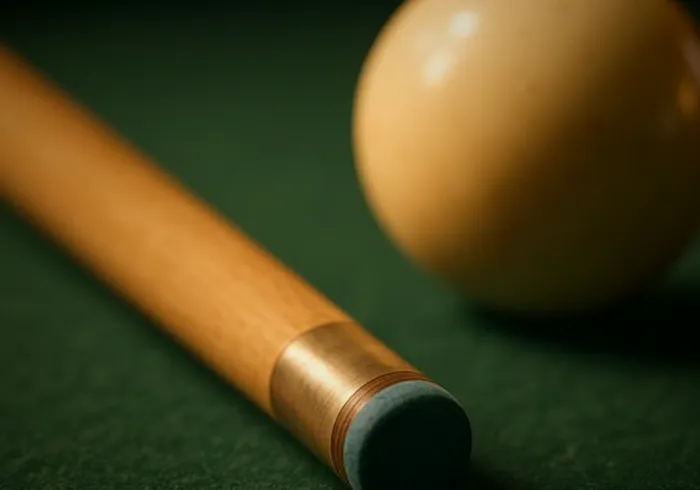
Jacoby Cues Reviewed: Lines, Prices and Who They Suit
Jacoby is one of those names that regular players know and casual buyers have never heard of. You will not find a wall of Jacoby cues at a big-box sporting goods store, and that is deliberate. The shop builds in the United States, sells mostly through pool-specific dealers and its own site, and has built a reputation on two things: honest wood work at mid-range prices, and jump cues that a lot of players consider the standard.
That makes Jacoby an awkward brand to shop for if you are used to reading Amazon reviews. Here is what the lineup actually looks like, what each tier costs, where the carbon shaft fits, and how to tell whether a Jacoby is the right cue for you or just a more expensive way to buy the same performance.
What Jacoby actually builds
Jacoby is a working cue shop rather than a badge on an imported cue. That distinction matters more than the marketing. When a brand cuts, turns, and assembles its own cues, you get consistency in the parts that are expensive to fake: straight-grained maple, a properly cut joint, a ferrule seated square, and a taper that repeats from cue to cue.
The catalog splits roughly three ways. There are playing cues in the mid-range, built around clean designs with points and simple inlays. There are higher-end cues where the price climbs because of the labor in the inlay work rather than any change in how the cue plays. And there is the jump and break equipment, which is where a lot of players first encounter the name.
The company also sells shafts separately, which is unusual and useful. Their carbon shaft, the Edge Hybrid Ultra, can be ordered to fit other makers' joints, so you are not locked into buying a Jacoby butt to try it.
Price tiers and what changes between them
Here is the honest version of what your money buys as you move up the Jacoby line.
- Entry playing cues: roughly $250 to $400. Straight maple, a functional wrap or a wrapless finish, standard maple shaft. Plays like a good cue because it is one.
- Mid-range: roughly $400 to $700. More decoration, sometimes exotic wood in the forearm and butt sleeve, often a nicer wrap. The hit is not dramatically different from the entry cue.
- Upper tier and custom: $900 and up, quickly into four figures. This is inlay labor, veneer points, and rare wood. You are buying craft, not performance.
- Carbon shaft upgrade: adds several hundred dollars, either bundled or purchased on its own.
Read that list twice before you spend. The performance curve on any cue brand flattens hard somewhere in the middle, and Jacoby is no exception. A $400 Jacoby and a $1,400 Jacoby will pot balls the same way. What you get for the extra money is a nicer object.
The jump cues, and why they have a following
If Jacoby has one product that people recommend without hedging, it is the jump cue. Jump cues live or die on two things: mass distribution and how cleanly the tip releases the cue ball. A good jump cue lets a mediocre jumper clear a blocker at a distance most players would consider hopeless. A bad one just makes noise.
Jacoby jump cues are known for being light and quick, with a hard tip that gets the ball airborne without a violent stroke. Many models break down so the same cue can serve as a jump-break, though as with every jump-break, a dedicated break cue will out-break it and a dedicated jumper will out-jump it. The convenience is the point.
Before you buy, check your league rules. Some leagues limit jump cue length or ban jumping entirely, and a jump cue you cannot legally use on league night is an expensive novelty.
The Edge Hybrid Ultra shaft
Jacoby's carbon shaft competes in a crowded field that Predator kicked off and that a dozen brands now sell into. Its selling points are the usual carbon advantages: it does not warp, it does not need burnishing or sealing, and it delivers low deflection without the fragility of a thin-walled wood shaft.
What is worth calling out is the pricing position. Jacoby's carbon shaft has generally sat below the flagship prices from the biggest names while still being made domestically. If you want carbon and you are not attached to a particular logo, that is a genuinely good place to be shopping.
Order carefully. A shaft is only useful if it matches your butt, which means knowing your joint pin and your joint diameter before you check out. Get that wrong and you own a shaft that fits nothing you have.
One more practical note: carbon shafts usually come with a smaller tip diameter than the maple shaft you are used to. Going from a 12.75mm maple shaft to an 11.8mm carbon shaft changes how the cue feels in your bridge on day one, and that adjustment period is real even though it is short.
Who should buy a Jacoby, and who should not
Buy one if you have played long enough to know what you like in a cue, you want American-built wood work without paying full custom prices, and you value a shop that will service what it sold you. That last part is underrated. A cue from a working shop can be retipped, refinished, and repaired by the people who built it, decades later.
Skip it if you are still in your first year. A beginner does not need a Jacoby, and there is no shame in that. A good sub-$150 cue teaches you the same lessons, and you will know your own preferences much better after a season of league play. Buying an expensive cue too early usually means buying a second expensive cue later.
Also skip it if what you actually want is a shaft upgrade. Players routinely spend $600 on a new cue when the honest fix was a $300 shaft on the butt they already own. Diagnose the problem before you shop.
Where to buy matters too. Jacoby sells through billiards dealers rather than through every online marketplace, so a listing that looks suspiciously cheap deserves scrutiny. Ask for photos of the joint, the ferrule, and the butt cap, and ask whether the cue has ever been refinished. On the secondary market a well-cared-for used Jacoby is often the best value in the whole lineup, because the first owner absorbed the depreciation and the cue itself has decades of life left.
Our picks
Links open the current selection and price on Amazon so you can compare real reviews before buying.
Jacoby jump cue
Getting over blockersThe product the brand is best known for. Light, quick, and hard-tipped, with models that break down into a jump-break when you want one cue to do both jobs.
Check price on AmazonJacoby Edge Hybrid Ultra carbon shaft
Upgrading a cue you already likeAmerican-made carbon shaft available in common joint pins, so you can add low deflection to your current butt instead of buying a whole new cue.
Check price on AmazonJacoby Black series playing cue
A first serious cueClean, understated build with a maple shaft. Sits in the range where you get real cue-shop quality without paying for inlay labor you do not need.
Check price on AmazonJoint pin gauge and protectors
Ordering a shaft correctlyBefore you buy any aftermarket shaft, confirm your pin type. A cheap set of protectors and a reference chart saves you an expensive return.
Check price on AmazonFrequently asked questions
Are Jacoby cues made in the USA?
Yes. Jacoby builds in the United States, which is a large part of why the cues cost more than imported production cues at similar decoration levels. It also means repairs and retips can go back to the shop that built the cue.
How much should I expect to pay for a Jacoby cue?
Plan on roughly $250 to $400 for an entry playing cue, $400 to $700 for a mid-range model with more decoration, and four figures for cues with serious inlay work. A carbon shaft adds a few hundred dollars on top.
Is a Jacoby jump cue legal in league play?
It depends on your league. Most leagues that allow jumping set a minimum cue length, and some ban jump cues entirely. Check your specific league rules before buying, because the cue itself is not the deciding factor, the rule set is.
Can I put a Jacoby carbon shaft on another brand of cue?
Usually yes, as long as you order the correct joint pin and diameter. Common pins like 3/8-10, radial, and Uni-Loc are widely supported. Confirm your pin before ordering, since a mismatched shaft is not usable.
Related guides
LeaguePool is reader-supported. When you buy through links on this site we may earn an affiliate commission at no extra cost to you. As an Amazon Associate we earn from qualifying purchases.