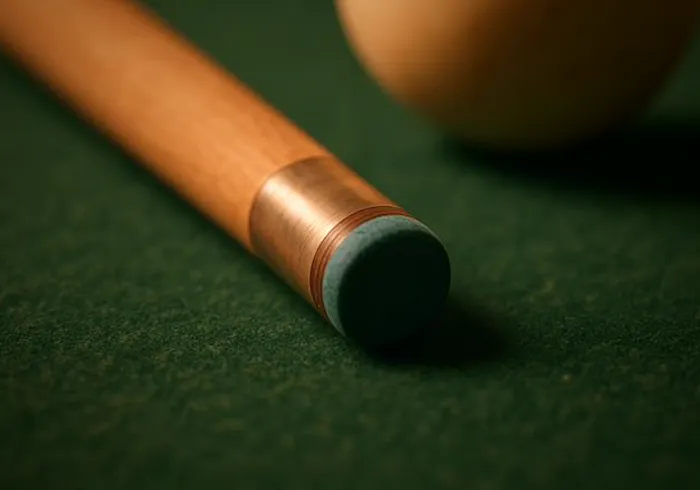
One-Piece vs Two-Piece Pool Cues
Choosing between a one-piece and a two-piece cue comes down to how and where you play. This guide explains the real differences so you buy the right type for a home table, a bar, or a league rather than guessing.
One-piece cues: simple and sturdy
A one-piece cue is a single unbroken length of wood, usually 57 or 58 inches. With no joint, there is nothing to loosen or misalign, and they are cheap to produce, which is why almost all bar and home house cues are one-piece. The downside is transport: you cannot fit a full-length cue in a normal case or a car trunk easily, and they are awkward to store and carry.
- Best for: Home tables, bars, and pool halls where the cue stays on site.
- Strength: No joint to loosen; simple and inexpensive.
Two-piece cues: portable and personal
A two-piece cue unscrews at a joint, typically at the center for a standard joint or nearer the butt for a sneaky-pete style, so it breaks down to about half its length and fits a carry case. This is the format for anyone who owns their own cue and takes it to leagues or friends' tables. Modern joints are precise enough that a quality two-piece plays with no meaningful loss of feel compared to a one-piece.
- Best for: Personal cues, leagues, and anyone who transports their stick.
- Strength: Portability plus the ability to upgrade shafts and tips.
Does the joint hurt playability?
A common myth is that the joint on a two-piece kills feel. In reality, joint design changes the character of the hit rather than degrading it. A stainless joint gives a firmer hit; a wood-to-wood joint gives softer feedback. Top professionals almost all play with two-piece cues. As long as the joint is machined well and screwed together snugly, you will not lose accuracy or power.
- Firm hit: Metal or phenolic joints.
- Softer feel: Wood-to-wood joints.
Which should you buy?
If you are outfitting a home table and the cues never leave the room, buy a set of sturdy one-piece house cues plus one or two spares. If you are buying a cue for yourself to improve with and carry to leagues or other tables, buy a two-piece and a case. Most serious players own a personal two-piece even if they also keep house cues around for guests.
Our picks
Links open the current selection and price on Amazon so you can compare real reviews before buying.
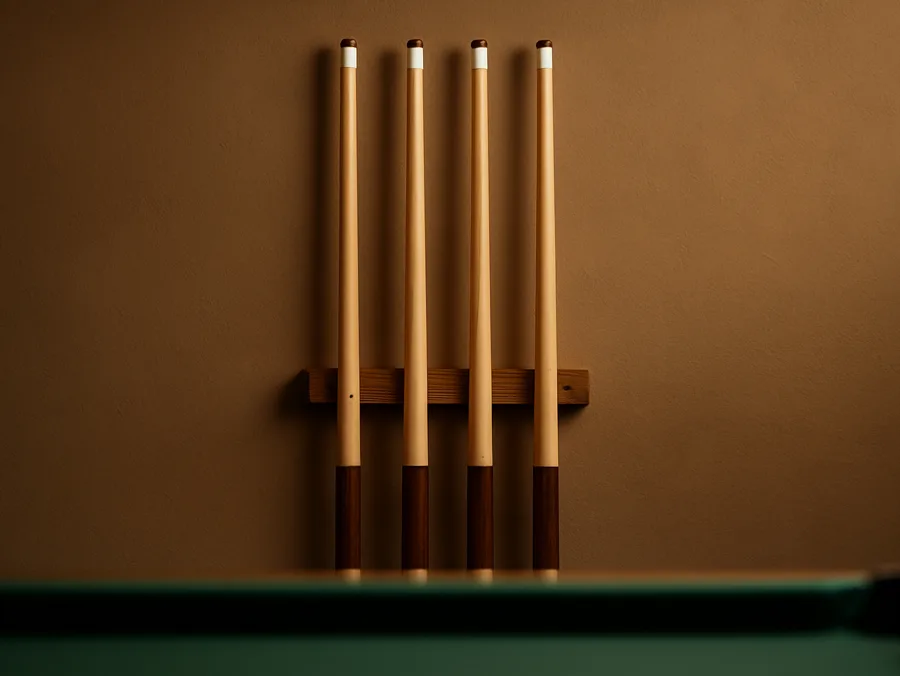
Set of one-piece maple house cues, mixed weights
Home tablesA set of durable one-piece cues in several weights gives every guest a straight stick and holds up to constant casual use.
Check price on AmazonTwo-piece maple cue with carrying case
Personal useA two-piece cue that breaks down into a case is the practical choice for anyone who plays in leagues or travels with a cue.
Check price on AmazonSneaky-pete two-piece cue
Portable but plainA sneaky-pete joins near the butt so it looks like a one-piece house cue while still breaking down for transport.
Check price on AmazonFrequently asked questions
Do two-piece cues play worse than one-piece?
No. A well-made two-piece plays just as well; nearly all professionals use them. The joint changes the feel of the hit slightly but does not reduce accuracy.
Why are house cues always one-piece?
They are cheaper, have no joint to loosen or lose, and never need to be transported, so simplicity and durability win in a shared setting.
What length are these cues?
Standard cues, one-piece or assembled two-piece, are about 57 to 58 inches. Shorter cues exist for tight rooms and younger players.
Related guides
LeaguePool is reader-supported. When you buy through links on this site we may earn an affiliate commission at no extra cost to you. As an Amazon Associate we earn from qualifying purchases.