Best Pool Cue Joint Protectors
Joint protectors are the cheapest insurance in pool. They are small threaded caps that screw onto the exposed pin of your butt and into the open insert of your shaft whenever the cue comes apart. Ten to forty dollars. In exchange they guard the most damage-prone square inch of a cue that might have cost you a thousand.
Plenty of players skip them for years and get away with it. Then a case tips over, a pin hits concrete, and a $40 accessory would have saved a $150 repair. Here is what protectors actually protect, and how to buy the right ones for your joint.
What Joint Protectors Actually Protect
Three things, in order of expense. First the pin. The exposed metal pin on your butt is machined to close tolerance, and a drop onto a hard floor can bend it or flatten the threads, which means a trip to a cue mechanic. Second, the shaft insert and joint face. The open end of a shaft collects chalk dust and grit inside a case, and grit in the threads grinds at the fit every time you screw the cue together.
Third, and nobody thinks about this one: moisture. The joint faces are exposed end grain, the fastest path for humidity in and out of the wood. Cap both ends and you slow the seasonal swings. That is one more small defense against warp, and it matters most for cues that live in car trunks and bar basements through winter and summer.
Why Serious Players All Seem to Use Them
Watch a pro or a seasoned league player pack up. The protectors go on before the cue goes in the case, almost every time. Part of that is math: their shafts often run $400 and up, and a set of protectors costs about what a tip replacement does. Part of it is that anyone who has played long enough has watched the failure happen to somebody, a buddy's bent radial pin or a stripped insert on tournament day.
There is a small practical bonus too. Many protectors extend the cue sections slightly, which gives your case padding something to seat against, and metal or wood caps keep case lint off the joint faces entirely.
Sizing by Joint Type
Protectors thread onto your joint, so they have to match it exactly. A set made for a 5/16x18 steel joint will not go onto a 3/8x10 wood pin, and Uni-Loc and radial pins each need their own. Find out what joint your cue uses first, since the maker's product page lists it, then buy protectors sold explicitly for that joint.
Brand-matched sets are the safe route. Predator sells Uni-Loc protectors for its cues, McDermott sells sets for its 3/8x10 pins, and most makers offer them as accessories. Generic sets work fine when they list your exact thread, and the better generics come in everything from black rubber to turned wood that can match your cue.
The Three Picks Explained
The Predator joint protectors are the obvious call for the huge population of Uni-Loc cues, Predator and Lucasi alike, with precise threads and a clean look. The McDermott joint protectors handle the 3/8x10 crowd, fitting McDermott's own cues and most others on that common wood pin. The CUESOUL joint protector set is the budget generic. It comes in the common thread types and usually sells as a three-piece set covering the butt and both shafts, which suits players who carry a spare.
Habits That Make Them Work
Protectors only help if they are on the cue. Make capping part of the same motion as breaking down: unscrew, cap, case. Wipe the joint faces with a dry cloth first so you are not sealing chalk dust against the threads.
And do not overtighten. They seat with a light snugging. Cranking them down does nothing extra and can stress a shaft insert. If a protector ever feels gritty going on, stop and clean the threads, because that grit is exactly what the cap exists to keep out.
Material is mostly a style call, with one practical wrinkle. Rubber and plastic are the lightest and cheapest and do the job fine. Metal adds a little length and heft, which helps a short shaft seat properly in a long case pocket. Turned wood looks best on a nice cue and can be made to match the butt, though it can crack if the case takes a hard fall. That is the protector sacrificing itself for the joint, which is the trade you want. Whatever the material, you are paying for the threads inside, so favor clean machining over a pretty exterior and a sloppy fit.
Our picks
Links open the current selection and price on Amazon so you can compare real reviews before buying.
Predator Joint Protectors
Uni-Loc cues, Predator and LucasiFactory threads cut for the Uni-Loc quick release joint, which is the most common premium joint system out there.
Check price on Amazon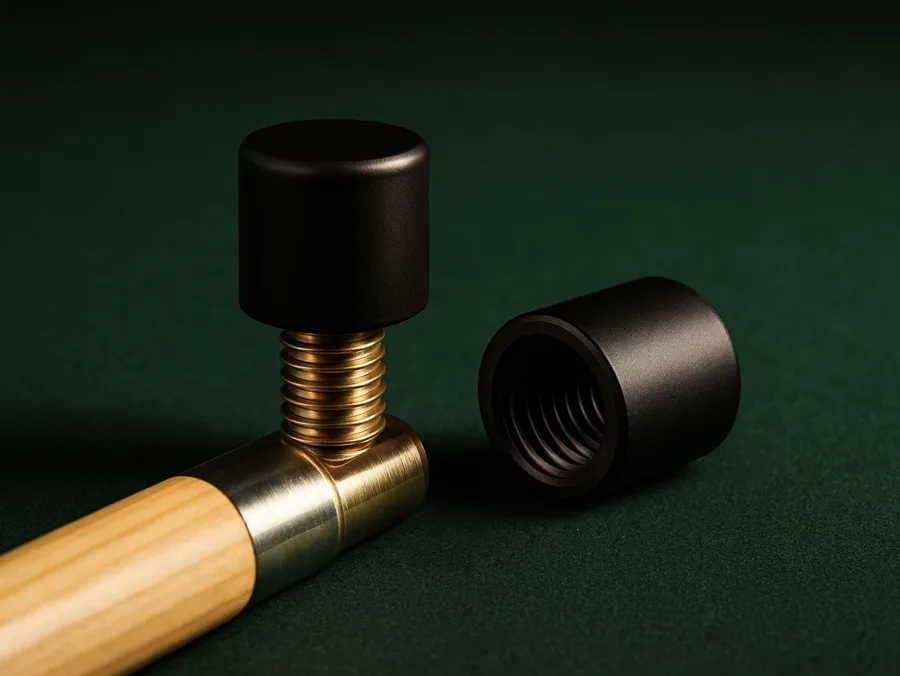
McDermott Joint Protectors
3/8x10 wood pin cuesBuilt for McDermott's 3/8x10 pin, and it fits most other cues on that wood-joint standard. Simple and cheap.
Check price on AmazonCUESOUL Joint Protector Set
Budget multi-piece generic setThree pieces, sold in the common thread sizes, covering a butt and two shafts for less than one tip install costs.
Check price on AmazonFrequently asked questions
Do I really need joint protectors?
Need is a strong word. But they are the cheapest protection a cue can get, stopping bent pins, thread damage, grit, and moisture swings for the price of a few games of pool. If your shaft is worth over $100, use them.
How do I know which joint protectors fit my cue?
Match them to your cue's joint type, which the maker lists: Uni-Loc, radial, 3/8x10, 5/16x18, or 5/16x14. Threads do not cross over between types. When in doubt, buy the set your cue's own brand sells.
Do joint protectors prevent warping?
They help at the margins. Capping the exposed end grain slows moisture exchange, and moisture is one factor in warping, but no cap beats bad storage. Keep the cue in a case and out of car trunks and damp basements, and protectors add a useful extra layer.
Related guides
LeaguePool is reader-supported. When you buy through links on this site we may earn an affiliate commission at no extra cost to you. As an Amazon Associate we earn from qualifying purchases.