Best Pool Training Aids That Actually Help
The pool training aid market is full of plastic gadgets that promise a tournament stroke in thirty days and deliver a drawer full of regret. But a handful of tools genuinely work, and the pattern behind them is consistent: the good ones give you feedback you cannot get on your own, or force repetition of one specific fundamental. The gimmicks, by contrast, mostly do the aiming or stroking for you, which teaches you to depend on the gadget.
Here is an honest sort of what actually helps, based on what instructors keep recommending and what players keep using after the first week.
Stroke Trainers: Fixing the Crooked Delivery
Most missed balls trace back to a cue that does not travel straight through the ball. Stroke trainers attack this directly. The simplest version is a bottle drill, stroking your cue in and out of a longneck bottle laid on the table without touching the glass, and it costs nothing. Commercial versions like the Third Eye Stroke Trainer clip a guide onto your cue or table that makes any wobble or steer immediately obvious.
These work because they convert an invisible flaw into instant physical feedback. Ten focused minutes a day for a month will straighten a stroke more than a year of just playing. The catch is honesty: the tool only helps if you use it slowly and deliberately rather than racing through reps.
Position Donuts: The Cheapest Big Upgrade
Paper hole reinforcement labels, the little adhesive donuts sold for loose-leaf binders, might be the highest value training aid in pool. Stick one on the cloth where the cue ball sits and one where the object ball sits, and you can replay the exact same shot fifty times. Miss the position zone? Set it up again in five seconds, identically.
This matters because random practice hides your weaknesses. With donuts you can isolate the one shot that keeps beating you, a thin cut down the rail, a draw across the table, and drill it until the miss is gone. Every serious player who practices alone should have a sheet of these in their case. A few dollars buys hundreds.
Training Balls: Seeing Your Contact Point
A marked training ball like the Aramith Jim Rempe shows exactly where your tip struck, because the chalk mark lands on a printed target. Most players find out within ten shots that their idea of one tip of draw is really a half tip, which explains years of weak draw shots. The measle-style dotted balls do a similar job during actual games by making all spin visible as the ball travels.
Of everything on this list, training balls give the most surprising feedback, because contact point error is the flaw players are least aware of having.
Drill Books and Systems: Practicing With a Plan
An hour of aimless ball banging is worth about ten minutes of structured drills. A good drill book solves the what-do-I-practice problem. The 99 Critical Shots in Pool has been the standard answer for decades, walking through the shots that actually decide games, and workbook-style systems that score your drills let you measure improvement week over week instead of guessing.
The scoring part is underrated. When a drill produces a number, practice becomes a game against yourself, and you can watch a 4 out of 10 become a 7 out of 10. That visible progress is what keeps people practicing.
What to Skip
Be skeptical of laser aiming devices, cue-mounted sights, and any guide that physically holds your cue on line for you. They feel productive, but the skill they build lives in the gadget, not in you, and it vanishes the moment the gadget comes off. The same goes for most miracle aiming systems sold on DVD. Aim is learned by hitting the same shot repeatedly with feedback, which is exactly what donuts and a training ball already give you for a fraction of the price.
Our picks
Links open the current selection and price on Amazon so you can compare real reviews before buying.
Third Eye Stroke Trainer
Straightening a wobbly strokeClips on to give immediate feedback the instant your cue strays off line, turning an invisible stroke flaw into something you can feel and fix.
Check price on Amazon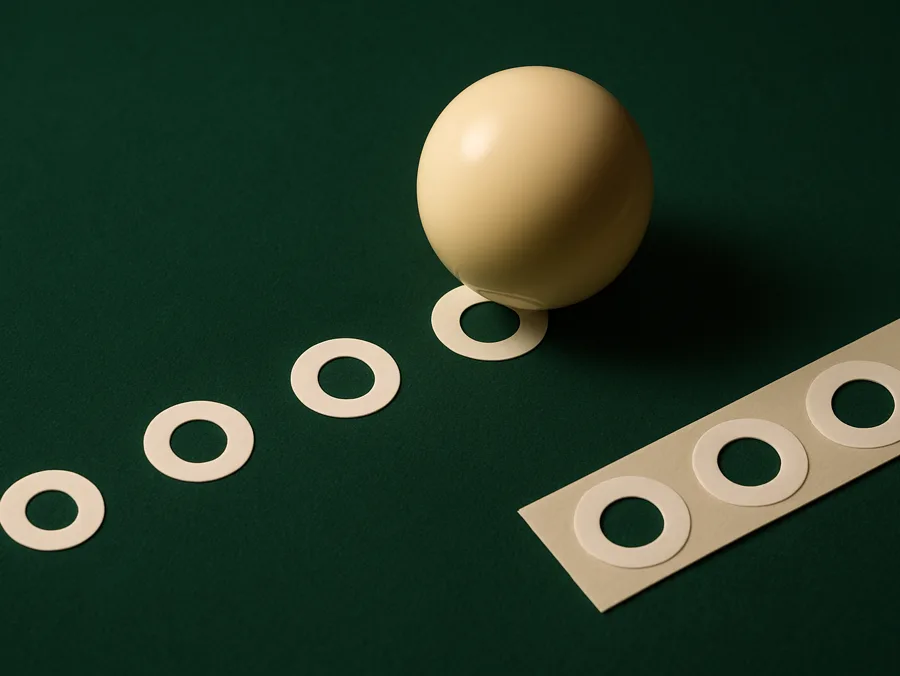
Hole Reinforcement Labels (Position Donuts)
Repeating exact shot setupsThe classic office-supply donut stickers let you mark cue ball and object ball positions and replay any shot identically, the backbone of serious solo practice.
Check price on Amazon
Aramith Jim Rempe Training Ball
Contact point and spin feedbackChalk marks on the printed targets show exactly where your tip struck, exposing the gap between the spin you intended and the spin you applied.
Check price on Amazon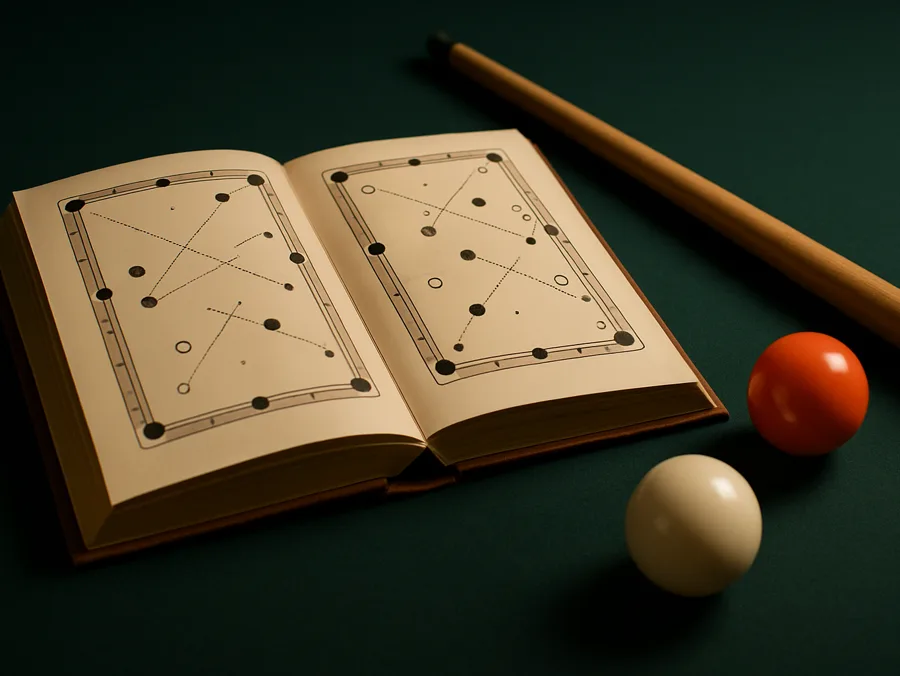
The 99 Critical Shots in Pool
Structured practice curriculumThe long-running standard drill book that tells you which shots to practice and how, converting table time into targeted improvement.
Check price on AmazonFrequently asked questions
What is the best training aid for a complete beginner?
Position donuts and a drill book, in that order. Beginners improve fastest by repeating fundamental shots with a plan. Add a marked training ball once you start working on draw and follow.
Do laser aiming trainers work?
They show where the cue points, but pointing the cue was never the hard part. The skill is delivering the cue straight and knowing the correct aim line by feel, and lasers train neither. Most end up unused.
How much practice time do training aids actually need?
Fifteen to twenty focused minutes a day beats a three hour session once a week. Stroke trainers and donut drills are built for short, repeatable sessions, which is exactly why they work.
Related guides
LeaguePool is reader-supported. When you buy through links on this site we may earn an affiliate commission at no extra cost to you. As an Amazon Associate we earn from qualifying purchases.