Best Pool Practice Drills
The players who improve fastest are the ones who practice specific drills instead of just racking and breaking. Drills isolate a skill, give you a score to beat, and turn vague practice into measurable progress. Here are some of the best drills for potting and position, from beginner to advanced.
The stop shot drill
This is the foundation drill. Set the cue ball and an object ball in a straight line to a pocket, a few feet apart. Pot the object ball and make the cue ball stop dead on the spot. To do it you need a straight, level stroke and a center-to-slightly-low hit with the right speed. Do ten reps and count how many you both pot and stop cleanly.
The stop shot teaches accuracy, speed control, and a true stroke all at once, which is why coaches assign it constantly. Master it before moving on.
The line-up drill
Line up all fifteen balls along the spot line down the center of the table. Take ball in hand and run them one at a time, potting each and controlling the cue ball to get on the next. Because the balls are in a row, you must move the cue ball deliberately to keep a clear shot, which forces real position play.
Score how many you run before you miss or get stuck. This drill trains sequencing, position, and the discipline of thinking one shot ahead.
Position drills: the L and progressive distance
For the L drill, place a few balls forming an L shape and pot them in order while keeping the cue ball inside a small target zone for each next shot. It sharpens precise cue ball placement using stop, follow, and draw.
The progressive-distance drill builds draw and follow control: pot a straight shot and try to bring the cue ball back (or forward) to a marked spot, then move that spot farther each time you succeed. This calibrates exactly how much spin and speed produce a given distance.
The wagon-wheel drill
Place an object ball near a pocket and the cue ball in the center of the table. Pot the object ball repeatedly, each time trying to send the cue ball to a different numbered position spread around the table like spokes on a wheel. This teaches you to reach many landing spots from the same shot using different spins, speeds, and cut angles.
Wagon-wheel practice is how you learn the full range of cue ball control from a single shot, which is exactly the skill that lets you run out real racks. Track which spokes you can hit reliably and work on the ones you cannot.
Our picks
Links open the current selection and price on Amazon so you can compare real reviews before buying.
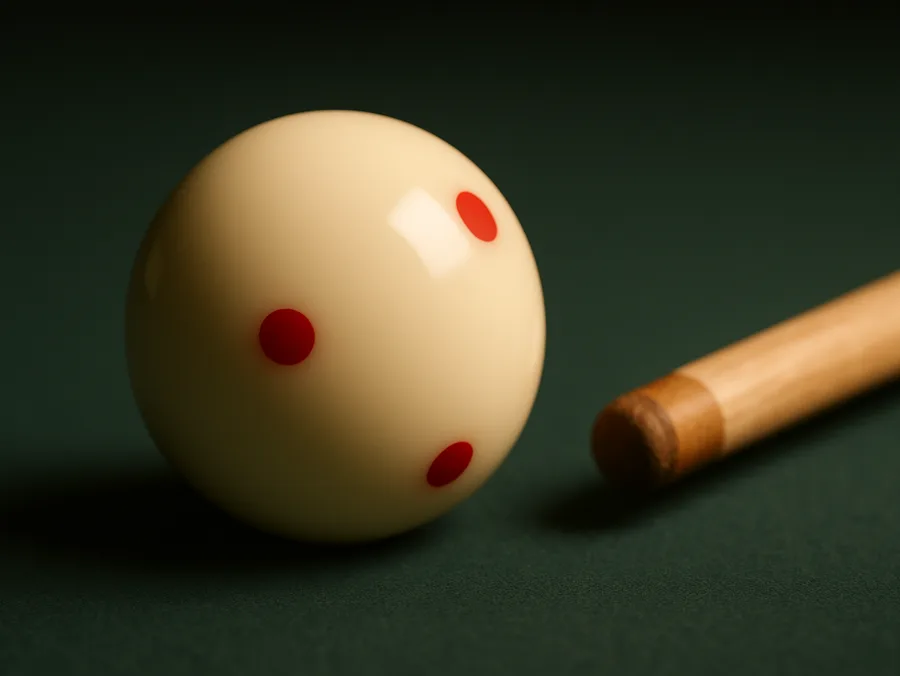
Training cue ball with target markings
Feedback on every drillA marked cue ball shows exactly where you strike the ball, giving instant feedback during stop, draw, and follow drills so you correct mistakes immediately.
Check price on AmazonPractice target spots or donuts
Marking ball positions for repeatable drillsSmall paper donuts or target spots let you place balls in the exact same spot every rep, which is what makes drills measurable and repeatable over time.
Check price on AmazonInstructional drill book
A structured library of proven drillsA drill-focused book gives you a progression of practice routines with scoring systems so you always know what to work on next as you improve.
Check price on AmazonFrequently asked questions
What is the best drill for beginners?
The straight-in stop shot. It builds a straight, level stroke, accurate potting, and speed control all at once. Set the cue ball and object ball in a line to a pocket, pot the ball, and make the cue ball stop dead, then repeat and keep score.
How do I practice position play?
Use drills that force you to control where the cue ball lands, like the line-up drill, the L drill, and the wagon-wheel drill. They make you plan the next shot and place the cue ball precisely using stop, follow, draw, and cut angles.
Why should I keep score during drills?
Scoring turns practice into measurable progress. When you count how many you make out of ten and try to beat it next time, you get feedback, stay focused, and build real skills instead of just knocking balls around aimlessly.
Related guides
LeaguePool is reader-supported. When you buy through links on this site we may earn an affiliate commission at no extra cost to you. As an Amazon Associate we earn from qualifying purchases.