The Diamond System Explained
Those little inlaid dots along the rails are not decoration. They are a measuring grid. Learn to read them and you can aim multi-rail kicks and banks with arithmetic instead of hope. The first time somebody explains a diamond system it sounds like advanced math, but the working versions take an afternoon to pick up, and then you spend years refining them. Here is what the diamonds are, the two systems worth learning first, and where any numbered system quits on you on a real table.
What the Diamonds Actually Are
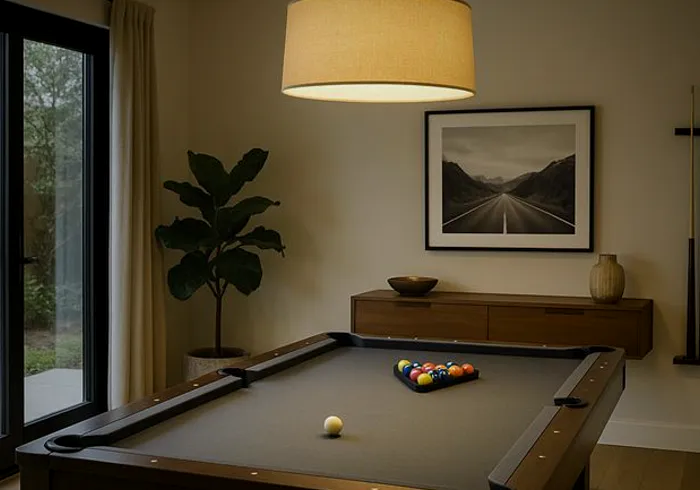
A standard table carries three diamonds spaced evenly along each short rail section and six positions along each long rail, which cuts the playing surface into a grid of squares. The point of them is to give every rail point a number, so an aiming reference can be repeated instead of re-eyeballed. One detail trips people up. Most systems measure through the diamond to the nose of the cushion, not at the diamond sitting on the rail top, and some track where the ball contacts the cushion rather than where it crosses the rail line. Fussy, yes. But half a diamond of error at the first rail is a full ball of error by the third.
The Plus-Two System for One-Rail Kicks
The plus system is the easiest place to start. It is built for kicking off the short rail back up the table. Number the long-rail diamonds from the corner nearest the short rail you plan to hit: the corner pocket is 0, then 1, 2, 3 heading up-table. The short rail diamonds run 1, 2, 3 across. With the cue ball near the up-table corner, it travels from its rail number into the short rail and comes back to a long-rail number you get by simple addition, and the classic version adds two when you are shooting from the corner region. In practice you shoot with a touch of running english at medium speed. Then you find out where your table actually returns the ball from one reference shot and adjust your personal constant from there. The arithmetic gets you close. The table teaches you the correction.
The Corner-Five System for Multi-Rail Kicks
The famous three-rail system came over from carom billiards. The corner where you stand is numbered 5, cue ball positions along the long rail count down from it, and positions along the short rail count up. Each diamond on the first rail you will hit gets a number too. The rule is one line long: cue ball number minus target number equals the first-rail number you aim at. Shoot with natural running english at a smooth medium pace and the ball runs three rails and lands near the target diamond. A cue ball leaving corner 5, aimed at diamond 2 on the first rail, arrives around diamond 3 at the far end. The first time it works it feels like a cheat code. Blind three-rail escapes stop being prayers and turn into shots you can actually play.
How to Practice a System
Do not sit down and memorize tables of numbers out of a book. Pick one system, set up its reference shot, and hit it twenty times at the same speed with the same touch of spin, marking where the ball arrives. You are calibrating your stroke and your table to the formula. Then move the cue ball one diamond and predict the new arrival before you shoot. Prediction is what burns a system in. Repetition alone will not. Ten focused minutes a session beats an hour of random kicking, and donut markers plus a notebook let you rebuild yesterday's setups exactly.
The Honest Limits
No diamond system survives contact with every table unchanged. New fast cloth makes balls slide and rebound long. Worn fuzzy cloth shortens everything. Humid rooms bend the numbers, so do dead cushions and dirty balls, and speed matters too, since hard hits shorten rebound angles. Every system also assumes a specific english, usually natural running spin, so any deviation changes the path. Treat the system as a starting calculation that puts you within a diamond, then let your eyes and your experience on that day's equipment supply the last adjustment. That is what the pros do: system first, then feel. If a table keeps coming up short of the numbers, note the correction once and use it all night rather than rediscovering it kick by kick.
Our picks
Links open the current selection and price on Amazon so you can compare real reviews before buying.
Banking and Kicking Systems Book
Learning diamond systems properlyA dedicated banks-and-kicks book in the style of Banking with the Beard walks through the plus and corner-five systems with diagrams, and covers the adjustments for speed and spin.
Check price on AmazonTraining Ball Set
Calibration drillsA practice set with a marked cue ball keeps your spin honest from attempt to attempt, which matters a lot when you are calibrating a system reference shot.
Check price on AmazonDonut Position Markers
Repeatable reference shotsStick-on donuts hold the cue ball and target positions steady across dozens of attempts, so speed and spin stay the only variables.
Check price on AmazonFrequently asked questions
Do diamond systems work on 7-foot bar tables?
Yes. The geometry scales, since the diamonds divide any regulation-proportioned table the same way. Bar tables often have slower cloth and rails that play livelier or deader, so your calibration numbers will not match the ones you use on a 9-foot table.
Which diamond system should I learn first?
Start with the simple one-rail mirror and the plus system for short-rail kicks. Those situations come up constantly. Add the corner-five three-rail system once one-rail kicks feel automatic.
Do professional players really use these systems?
Many do, mostly for blind multi-rail kicks where feel alone is unreliable. Top players blend the system's starting number with the table-specific corrections they picked up during warm-up and earlier racks.
Related guides
LeaguePool is reader-supported. When you buy through links on this site we may earn an affiliate commission at no extra cost to you. As an Amazon Associate we earn from qualifying purchases.