
What Is a Scratch in Pool? Scratch Rules by Game
A scratch in pool is when the cue ball, the white ball, goes into a pocket. Knocking it off the table is penilized the same way. Either one is a foul: your turn ends on the spot, even if you made a ball on the same shot, and your opponent usually gets ball in hand.
The scratch itself is simple. What follows it isn't, because the penalty changes with the game (8-ball, 9-ball, straight pool), with the moment (the break, a shot at the 8), and with whose rules you're playing. This page goes through all of it, plus what to do when it's your turn after a scratch and how to stop scratching in the first place.
What is considered a scratch in pool
The WPA world rules define a scratch in one line: a shot on which the cue ball is pocketed. A few edge cases decide most arguments:
- The cue ball counts as pocketed once it stops in the pocket or rolls into the ball return.
- If the cue ball touches a ball that's already sitting in the pocket, it's a scratch even if it bounces back onto the table. CSI rules say the same and add any obstruction in the pocket.
- A cue ball that drops into the jaws and rattles back out without touching a pocketed ball isn't pocketed.
- Cue ball off the table is its own foul with the same penalty in most games. It counts as off the table if it hits a light, a player or a piece of chalk and comes back. Bouncing along the top of the rail and returning to the cloth doesn't count.
Plenty of players also say "table scratch" for a foul where the cue ball stays up: missing every ball, or hitting a ball without anything reaching a rail. APA uses the phrase for missing the 8 entirely! The rule books treat those as ordinary fouls, not scratches. For the rest of them, see the full foul list.
What happens when you scratch in pool
Your inning is over! A ball you made on the scratch shot doesn't let you keep shooting. After that, the penalty depends on the game:
| Game | Penalty for a scratch | Balls made on the scratch |
|---|---|---|
| 8-ball (WPA, APA, CSI) | Opponent gets ball in hand anywhere | Stay down (only the 8 is ever spotted) |
| 8-ball, typical bar rules | Opponent places the cue ball behind the head string | Usually stay down |
| 9-ball and 10-ball | Ball in hand anywhere | Stay down, except the 9 (or 10), which is spotted |
| Straight pool (14.1) | Minus one point, plus ball in hand behind the head string | Spotted, no points |
| One pocket and bank pool | One point off, with ball in hand behind the head string | Spotted as the game requires |
| Blackball (WPA) | Opponent gets a free shot from in hand in baulk | See the blackball rules |
| Three-ball (as usually played) | One penalty stroke; next shot from behind the head string | Count |
So yes, in most games a scratch is ball in hand, but not in all of them. If you learned on a bar table, the kitchen version will feel normal and full-table ball in hand will feel brutal. If you learned in a league, it's the reverse. Game-specific details are in the 9-ball, straight pool and one pocket guides.
Scratching on the break
A scratch on the break is a foul, not a loss, under every major rule set... unless the 8 goes in on the same shot in a game played by APA or bar rules. Where the incoming player gets the cue ball is what changes:
| Rule set | Scratch on the 8-ball break | Scratch and the 8 goes in |
|---|---|---|
| WPA | Opponent takes ball in hand behind the head string, or the table as it lies | Opponent chooses: spot the 8 and take ball in hand behind the head string, or re-break |
| APA | Ball in hand behind the head string; the shot must contact a ball outside it | Loss of game |
| CSI (BCAPL) | Ball in hand anywhere | Opponent chooses: spot the 8 with ball in hand anywhere, or re-rack |
| Typical bar rules | Behind the head string; a few rooms just pass the break | Usually a loss |
In 9-ball and 10-ball under WPA rules, a break scratch gives ball in hand anywhere, like any other foul. Cue ball control on the break is covered in our breaking guide.
Scratching on the 8 ball
Scratch on the shot that pockets the 8 and you lose, under every rule book and in every bar. If the 8 stays on the table, it splits: APA and most bars still call any scratch while you're shooting the 8 a loss, while WPA and CSI rules treat it as an ordinary foul and your opponent gets ball in hand. Know which you're playing before it comes up. The full league-by-league table is in 8-ball rules, and the house versions are in bar rules for 8-ball.
What to do when your opponent scratches
First, make sure everyone agrees it was a scratch. A foul has to be called before the next shot, so speak up now. Then:
- Pick up the cue ball. In APA play, confirm with your opponent that you have ball in hand before you touch it.
- Place it. With ball in hand anywhere, you can keep adjusting it with your hand or the cue, as long as you don't push it forward with the tip. Don't touch any other ball while you do it.
- If you're restricted to the kitchen, put the cue ball behind the head string, not on it. The cue ball has to cross the line before it hits anything, so a ball inside the kitchen can only be reached off a far rail.
- If every ball you're allowed to hit is inside the kitchen, WPA rules let you ask for the one closest to the head string to be spotted at the foot end. A ball sitting exactly on the head string is playable.
With ball in hand anywhere, don't just take the easiest shot. Use it to break up a cluster or set up the run, which is the point of our 8-ball strategy guide.
Can you scratch on purpose in pool?
Yes. Scratching deliberately isn't against the rules; it's a foul like any other, and you take the normal penalty. The WPA list of unsportsmanlike conduct covers things like moving balls by hand, distracting your opponent and miscuing on purpose, but not pockating the cue ball.
Whether it's smart is another matter. In 8-ball and 9-ball it hands your opponent ball in hand anywhere, which is almost never worth it. In straight pool and one pocket, a scratch costs one point and puts your opponent in the kitchen, so a deliberate foul can beat leaving them an open shot; straight pool players call it "taking a scratch". The three-fouls rule is the brake: in straight pool a third straight foul costs an extra 15 points, and in one pocket it loses the rack. Under kitchen-scratch bar rules, a deliberate scratch can occasionally leave your opponent stuck behind the line with nothing to shoot at, but expect an argument if you try it on a stranger.
How do you scratch in pool, and how do you stop?
Most scratches come from the cue ball following a predictable path into a pocket you never checked. Two rules of thumb from Dr. Dave Alciatore's physics work tell you where it's going:
- Stun shots: if the cue ball is sliding (no spin) when it hits the object ball, it leaves along the tangent line, 90 degrees from the object ball's path. On a cut shot near a pocket, follow that line with your eye before you shoot.
- Rolling shots: a naturally rolling cue ball bends to roughly 30 degrees off its original line for hits between a quarter-ball and three-quarter-ball, more like 34 degrees around a half-ball hit.
The classic scratches all follow from those lines:
| Scratch | Why it happens | The fix |
|---|---|---|
| Straight in, cue ball follows the object ball | Topspin on a full hit | Hit a little lower for a stop shot, or draw it back |
| Cue ball rolls into the side pocket on a cut | The 90-degree or 30-degree line points right at it | Add follow spin or draw spin to bend the path off the pocket |
| Two- or three-rail scratch in a corner | Too much speed | Shoot softer and plan where the ball stops |
| Draw shot pulls back into the corner behind you | Straight-back draw with a pocket in line | Use less draw, or a touch of side to angle it off |
Before each shot, trace the cue ball's path off the object ball and every rail it'll touch, and check each pocket on the way. If one is in line, change the speed or the spin, or take a different shot. Planning where the cue ball stops, not just whether the ball drops, is what position play is about.
Sources
- WPA Rules of Play, effective 2025-09-15 (definitions 2.2, 2.6 and 2.17, rules 1.6, 3 and each game's foul rules)
- APA official rules on fouls
- APA Official Rules: How to win a game
- Official Rules of CueSports International, August 2025
- Dr. Dave Alciatore: the 30-degree rule and the 90-degree rule
Our picks
Links open the current selection and price on Amazon so you can compare real reviews before buying.

Aramith Red Circle Regulation Cue Ball
Checking where your tip hitsA tip that lands higher than you meant adds follow, and follow is what carries the cue ball in behind a straight-in shot. The red circle on this 2-1/4 inch phenolic Aramith ball shows your chalk mark after each shot, so you can see whether that stop shot was really struck below center.
Amazon price: $25.68 as of 6:36 AM EST. Price and availability can change; Amazon’s price at purchase applies.
Check price on Amazon
Terizger Training Cue Ball Set, 2 Pack
Learning follow, draw and stunTwo regulation-size training balls: one printed with an aiming diagram of eight strike zones, and one dotted ball that shows how the cue ball spins after contact. Seeing whether the ball is sliding or rolling when it hits the object ball is exactly what the 90-degree and 30-degree lines depend on.
Check price on Amazon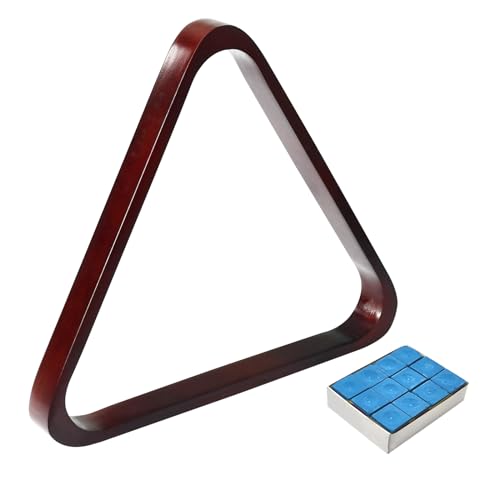
Standard Eight-Ball Rack
Practicing clean eight-ball finishesSince scratching on the 8 loses the game, rack full games and practice the last three balls, choosing a shot on the 8 that keeps the cue ball away from every pocket.
Amazon price: $14.99 as of 6:58 AM EST. Price and availability can change; Amazon’s price at purchase applies.
Check price on Amazon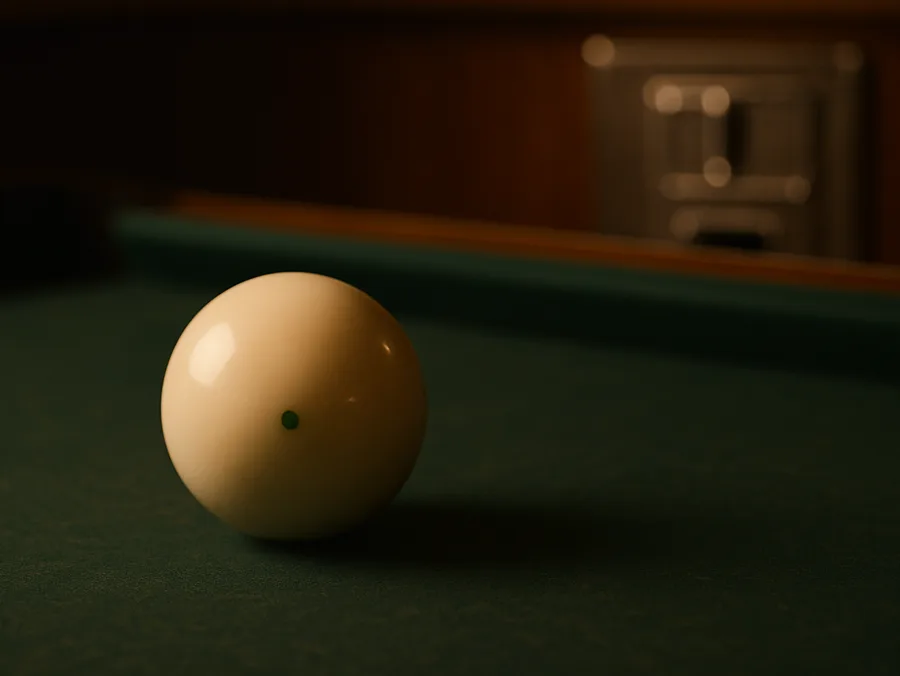
Aramith Magnetic Cue Ball
Scratches on coin-op tablesOn a coin-operated table, a scratched cue ball has to come back out of the ball return. This phenolic Aramith ball is made for tables that sort the cue ball with a magnet. Check how your table separates it first; size-sorting tables need an oversized ball.
Check price on AmazonFrequently asked questions
What's a scratch in pool?
A scratch is when the cue ball goes into a pocket. Knocking the cue ball off the table carries the same penalty in most games. It's a foul that ends your turn.
Does making a ball cancel out a scratch?
No. If the cue ball goes in, it's a foul no matter what else dropped, and your turn ends. In 8-ball, 9-ball and 10-ball the ball you made stays down (except the 9 or 10, which is spotted). In straight pool it's spotted and doesn't score.
Do you lose if you scratch on the break?
Usually not. Under WPA, APA and CSI rules a break scratch is a foul and your opponent gets ball in hand. It only loses in APA and in most bars if the 8 also goes in on that break.
Is a scratch always ball in hand?
No. In 8-ball, 9-ball and 10-ball it is, anywhere on the table under official rules. Straight pool, one pocket, bank pool and many bars put the cue ball behind the head string instead, and the point games also take away a point.
What happens if the cue ball jumps off the table?
It's a foul with the same penalty as a scratch in most games. It counts even if the ball hits a light or a person and bounces back onto the table.
Is it a scratch if the cue ball touches a ball in the pocket?
Yes, under WPA and CSI rules. If the cue ball touches a ball already in the pocket, it counts as pocketed even if it bounces back out.
Can you purposely scratch in pool?
Yes. It isn't unsportsmanlike under WPA rules; you just take the normal foul penalty. It rarely pays in 8-ball or 9-ball, but in straight pool and one pocket a deliberate foul can be a real defensive option.
Related guides
LeaguePool is reader-supported. When you buy through links on this site we may earn an affiliate commission at no extra cost to you. As an Amazon Associate we earn from qualifying purchases.