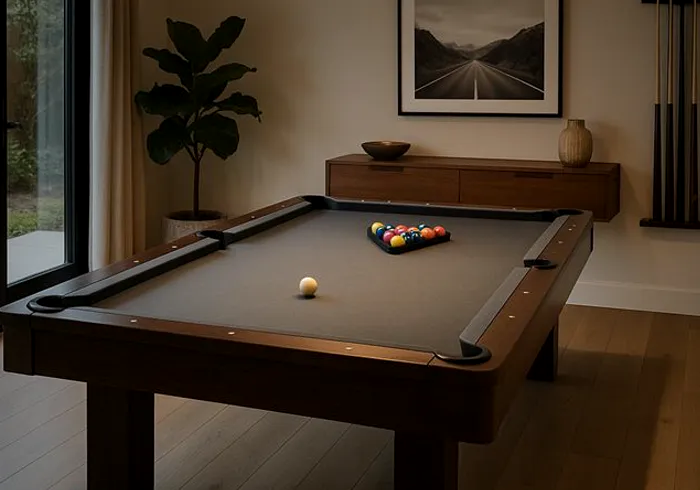
Bumper Pool: Rules and How to Play
Walk into an older rec room, a lake cabin, or a well-stocked basement bar and you may find a small octagonal or rectangular table with two holes, a cluster of mushroom-shaped posts in the middle, and no side pockets at all. That is bumper pool, a game that peaked in American homes in the 1960s and 70s and refuses to die, because it is genuinely fun.
Bumper pool trades the open runways of regular pool for an obstacle course. Every shot has to negotiate the bumpers, which turns a tiny table into a surprisingly deep game of banks and angles.
The Table and Equipment
A bumper pool table is small, commonly about 4.5 feet by 2.5 feet, and comes in rectangular and octagonal versions. There are exactly two pockets, one centered at each end, each usually ringed by a pair of bumpers guarding the entrance. The middle of the table holds a cross or diamond arrangement of additional bumpers, cushioned posts that balls carom off like tiny rail sections.
Each player gets five balls, traditionally red for one side and white for the other, with one ball of each color marked or spotted to indicate it must be sunk first. There is no cue ball; you strike your own colored balls directly with a shortened cue.
Setting Up and Starting
Each player places their five balls in the marked positions on their own end of the table, lined up around their cup, with the marked ball directly in front of the scoring hole. Play begins with both players shooting their marked ball at the same time, banking it off the side cushion toward the opponent's cup. Whoever gets closer, or sinks the ball outright, shoots next.
The marked ball rule matters: you must sink your marked ball before any of your other balls count. Sink a different ball first and it comes back out, often with a penalty ball handed to your opponent depending on the house rules.
The Rules of Play
Turns work like pool: sink one of your balls in the correct cup and you shoot again, miss and your opponent takes over. You score only in the cup at your opponent's end of the table. Knocking your own ball into your own cup is a foul, and the usual penalty is that your opponent gets to drop one of their balls into their target cup for free, a brutal swing on a five-ball game.
Jumping a ball off the table or shooting an opponent's ball are also fouls with similar penalties. The first player to sink all five balls wins. There is no slop concept; any ball that finds the right cup counts, banks and caroms included.
Strategy on a Crowded Table
Bumper pool rewards two skills: banking and blocking. Direct paths to the cup are almost always guarded by the bumpers flanking it, so the standard scoring shot is a bank off the side rail that curls in behind the guards. Learn the one or two reliable bank angles from your side and the game opens up.
Defense is the other half. Leaving your balls parked in front of your opponent's shooting lanes, or nestled against a center bumper where they are hard to move, costs them turns. Good players think about where a missed shot leaves the ball, not just whether it might drop.
Pace matters too. A ball fired hard at the cup can rattle off the guarding bumpers and fly back into open table, while a softly rolled bank dies into the hole. Most beginners shoot everything at break speed for the first hour; the game rewards the first player at the table who slows down.
Buying a Bumper Pool Table
New bumper pool tables are one of the cheaper ways into cue sports, with decent home models commonly running around $300 to $800 and heavier slate-bed versions costing more. Look for a slate or thick MDF bed that sits level, live rubber on the bumpers (dead bumpers ruin the game), and a cabinet sturdy enough not to shift when leaned on. Three-in-one combination tables that convert between bumper pool, poker, and dining are popular for small rooms.
Used tables turn up constantly for very little money. Check that the bumper posts rebound crisply and the cloth is not worn through, since recovering a table can cost as much as a used table itself.
Our picks
Links open the current selection and price on Amazon so you can compare real reviews before buying.
Hathaway Renegade Bumper Pool Table
Home game roomsA slate-bed bumper pool table with live rubber bumpers and included cues and balls, sized to fit rooms where a full pool table never could. Assembly is straightforward for two people.
Check price on AmazonBumper Pool Ball Set
Replacing worn or lost ballsA standard replacement set with five red and five white balls, including the two marked spot balls the rules require. Older tables almost always need these, since original balls wander off over the decades.
Check price on Amazon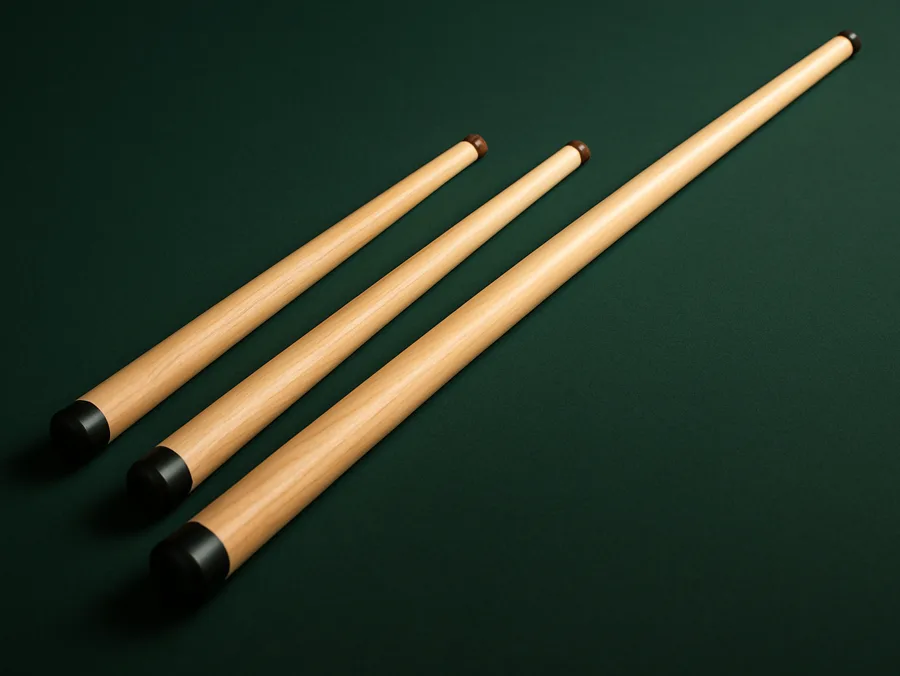
48-Inch Shorty Cue Pair
Small-room shootingFull 57-inch pool cues are clumsy over a bumper pool table, especially near walls. A pair of 48-inch shorty cues fits the table and the room, and they double as tight-corner cues for regular pool tables.
Check price on AmazonFrequently asked questions
How is bumper pool different from regular pool?
There is no cue ball and there are no corner pockets. Each player shoots their own five balls directly, aiming at a single cup at the opponent's end, and a field of cushioned bumpers blocks straight paths. It plays more like a banking and blocking duel than standard pool.
What happens if I sink a ball in my own cup?
That is a foul. Under common rules your opponent then gets to place one of their balls into their scoring cup for free, which is a two-ball swing. Some house rules simply forfeit the game if the ball was your last one.
How much space does a bumper pool table need?
Far less than a pool table. The table itself is around 4.5 feet long, and with short cues you can play comfortably in a space of roughly 10 feet by 8 feet. This is exactly why the game thrived in basements and cabins.
Related guides
LeaguePool is reader-supported. When you buy through links on this site we may earn an affiliate commission at no extra cost to you. As an Amazon Associate we earn from qualifying purchases.