Best Pool Tables for Apartments and Small Rooms
Wanting a pool table in an apartment runs into three hard constraints at once: floor space, floor loading, and the people below you. None of them are unsolvable, but pretending they do not exist leads to expensive mistakes, and occasionally to structural ones.
This is a realistic guide to getting a table into an apartment or a small home: how much room you actually need, what the weight question means in practice, which table types work in constrained spaces, and the honest alternatives when a full table simply will not fit.
The space math
Table size is not the number that matters. Cue clearance is.
You need enough room on every side to draw a cue back and stroke without hitting a wall. For a standard 58-inch cue, allow about 5 feet from the edge of the table on all sides.
- 6ft table (about 71 by 38 inches of play): room of roughly 15 by 12 feet for full clearance.
- 7ft table (about 78 by 39 inches): roughly 16 by 13 feet.
- 8ft table (about 88 by 44 inches): roughly 17 by 13.5 feet.
Most apartment living rooms do not offer that. The practical workaround is short cues: 48-inch and 52-inch cues cover the sides where the wall is close. They are not as pleasant to shoot with, but they make an otherwise impossible room workable, and every serious small-room table owner has a couple.
Measure before you shop. Tape the table footprint on the floor, then walk around it with a cue in your hand. That five-minute exercise prevents the most common regret in this category.
Weight and floors
A slate 7ft table weighs roughly 600 to 800 pounds. An 8ft table runs 700 to 1,000. That sounds alarming and usually is not.
The relevant factor is load distribution. A pool table spreads its weight across a large footprint through multiple legs, so the load per square foot is often comparable to a well-attended dinner party or a full bookcase. Modern residential floors are generally engineered to handle it.
Where caution is warranted:
- Older buildings with unknown joist condition or spans.
- Upper floors in wood-framed construction, particularly if the table would sit mid-span rather than near a load-bearing wall.
- Any building where you are not the owner, since your lease may have something to say about it.
If in doubt, position the table so its weight runs across joists rather than parallel to a single one, keep it closer to a bearing wall, and if the building is old or you are genuinely unsure, ask a structural engineer or the building management. That consultation costs far less than the alternative.
Also check the practical logistics: elevator size, stair turns and doorway widths. Slate sections are heavy and rigid and do not negotiate tight corners.
Table types that work in small spaces
7ft slate tables. The bar-box size, and the largest that belongs in most apartments. Plays properly and is what you find in bars, so league practice translates directly. Heavy, and requires professional moving.
6ft tables. A real compromise on play, since the game changes noticeably at this size and cue ball control feels cramped. But they fit rooms nothing else will, and a decent 6ft table beats no table.
Folding and rollaway tables. Legs fold and the table rolls to a wall or a corner. Almost always MDF-bedded and lighter, and stability is the trade. Genuinely useful in a multi-use room.
Dining pool tables. Do double duty in a room you already need for eating. Usually 7ft. A strong option in an apartment because the floor space is already committed.
Tabletop and mini tables. Not real pool, but they exist and they entertain. Set expectations accordingly.
What generally does not work: 8ft and 9ft slate tables. Not because they cannot be installed, but because the clearance requirement means the room becomes a pool room and nothing else.
The neighbor problem
This is the constraint people forget and then discover.
Pool is louder than it seems from inside the room. The break in particular sends a sharp impact through the table into the floor, and in an apartment that transmits downward. Balls dropping into pockets and the ball return rattling add more. Playing at eleven at night above a light sleeper is a way to meet your neighbors.
Mitigations that actually help:
- A thick rug or padded underlay beneath the table decouples some vibration from the floor.
- Rubber or felt pads under the leg feet.
- Soft-drop pockets rather than a hard ball return, where you have the choice.
- Sensible hours, which is free and more effective than any of the above.
None of this makes a table silent. If you live above someone who works nights, factor that into the decision honestly.
If a table truly does not fit
There are worthwhile alternatives, and some of them make you a better player than owning a cramped table would.
Buy a good cue and use a local room. Table time at a pool hall costs a fraction of owning, and you get full-size tables and better players to learn from.
Practice equipment at home. A stroke trainer, a mirror for stance work, and drills that need no table build real skills.
A 6ft table plus league membership. Home for casual play and repetition, league night for the real thing.
Wait. A pool table is a decades-long purchase. Buying the wrong size for the wrong room is worse than waiting until you have the space, especially since slate tables hold value and there is always one for sale.
If you do buy, buy for the room you have rather than the room you want. A 7ft table you can shoot comfortably on beats an 8ft table you have to shoot around.
Our picks
Links open the current selection and price on Amazon so you can compare real reviews before buying.
7ft slate pool table
The largest that fits most apartmentsBar-box size, plays properly, and matches the tables you will find in leagues and bars. Requires a professional move and a floor check.
Check price on Amazon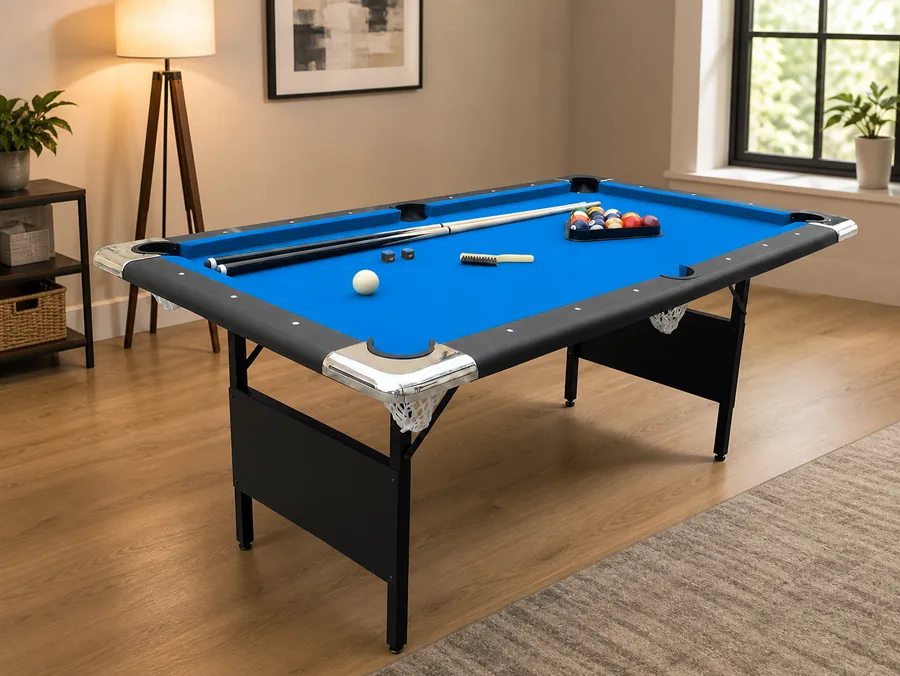
Folding or rollaway pool table
Multi-use roomsLegs fold and the table rolls aside. Lighter and MDF-bedded, so it trades true roll for the ability to reclaim the room.
Check price on Amazon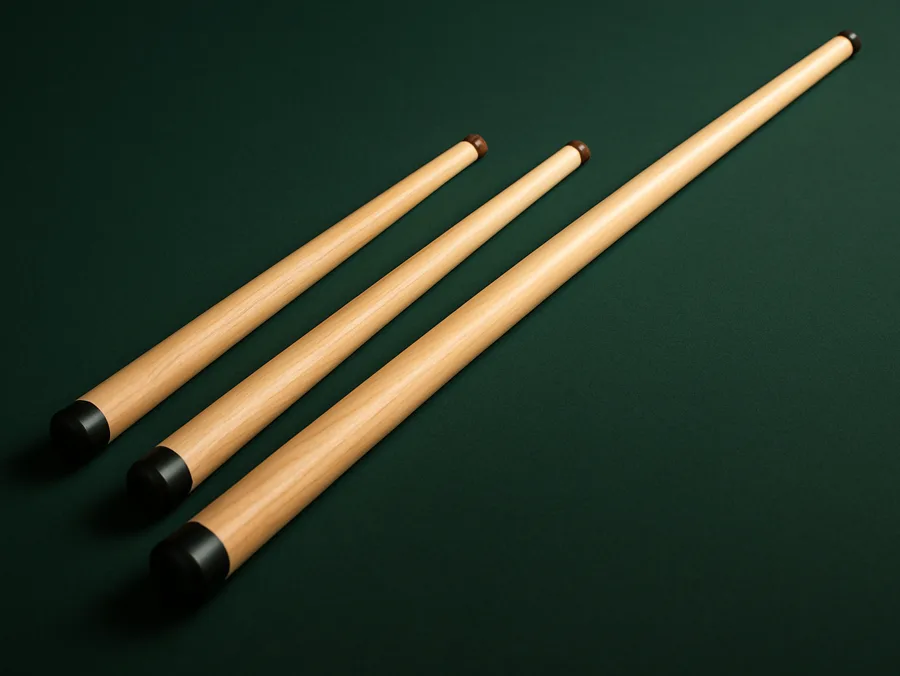
Short cues, 48 and 52 inch
Tight wallsThe single item that makes a small room workable. Covers the shots a full-length cue cannot when a wall is close.
Check price on AmazonThick rug or underlay
Keeping neighbors happyDecouples some vibration from the floor and reduces the impact noise that carries downward, especially on the break.
Check price on AmazonFrequently asked questions
What size pool table fits in an apartment?
A 7ft table needs about 16 by 13 feet for full cue clearance, and a 6ft table about 15 by 12 feet. Short 48 and 52-inch cues reduce those requirements significantly and are what make tight rooms workable.
Can an apartment floor hold a pool table?
Usually yes in modern construction, because the weight spreads across a large footprint through multiple legs. Be cautious in older buildings, on upper floors mid-span, and check your lease. When genuinely unsure, ask building management or a structural engineer.
How much does a pool table weigh?
A slate 7ft table is roughly 600 to 800 pounds and an 8ft table 700 to 1,000. MDF-bed and folding tables are far lighter, often under 300 pounds, which is part of why they suit apartments.
Are pool tables loud for neighbors below?
Yes, more than people expect. The break sends a sharp impact through the table into the floor. A thick rug under the table, pads under the legs and sensible playing hours all help, but nothing makes it silent.
Related guides
LeaguePool is reader-supported. When you buy through links on this site we may earn an affiliate commission at no extra cost to you. As an Amazon Associate we earn from qualifying purchases.