Kick Shots: Hitting Rails First with Confidence
Sooner or later your opponent hides the cue ball, and the only path to your object ball runs through a rail. Most players stab at kick shots with hope instead of a plan, hit the wrong half of the table, and hand over ball-in-hand. The truth is that basic kicks are learnable geometry. With one simple mirror system and an understanding of how spin and speed bend the rebound, you can turn kicks from panic shots into shots you expect to make contact on, and sometimes even pocket.
The One-Rail Mirror System
The foundation of kicking is the equal-angle principle: a ball leaving a rail departs at roughly the same angle it arrived. To use it, picture the object ball reflected through the rail, sitting the same distance behind the cushion as the real ball sits in front of it. Aim the cue ball straight at that imaginary mirrored ball, and the rebound brings you to the real one. On the table, you can estimate the mirror point by eye or by walking to the rail and finding the spot halfway between where the cue ball path meets the rail line and the object ball. Practice this with the object ball a foot off the rail before trying longer reflections across the table.
How English Bends the Rebound
Sidespin changes everything the mirror predicts. Running english, spin in the same direction the ball naturally travels after the rail, widens the rebound angle and adds pace off the cushion. Reverse english narrows the angle and kills speed. This is a tool, not just a hazard: if the mirror line is blocked, a touch of running english lets you aim shorter and let the spin carry the ball to the target, while reverse lets you aim longer and hold the line. But every tip of sidespin also pushes the cue ball off your aiming line before it ever reaches the rail, so learn the natural no-spin kick first and add english a half-tip at a time.
Speed Changes the Angle Too
The equal-angle rule is only exact at medium speed. Hit a rail hard and the cushion compresses, spitting the ball out shorter, at a narrower angle than the mirror predicts. Hit softly and the ball rolls long, widening the angle, especially on worn cloth. This is why a kick that worked in practice sails past the ball in a match when adrenaline adds pace. As a rule, kick at the lag speed you would use to roll the cue ball down and back the length of the table. That medium pace keeps the geometry honest and leaves the cue ball somewhere reasonable after contact instead of flying around the table.
Two-Rail Kicks in Brief
When the direct mirror is blocked, two-rail kicks open up. The most common is the corner two-railer: send the cue ball into the long rail near a corner so it rebounds off the short rail and comes out roughly along the diagonal. On most tables, a ball struck with natural rolling speed and no spin into the first rail near the corner will track out parallel to the diagonal of the table. Start by memorizing one reference line, cue ball from the center spot into the first diamond past the side pocket, and note where it lands. Adjust from that known line rather than calculating each kick from scratch.
Kick or Jump? Choosing Under Pressure
Jumping is tempting because it attacks the ball directly, but kicking is usually the smarter percentage. Kick when you mainly need a legal hit, when the blocker is close to the cue ball, or when a controlled rebound can leave the object ball safe even if you do not pocket it. Jump only when you have a real chance to score and a clean landing area. A thoughtful kick played at controlled speed often re-hides the cue ball or leaves a long, ugly shot, turning your defensive problem into your opponent's. Winning safety exchanges is where kicks pay the rent.
When you do commit to a kick, commit to a goal for it too. Decide before you get down whether you are kicking to pocket the ball, to drive it safe to a rail, or simply to make legal contact and leave the cue ball buried. A kick with a defined outcome gets a defined speed, and defined speed is what separates a real kicking game from hopeful contact.
Our picks
Links open the current selection and price on Amazon so you can compare real reviews before buying.
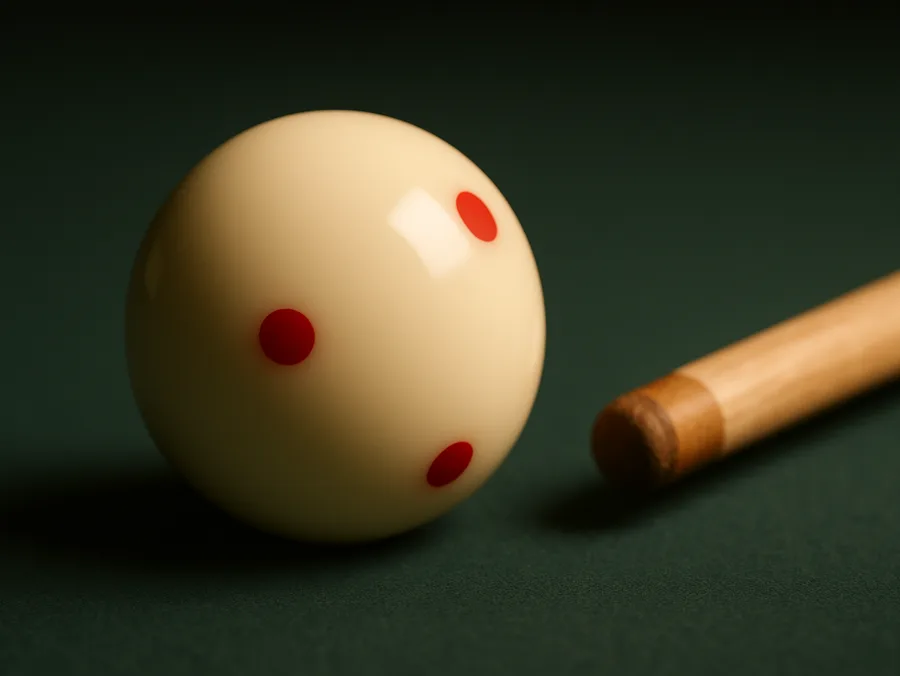
Marked Training Cue Ball
Seeing spin off railsA training ball with visible markings shows exactly how much sidespin you carried into the rail, which makes the difference between running and reverse english obvious.
Check price on AmazonKicking and Banking Drill Book
Learning rail systemsA good systems book lays out mirror, two-rail, and diamond-based kicking lines with diagrams you can set up and verify on your own table.
Check price on AmazonDonut Position Markers
Repeating exact setupsAdhesive donut markers let you place the cue ball and object ball in identical spots every attempt, so you can groove one kick line until it is automatic.
Check price on AmazonFrequently asked questions
Why do my kicks always come up short?
Usually you are hitting too hard. Firm hits compress the cushion and rebound at a narrower angle than the mirror predicts. Drop to a medium lag speed and most short misses disappear.
Should I use english on kick shots?
Not at first. Learn the natural no-spin line until you can make contact reliably, then add running or reverse english deliberately to widen or narrow the rebound when the natural line is blocked.
Do kick shots work the same on bar tables?
The principles are identical, but worn cloth and older cushions make balls rebound shorter and roll longer. Spend your warm-up hitting a few one-rail kicks to calibrate that specific table before your match.
Related guides
LeaguePool is reader-supported. When you buy through links on this site we may earn an affiliate commission at no extra cost to you. As an Amazon Associate we earn from qualifying purchases.