Best Pool Table Vacuums (and Which Are Safe)
The best pool table vacuum is one you can turn down: a canister, small shop vac or handheld with adjustable suction and a soft, non-rotating brush head. That is close to word for word what Simonis, the Belgian cloth maker, tells owners. Its care page says the cloth can be vacuumed carefully with a non-rotating brush-head attachment that doesn't let too much suction build, and adds that less is more.
The vacuum you probably already own is the wrong one. An upright with a spinning beater bar is built to rough up carpet, and it does the same thing to billiard cloth. This guide covers which machines are safe, how to run them, when to skip the vacuum and brush instead, and the one slate-seam problem almost nobody mentions.
Can you vacuum a pool table?
Yes, and the cloth maker says so. Simonis's cloth care page allows both brushing and vacuuming, with two conditions: a non-rotating brush head, and low enough suction that the cloth doesn't get pulled. It also warns that a strong vacuum can stretch the cloth and damage the grouting between slate sections, and it tells you to test the attachment on something other than the table first.
You will also find table sellers who say never vacuum the felt at all, because suction can lift cloth off the slate and leave wrinkles. Both camps are describing the same risk. Too much suction is the problem, so a vacuum you can't turn down shouldn't touch the table, and one you can is fine.
Brunswick's care guide doesn't mention vacuuming. It tells owners to brush with soft bristles in one direction, toward the pockets, and to keep a cover on the table when nobody is playing. If you only ever brush, you are following a major table maker's advice.
Which pool table vacuum cleaners are safe, and which aren't
| Vacuum type | Safe on cloth? | What to watch |
|---|---|---|
| Canister with suction control and a soft dusting or upholstery brush | Yes, the best choice | Start at the lowest setting. Many have a bleed valve on the wand; open it. |
| Small shop vac with a brush nozzle | Yes, if you can bleed off suction | Full shop-vac pull is far too strong. Crack the bleed hole or hold the nozzle higher. |
| Corded or cordless handheld, suction only | Usually | Some are too weak to lift fine chalk out of the weave. Skip any with a motorized brush head. |
| Stick vacuum in handheld mode with a dusting brush | Yes, with the floor head removed | The floor head almost always has a spinning roller. Take it off. |
| Upright with a beater bar or brush roll | No | Even with the roller switched off, the head is heavy and seals against the cloth. |
| Robot vacuum | No | Rotating brushes, and it will drive off the rail. |
A dedicated pool table vacuum cleaner is usually a small canister or handheld sold with soft attachments. It works, but you are paying for the label. If the vacuum in your closet has a suction dial and a soft dusting brush, you already own a pool table vacuum.
On handhelds, opinion splits even among people who run pool rooms. In one long AZBilliards thread, some swear by small canister handhelds and others say a small shop vac turned down does a far better job than any mini vac. One owner reported that a handheld with a rotating brush raised a fuzz on his Simonis 860 and slowed the cloth. That fits the rule: suction only, nothing spinning.
How to vacuum pool table felt without damaging it
- Test the suction off the table. Hold the brush head against a scrap of fabric or your sleeve. If it grabs and sucks the fabric in, turn it down or open the bleed valve. Simonis tells owners to run this kind of test before the vacuum ever touches the table.
- Brush first. A soft billiard brush, run in one direction toward the pockets, loosens chalk and moves the bulk of it to where you can collect it.
- Do the rails and the pocket corners before the bed. Chalk collects along the cushion nose and under the rail lip, and you don't want to knock it back onto clean cloth.
- Hover. Hold the brush head so the bristles just touch the cloth, or about an inch above it, and never press down. A head pressed flat makes a seal, and a seal is what lifts and stretches the cloth.
- Move slowly in one direction, the same way you brushed, usually head to foot. Don't scrub back and forth and don't park in one spot.
- Skip the crevice tool in the pockets. A narrow, hard nozzle concentrates suction on a small patch of cloth, and pocket liners and netting snag easily. Clean pockets by hand.
- If you wipe with a damp towel, do it last. Simonis says a damp (never wet) towel comes after vacuuming, because moisture makes leftover chalk clump. Let the cloth dry before you brush or play.
If you see the cloth ripple up toward the nozzle at any point, stop. That is too much suction, and it is exactly how cloth gets stretched loose at the rails.
The slate seam problem
A three-piece slate table has two seams across the bed. Installers fill those seams before the cloth goes on, traditionally with beeswax. Some use a hard filler such as auto-body putty instead.
Simonis warns that a strong vacuum can harm the grouting between slates, and a mechanic on AZBilliards made the same point more bluntly: on a table filled with putty instead of beeswax, vacuuming can pull filler out of the seams. If you had the table installed recently, ask the installer what was used. If you don't know, assume low suction only and never let the nozzle sit over a seam line.
A one-piece MDF bed has no seams to worry about, though the cloth on cheaper tables is often glued and stretched less carefully, so the same low-suction rule applies.
Brush or vacuum: what each one actually does
A brush moves chalk. A vacuum removes it. That is the whole argument in two sentences, and it's why most owners who care about their cloth end up using both.
Brushing alone pushes dust toward the pockets and the rail, and some of it goes airborne and settles back down. People in the pro-vacuum camp say that is why they stopped relying on the brush. The pro-brush camp answers that a brush loosens dust a vacuum alone leaves in the weave. Several room owners in the same AZBilliards discussion settled on brush first, then vacuum, which is what we recommend.
What a brush can't do is lift the fine dust that works down into the cloth over months. That embedded chalk is what slows a cloth down and leaves a blue haze in the break area. A low-suction vacuum gets it out, and a damp towel afterward picks up most of what's left.
If you want a brush, our pool table brush guide covers horsehair versus nylon. For the full wet-cleaning and stain routine, see how to clean pool table felt.
A cleaning routine that keeps cloth fast
| When | What to do | Time |
|---|---|---|
| After each session | Brush the bed in one direction toward the pockets, brush the rails, cover the table | About two minutes |
| Every week or two of regular play | Brush, then a low-suction vacuum pass over rails, corners and bed | 10 minutes |
| When the break area looks hazy or balls feel slow | Brush, vacuum, then a barely damp towel; let dry fully | 30 minutes plus drying |
| After a spill | Blot (don't rub) right away; follow our felt cleaning guide | Right away |
Nobody publishes an official schedule. Simonis and Brunswick both avoid giving one, so treat these intervals as a starting point and adjust to how much the table gets played. A basement table in a dusty room or a house with pets needs the weekly vacuum more than a covered table in a finished room.
Mistakes that ruin cloth
- Running an upright or any head with a spinning brush over the bed.
- Full suction, especially from a shop vac. The cloth stretches, loosens at the rails and can wrinkle.
- Pressing the nozzle flat against the cloth.
- Scrubbing back and forth instead of working one direction.
- Ammonia, bleach, strong detergents or a steam cleaner. Seybert's lists all of them as cloth killers, and heat plus moisture is the worst pairing.
- Wiping with a damp towel before vacuuming, which turns dust into paste.
- Chalking over the table. Chalk your tip over the floor and a lot less ends up on the cloth.
- Leaving the table uncovered in a sunny room. Brunswick says direct sun and temperature swings damage felt, wood and cushions.
None of these show up after one cleaning. They show up a year later as a cloth that plays slow and looks tired. When it gets that far, our refelting cost guide covers what a new cloth runs.
Do you even need to vacuum?
For a lightly used home table with a cover on it, no. A brush after you play and a cover between sessions handles most of it, and that is the routine Brunswick describes.
Vacuum if the table gets played several nights a week, if it lives in a basement or garage with dust, if pets share the room, or if you can see chalk ground into the break area. Worsted cloth like Simonis 860 shows embedded chalk quickly, and a gentle vacuum is the easiest way to keep it playing at the speed you paid for.
One product claims to replace both: the Quick-Clean spray's listing pitches it as a way to skip brushing and vacuuming. That is the seller's claim, and it's still a liquid on cloth, so use it the way any damp cleaning goes: after loose dust is gone, sparingly, and with time to dry.
Sources
- Simonis: cloth care and maintenance
- Brunswick Billiards: guide to billiard table care and maintenance
- Seybert's Billiards Supply: how to clean pool table felt
Our picks
Links open the current selection and price on Amazon so you can compare real reviews before buying.
Canister or handheld vacuum with suction control and a soft dusting brush
Safe deep cleaningThe tool that matters is the attachment and the dial. Look for adjustable suction or a bleed valve, plus a soft round dusting brush with nothing that spins. Run it at the lowest setting that still picks up chalk.
Check price on AmazonPro Series A15 Billiard Table Brush, 10.5-Inch
The brush pass before you vacuumA 10.5-inch head with an 85% horsehair, 15% nylon bristle blend that the maker says won't pill cloth. Brush toward the pockets first and the vacuum has half as much work to do.
Check price on AmazonHaloVerde Arc-Shaped Pool Table Rail Brush
Under the cushions and in cornersThe curved body reaches under the rail lip and into the corners, where chalk piles up and a vacuum head can't reach without pressing on the cloth. Soft PVC bristles set firmly so they don't shed onto the bed.
Check price on AmazonQuick-Clean Pool Table Felt Cleaner Spray
The damp-clean stepA cloth spray that the maker says is safe on every grade of cloth and brings faded cloth back toward its original color. Use it after brushing and vacuuming, never on a dusty table, and give it time to dry.
Check price on Amazon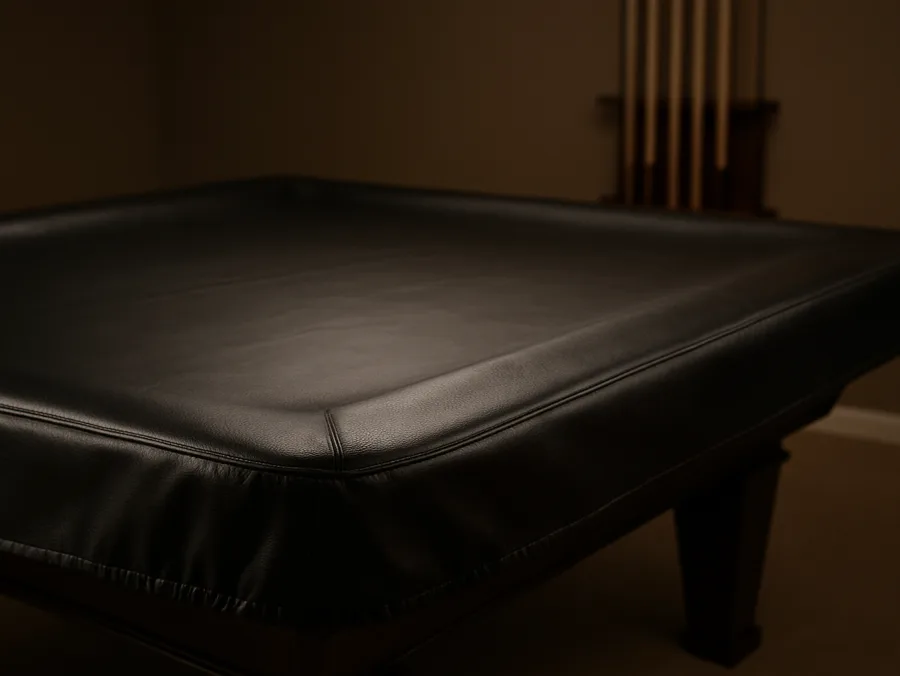
Fitted table cover
Less cleaning overallDust that settles between sessions is most of what you end up vacuuming. A fitted cover keeps it off and blocks the sun Brunswick warns about.
Check price on AmazonGhost Billiards Pool Cue Chalk
Less chalk on the clothMost of the dust you vacuum up started as chalk on a tip. A light touch with the cube, done over the floor rather than the table, keeps far less of it off the cloth whatever brand you use.
Check price on AmazonFrequently asked questions
Can you vacuum a pool table?
Yes. Simonis, the cloth maker, says its cloth can be vacuumed carefully with a non-rotating brush head and limited suction. Never use a spinning beater bar, test the suction off the table first, and hover the nozzle instead of pressing it down.
What is the best vacuum for a pool table?
A canister or small shop vac with adjustable suction and a soft dusting brush, run at a low setting. A good handheld also works if it has enough pull and no motorized brush. A dedicated pool table vacuum is optional.
Can I use a Dyson or other stick vacuum on pool table felt?
Only in handheld mode with the floor head removed and a soft dusting brush fitted, on the lowest power setting. The floor heads on most stick vacuums have a spinning roller, which should never touch billiard cloth.
Do I need a special pool table vacuum cleaner?
No. Products sold as pool table vacuums are mostly small canisters or handhelds with soft attachments. Any vacuum with adjustable suction and a soft, non-rotating dusting brush does the same job.
Can a shop vac be used on a pool table?
Yes, if you reduce the suction. Full shop vac pull will stretch the cloth. Open the bleed hole on the wand if it has one, use a brush nozzle, and hold it just above the cloth.
Which direction should I vacuum or brush pool table cloth?
One direction, the same every time, usually from the head of the table toward the foot or toward the pockets. Avoid scrubbing back and forth, which fluffs the cloth and spreads dust.
Should I brush or vacuum first?
Brush first to loosen chalk and move it toward the pockets, then vacuum to lift what the brush moved and what is embedded in the weave. Any damp wiping comes last, after the cloth is free of dust.
Can vacuuming damage the slate?
Strong suction can pull at the filler in the seams between slate sections, which Simonis warns about. Tables filled with putty instead of beeswax are most at risk. Keep suction low and do not hold the nozzle over a seam.
How often should I vacuum my pool table?
No maker publishes a schedule. Brush after each session, vacuum every week or two on a table that gets regular play, and do a deeper clean when the break area looks hazy. A covered, lightly used table may only need brushing.
Related guides
LeaguePool is reader-supported. When you buy through links on this site we may earn an affiliate commission at no extra cost to you. As an Amazon Associate we earn from qualifying purchases.