Pool Balls: Best Sets, Colors and Numbers Explained
A standard set of pool balls is 16 balls: a white cue ball plus 15 numbered object balls, each 2 1/4 inches across and close to 6 ounces. What separates a good set from a bad one is the resin. Phenolic resin sets (Aramith is the name you will see most) stay round and glossy for decades. Polyester sets cost a fraction as much and are fine for a basement table that gets a few games a month.
Below: the color and number chart, how many balls each game uses, what the materials change, the sets worth buying at each budget, and the ones to skip.
Our picks at a glance
| Set | Material | Who it suits |
|---|---|---|
| Aramith Premier | Phenolic resin | Most home tables, league practice |
| Aramith Premium | Phenolic resin, Vitrotech finish | Busy home rooms, hard breakers |
| Super Aramith Pro-Cup TV set | Super Aramith Pro phenolic | Serious players who want TV colors and the measle cue ball |
| GoSports Regulation set | Resin (polyester class) | Casual family play on a budget |
| JAPER BEES Deluxe set | Resin (polyester class) | Replacing the worn balls a table came with |
| VSSAL Marble set | Polyester resin, marble swirl | Game rooms where looks matter more than league feel |
The full cards with Amazon links are further down. If you are only here for the colors, the chart is next.
Pool ball colors and numbers
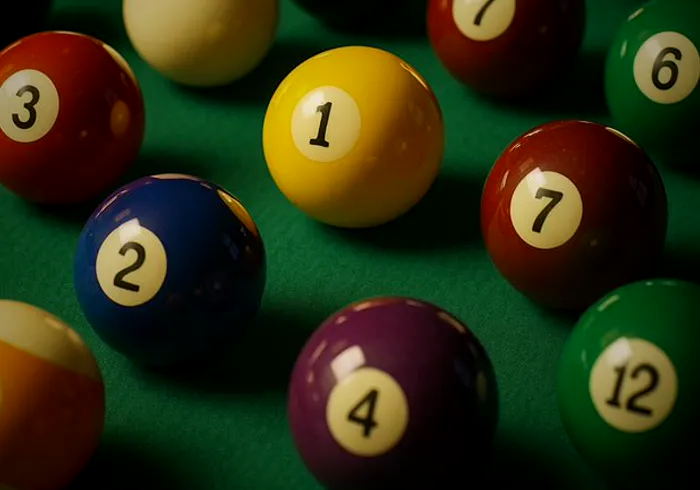
American pool sets follow one color scheme. Balls 1 through 7 are solids, the 8 is black, and 9 through 15 are stripes that repeat the solid colors in the same order. The colors are cast into the resin, not painted on, which is why a good set never flakes.
| Solid | Stripe | Color |
|---|---|---|
| 1 | 9 | Yellow |
| 2 | 10 | Blue |
| 3 | 11 | Red |
| 4 | 12 | Purple |
| 5 | 13 | Orange |
| 6 | 14 | Green |
| 7 | 15 | Maroon (dark brown red) |
| 8 | none | Black |
| Cue ball | none | White |
TV sets change two colors so viewers can tell balls apart on a screen: the 4 and 12 turn pink, and the 7 and 15 go to a lighter brown. Aramith's Pro-Cup TV sets use this scheme, so if your 4 ball is pink, you are not missing a ball.
British style eight ball is different again. Those sets have no numbers at all: seven reds, seven yellows (some sets use blue instead of red), a black and a white.
How many balls are in a set
Sixteen for American pool. The count changes by game, and so does the ball size, so a set for one game will not play right on another table.
| Game | Balls |
|---|---|
| American pool (8-ball, 9-ball, straight pool) | 15 numbered + cue ball = 16 |
| Nine-ball only | Balls 1 to 9 + cue ball, from the same set |
| British eight ball (blackball) | 7 red, 7 yellow, black, white = 16 |
| Snooker | 15 reds, 6 colors, white = 22 |
| Carom (three cushion) | 3 balls, no pockets |
| Russian pyramid | 15 numbered white + colored cue ball |
The sizes for each game are in the next section. One ball pool, 14.1 straight pool and the other house games all use the same 16 ball American set. Bumper pool uses its own smaller set and table (see what is bumper pool).
Are billiard balls the same as pool balls?
Not quite. Pool balls are one kind of billaird ball. "Billiard balls" covers every cue sport, and each game's governing body sets its own size and weight, so a set made for one game won't play right on another game's table.
| Game | Diameter | Weight rule | Source |
|---|---|---|---|
| Pool (American, 8-ball, 9-ball) | 2 1/4 in (57.15 mm) | 5 1/2 to 6 oz (156 to 170 g) | WPA |
| British pool (blackball) | Object balls 2 in (50.8 mm); cue ball 1 7/8 in (47.6 mm) | Object balls 116 g, cue ball 94 g, each within 2 g | WEPF |
| Snooker | 52.5 mm, within 0.05 mm | No set weight; heaviest and lightest ball in a set within 3 g | WPBSA |
| Carom (three-cushion) | 61 to 61.5 mm | 205 to 220 g, within 2 g of each other | UMB |
| Russian pyramid | 67 or 68 mm | Not published | Aramith sets |
So when a store says "billiard balls" and means a 16 ball numbered set, it's selling pool balls. A carom set is three unnumbered balls (a white and a yellow cue ball, one for each player, plus a red object ball), and they are bigger and heavier than pool balls. Snooker and British pool sets are smaller. Tolerances, cushion height and how to measure your own set are in regulation ball size and weight, and how pool, billiards and snooker differ compares the games themselves.
What are pool balls called?
- Cue ball: the plain white ball, the only one you strike with the cue. A cue ball with red dots (Aramith's Pro-Cup "measle" ball) is still just the cue ball; the dots show spin.
- Object balls: the 15 numbered balls you aim at and pocket.
- Solids: balls 1 to 7, one color all the way around.
- Stripes: balls 9 to 15, white with a band of color.
- The 8 ball: the black ball. In 8-ball it belongs to neither solids nor stripes, and it is the last ball you pocket.
In rotation games like 9-ball, nobody cares about solids and stripes; the number on the ball tells you which one to hit next. British sets drop the numbers and split the object balls into reds and yellows, and snooker calls its balls reds and colors.
How to arrange pool balls in the rack
For 8-ball, the 8 goes in the middle of the third row, the back two corners get one solid and one stripe, and the front ball sits on the foot spot. For 9-ball, use a diamond with the 1 in front and the 9 in the center.
That covers the order. Getting the balls frozen tight is the hard part, and our step by step racking guide walks through it, along with 10-ball and the racks that make it easier.
What billiard balls are made of, and why it matters
Almost every set sold today is one of two resins.
Phenolic resin is a thermoset plastic, made from phenol and formaldehyde under heat and pressure. Once it cures it cannot melt or soften again. That is the property you pay for. A hard break and a lot of spin heat the contact point between two balls, and phenolic shrugs that heat off. The surface stays smooth, so the balls keep rolling the same way and drag less on the cloth. Aramith says its phenolic balls last up to five times longer than polyester balls, and up to 40 years in home use. Those are the maker's numbers, not an independent test, but every source we read agrees phenolic outlasts polyester.
Polyester resin is cheaper and softer. It casts nicely, which is why marble and clear sets are nearly all polyester. The trade off shows up with time: the gloss dulls, small chips appear on the stripes, and spin-heavy shots can leave little burn marks where two balls met. A rough ball also scrubs the cloth harder on every roll, so a cheap set wears out your felt faster.
Older materials come up too. Ivory was the premium ball material for roughly three centuries, then celluloid (patented by John Wesley Hyatt in 1869), then Bakelite and acrylic before phenolic took over.. The history of billiard balls has the full story, including what to do with an old ivory or clay set.
How much a good set costs
Retail price bands are fairly consistent across billiards retailers:
- Budget polyester sets: most run about $30 to $60.
- Better polyester and mid grade sets: roughly $70 to $150.
- Phenolic sets: from about $150, rising past $500 for the top Aramith Tournament sets.
Do the math per year and the phenolic set usually wins for anyone who plays weekly. A $40 set that looks tired after a few seasons is not cheaper than a set that is still racking the same way when your kids are grown! The site shows live Amazon prices on each card, so check those rather than trusting any number printed in an article.
The cheap best sellers: when they make sense
The pool ball sets that sell the most on Amazon are not Aramith. They are 16 ball polyester class resin sets from brands like JAPER BEES and GoSports, several of them bought hundreds of times a month. Are they a mistake? Not for everyone.
They make sense if the table came with chipped balls and gets used at parties, if kids are learning, or if the room is more about hanging out than running racks. Check the listing for 2 1/4 inch diameter and about 6 ounces per ball, and look for a full set with a matching cue ball!
They are the wrong buy if you play in a league, practice position play, or break hard. Listing claims about tournament quality and perfect roundness are marketing, and no budget seller publishes measured tolerances the way Aramith lists its quality criteria. One more caution: the big accessory bundles (95 pieces, balls and cues included) are built to a price across every item. Buy the balls and the cues separately and you get better versions of both.
What is the best brand of pool balls?
Aramith, for most buyers. It's the brand the leagues and pro events pick: Aramith says the American Poolplayers Association and the United States Professional Poolplayers Association have both named it the exclusive official ball for their tournaments. Its parent company, Saluc in Belgium, claims a world market share above 85 percent (another line on the same page says nearly 80 percent, so read it as "most of the balls in the world"). Every set in Aramith's current pool range is phenolic.
Brunswick is the other name people ask about. It sells three sets of its own under the Brunswick name:
| Brunswick set | Material | Tolerance Brunswick lists | Brunswick list price |
|---|---|---|---|
| Traditional | Polyester | 0.003 in radial | $125 |
| Heritage | Phenolic resin | 0.003 in radial | $300 |
| Centennial | Premium grade phenolic resin, ivory tint with a "dart" on the number field | 0.001 in radial | $560 |
Brunswick doesn't say who casts these sets. One major retailer lists the Centennial as Aramith made, so the two brands may share a factory at the top end. Brunswick's "radial tolerance" is also not the same measuremment as the diameter and roundness figures Aramith publishes, so don't compare the numbers directly.
Our call: buy Aramith unless you want a set that matches a Brunswick table's look, in which case the Centennial is the one to get. Think twice about Brunswick's polyester Traditional set: phenolic sets start not far above its list price (see the price bands above), and phenolic is the material worth paying for. How the Aramith tiers differ is next.
Aramith tiers in one minute
Aramith's current pool range, from the top: Tournament Black, Tournament (both with the Duramith resin treatment), Super Aramith Pro, Premium (with the Vitrotech hardened finish) and Premier. Crown Standard still sells below Premier as the cheapest Aramith set, though it is no longer in Aramith's own lineup. Every one of them is phenolic.
For a home table, Premier is the stopping point most people should pick. Our Aramith tiers compared page goes ball by ball through what each step up buys, and Aramith pool balls vs cheap sets covers the brand itself and its specialty sets.
Which cue ball for a bar table: magnetic or oversize?
A coin-op table has to fish the cue ball out of the locked ball return after a scratch, and the cue ball you buy has to match how it does that:
- Tables that sort by size need an oversized cue ball, about 2 3/8 inches. It's bigger and heavier than the object balls, which is why bar cue balls feel heavy and draw shots die.
- Tables with a magnetic separator (current Valleys, for example) need a magnetic cue ball. It's regulation size with magnetic material inside, so it plays much closer to a normal ball.
- Diamond Smart Tables read the cue ball with an optical sensor, so a normal cue ball works.
Get it wrong and the cue ball disappears into storage with the object balls. A home table, even one with a ball return, takes an ordinary cue ball that matches your set. Our guide to coin operated tables explains each separator, and our replacement cue ball picks cover each type.
Marble, glow, custom and vintage sets
Marble swirl and clear sets look great under a table light. Nearly all of them are polyester, so treat them as a looks purchase. Before you buy, check that the listed weight is close to 6 ounces; some novelty sets run light, and a light set banks and breaks differently.
Glow in the dark sets only glow under black light. Aramith sells a phenolic glow kit that comes with reflective cushion strips and stickers to convert a whole table, which is a more complete party setup than glow balls alone.
Custom pool balls (a logo, a name, a team crest on the cue ball or 8 ball) are usually printed onto a standard ball. Ask the seller what resin the base ball is and whether the print is under a clear coat; a print that sits on top wears off where balls collide.
Vintage and ivory sets belong on a shelf. They were never made to modern tolerances, and old ivory and celluloid balls are far more fragile than resin. Play on them and you risk damaging both the set and the cloth.
Snooker, British and other non-American sets
Snooker balls are 52.5 mm and come 22 to a set, and they need a snooker table with matching pockets; on a pool table they look small and play oddly. British pool sets in red and yellow are smaller again at 2 inches and match British tables. If you want to try snooker at home on a pool table, read playing snooker on a pool table first!! For the rules of the British game, see blackball rules.
Keep a set rolling true
- Wipe the balls with a dry microfiber cloth after each session to take off chalk and hand oil.
- For a real cleaning, use a cleaner made for pool balls; Aramith's directions for its phenolic sets use its own Ball Cleaner and a microfiber cloth. Soap and water is allowed (the WPA's equipment specs say balls may be washed with it), but Simonis advises polish over water and soap won't bring back the shine, so keep it for a grimy emergency, wash by hand and dry each ball fully. Skip abrasives, furniture polish and the dishwasher.
- Store them out of direct sun. UV light can yellow resin over time.
- Replace a chipped or lost cue ball with one of the same size and material, preferably from the same maker. A mismatched cue ball throws off every position shot.
For the full method, see how to clean pool balls. Product picks for this are in our ball cleaner roundup, and cue ball options are in our replacement cue ball list.
Sources
- Aramith regular range pool balls (current lineup and sizes)
- The story behind Aramith (Saluc, durability claim)
- Aramith fun sets (glow in the dark kit)
- Aramith snooker and billiards sets (52.5 mm snooker balls)
- Billiard ball, Wikipedia (color scheme, solids and stripes, carom ball colors, materials history)
- WPA Recommended Equipment Specifications, section 16 (pool ball size, weight, soap and water)
- World Eight-ball Pool Federation byelaws, Annexe A (British pool balls)
- WPBSA Official Rules of Snooker (snooker balls)
- UMB World Rules of Carom Billiard, article 12 (carom balls)
- Aramith other games (Russian pyramid sets)
- Brunswick Billiards: billiard balls (Traditional, Heritage and Centennial sets, list prices)
- Aramith cleaning products (Ball Cleaner directions)
- Simonis cloth care and maintenance (polish, not water, for balls)
Our picks
Links open the current selection and price on Amazon so you can compare real reviews before buying.
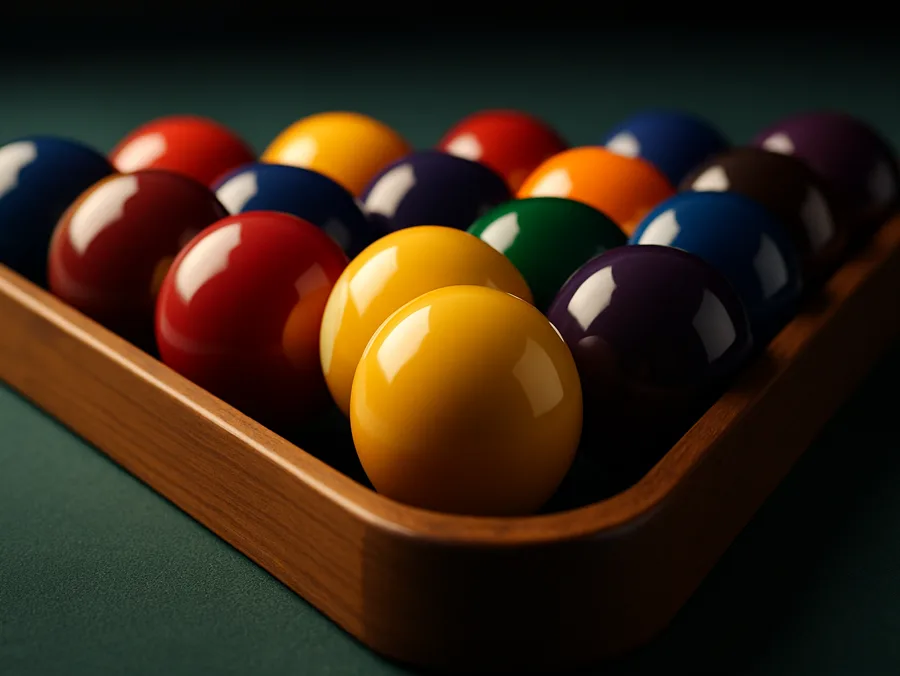
Aramith Premier Ball Set
Most home tablesReal Aramith phenolic resin with classic numbers in the stripe, and Aramith itself calls Premier its best balance of quality and price. This is the set to buy once and stop thinking about. The detail first-time buyers miss: a phenolic set keeps its polish, so it is still kind to your cloth years from now.
Check price on Amazon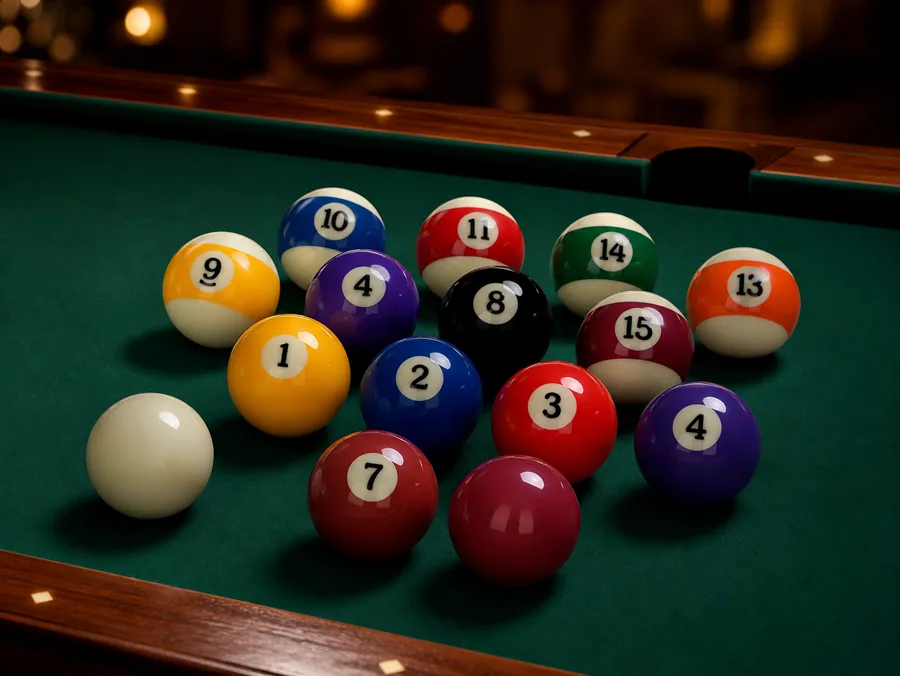
Aramith Premium Belgian Ball Set
Busy home rooms and hard breakersBelgian made phenolic set of 16 at 2 1/4 inches, finished with Aramith's Vitrotech heat curing process for impact resistance. Aramith rates its phenolic at up to five times the life of polyester balls. Pick it if the table gets hammered by a houseful of guests every weekend.
Check price on Amazon
Super Aramith TV Pro-Cup Ball Set
Serious players who want the TV lookSuper Aramith Pro resin in the TV color scheme, with the red dotted Pro-Cup cue ball that makes every bit of spin visible. If you watch pro events, this is the look you know, and the measle cue ball doubles as a training aid every time you play.
Check price on Amazon
GoSports Regulation Pool Ball Set
Casual family playA full 16 ball set (15 numbered balls plus a cue ball) in high gloss resin, sized for regulation tables. A sensible replacement for the worn balls that came with a table or a backup set for parties.
Check price on Amazon
JAPER BEES Deluxe Pool Ball Set
Budget replacement setThe most bought set in Amazon's pool ball results when we checked, a complete 16 ball resin set at 2 1/4 inches and 6 ounces with a modern number style. The seller offers a money back policy on quality issues. Fine for casual play; league players should step up to phenolic.
Check price on Amazon
VSSAL Marble Swirl Ball Set
Game rooms that want a different lookPolyester resin balls with a marble swirl pattern and a fade resistant coating, listed at 2 1/4 inches and 6 ounces within 0.1 ounce. Comes with a lifetime warranty from the seller. Buy it for the look, not for league practice.
Check price on AmazonFrequently asked questions
How many balls are in a pool set?
Sixteen. There are 15 numbered object balls (solids 1 to 7, the black 8, stripes 9 to 15) and a white cue ball. Snooker sets have 22 balls and carom uses only 3.
What are the pool ball colors in order?
1 yellow, 2 blue, 3 red, 4 purple, 5 orange, 6 green, 7 maroon, 8 black. The stripes 9 to 15 repeat the same colors in the same order. TV sets make the 4 and 12 pink and the 7 and 15 a lighter brown.
What size are regulation pool balls?
2 1/4 inches (57.15 mm) in diameter and 5 1/2 to 6 ounces (156 to 170 grams) each under WPA specifications. British pool object balls are 2 inches and snooker balls 52.5 mm, so the sets are not interchangeable.
Are billiard balls the same as pool balls?
Pool balls are one type of billiard ball. Pool balls are 2 1/4 inches (57.15 mm), carom balls are larger at 61 to 61.5 mm and 205 to 220 grams, snooker balls are 52.5 mm, and British pool object balls are 2 inches. Each game needs its own set.
What are pool balls called?
The white ball you hit is the cue ball. The 15 numbered balls are object balls: 1 to 7 are solids, 9 to 15 are stripes, and the black ball is the 8 ball.
What is the best brand of pool balls?
Aramith. It is the official ball of the APA and the US Professional Poolplayers Association, and its maker claims most of the world market. Brunswick's phenolic Heritage and Centennial sets are the main alternative, mainly for owners who want a set that matches a Brunswick table.
What are the best pool balls for home use?
An Aramith Premier phenolic set suits most home tables and should last for decades. If the table only sees a few games a year, a well reviewed 2 1/4 inch polyester set is enough.
Are Aramith balls worth it?
For anyone who plays weekly or more, yes. Phenolic resin stays smooth and round far longer than polyester and is gentler on cloth. For a table used a few times a year, a decent polyester set is enough.
What is the best material for billiard balls?
Phenolic resin. It is a thermoset that does not soften from the heat of hard collisions, so it resists burn marks and chips. Polyester is cheaper and fine for light use.
Can I buy just a cue ball?
Yes. Match the size and material of your set, ideally the same maker. Coin operated tables need a magnetic or oversized cue ball instead, depending on how the table returns it.
How long do pool balls last?
Aramith claims up to 40 years of home use for its phenolic sets. Budget polyester sets dull and chip much sooner; one vendor estimate puts them at about eight years of regular play.
Related guides
LeaguePool is reader-supported. When you buy through links on this site we may earn an affiliate commission at no extra cost to you. As an Amazon Associate we earn from qualifying purchases.