How to Use a Mechanical Bridge (Without Embarrassment)
No piece of equipment in pool carries more unearned shame than the mechanical bridge. Bar players call it the granny stick and would rather attempt a one legged stretch across the table than touch it. Meanwhile, watch any professional event and you will see world class players reach for the bridge without a moment of hesitation, because they know the math: a controlled stroke with the bridge beats a wobbling stretch every single time. Here is when to use it, how to use it properly, and how to need it less.
When to reach for it
The rule is simple: never stretch past control. If reaching the shot means one foot in the air, your bridge hand at full fingertip extension, or your chin nowhere near the cue, your stroke is compromised more than you think. Stretched out, most players cannot draw the ball, cannot hit soft speed accurately, and push their aim line off without feeling it. The bridge removes all of that. The professionals treat it as a normal tool precisely because they have measured what stretching costs. A good habit: address the shot normally, and if your back foot wants to leave the floor or your bridge hand lands short of the spot you wanted, stand up and get the bridge. Deciding early beats talking yourself into a hero stretch after you are already down.
Setting up the bridge head
Lay the bridge head flat on the cloth behind the cue ball, aligned with your shot line, close enough that the cue ball sits within comfortable stroke range, usually six to ten inches from the head. Standard bridge heads offer two positions: laid flat, the shallow grooves give you a normal height bridge for center and below center hits, and stood on its side, the taller notches raise the cue to shoot over an obstructing ball or reach elevated contact. Use the lowest position the shot allows, since higher means less stable and harder to hit accurately. Never stack the bridge on top of another cue unless you truly must, and if you do, take the simplest shot available. Hold the bridge handle flat to the cloth with your non shooting hand, pressing gently down so nothing rocks during the stroke.
The stroke: shorter and straighter
Grip the cue near the butt end with your thumb and first two fingers, palm facing in or down, like holding a dart or a pen, not a full fist. Stand facing the shot at a slight angle so your stroking arm swings freely, drop your chin toward the cue line, and take a few short practice strokes. The bridge stroke is a shorter, more compact motion than your normal stroke, and that is fine, because the bridge head is doing the stabilizing your bridge hand normally does. Keep the cue as level as possible, accelerate smoothly, and follow straight through. Aim for center ball or modest follow. Draw and heavy english are possible with the bridge but they are low percentage; the winning play is almost always the simple pot with natural position. Take the make.
Etiquette and care
A few courtesies keep you welcome in any room. Replace the bridge where it lives when you finish, not sprawled across the table or leaned on a rail. Do not drag the head across the cloth, lift and place it. In leagues where a shared bridge hangs under the table, check the head for chalk grime before laying it on a clean table, and never use a bridge with a cracked head that can scratch the cloth or the cue ball. If you own a table, buy your own bridge head, screw it onto a spare cue butt or a house cue, and it will always be within reach, which quietly removes the last excuse for not using it.
Needing it less
The bridge is the right tool for genuinely unreachable shots, but many shots feel unreachable because of a cramped hand bridge. Practice a full length rail bridge, fingers on the rail and cue sliding along the rail top, and a long open hand bridge with your arm extended and fingers spread wide for stability. Both extend your comfortable reach by several inches. A screw on cue extension helps too, adding length to the butt for those in between shots where your bridge hand reaches fine but your grip hand runs out of cue. Between better hand bridges, an extension, and zero ego about the mechanical bridge, no shot on the table should ever be taken off balance.
Our picks
Links open the current selection and price on Amazon so you can compare real reviews before buying.
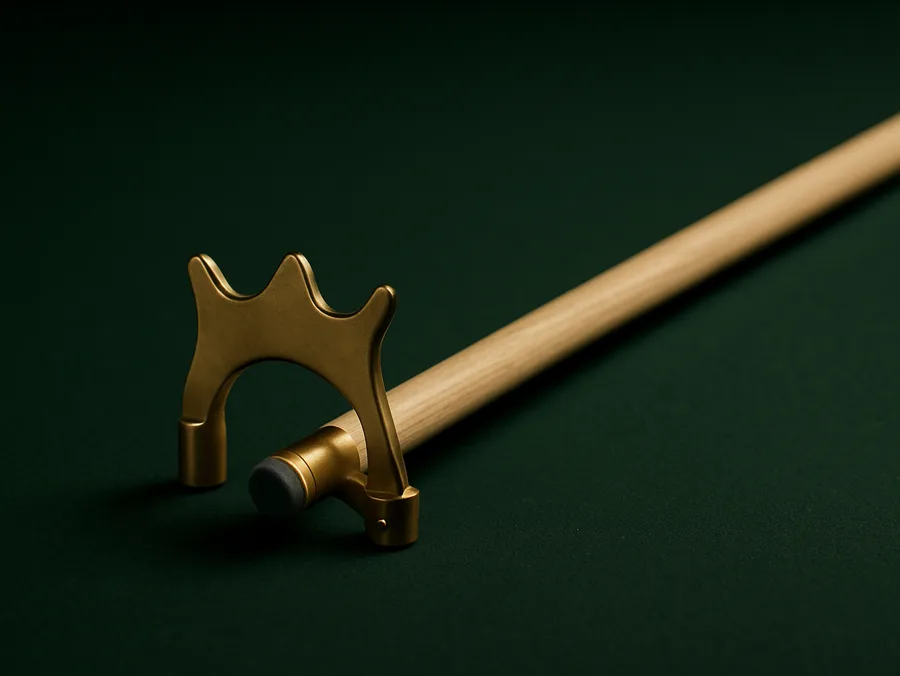
Standard Brass Bridge Head
Add to any spare cueA classic screw on bridge head that fits a standard house cue butt. Own your own and the bridge is always clean and within reach.
Check price on Amazon
Complete Mechanical Bridge Stick
Home tables, ready to useA full bridge with head and stick included, sized for home rooms. Hang it under the table and stop stretching.
Check price on Amazon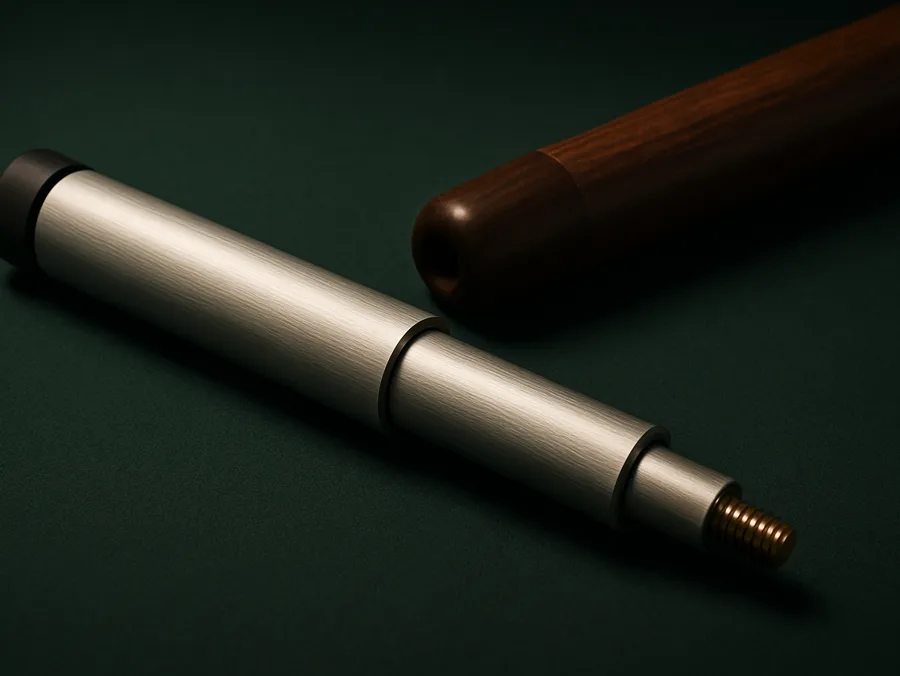
Telescoping Cue Extension
In between reach shotsScrews onto the cue butt to add reach for shots where your bridge hand gets there but the cue runs out. Pros carry one for a reason.
Check price on AmazonFrequently asked questions
Is using a mechanical bridge cheating or bad form?
Neither. It is legal in every rulebook and standard practice at the professional level. The only rule to know is that in most rule sets you may not use the bridge to touch or move any ball, only to support your cue.
Can I draw the cue ball with a mechanical bridge?
Yes, but it is a low percentage shot because the compact grip limits stroke power and touch. Address below center, keep the cue level, and accelerate through. In game situations, choose the simple shot with natural position instead whenever one exists.
How far away should the bridge head be from the cue ball?
About six to ten inches, similar to a normal bridge hand distance. Closer gives more accuracy for soft shots; slightly farther allows a longer stroke for firm shots. Keep the head flat and press it lightly into the cloth so it cannot shift.
Related guides
LeaguePool is reader-supported. When you buy through links on this site we may earn an affiliate commission at no extra cost to you. As an Amazon Associate we earn from qualifying purchases.