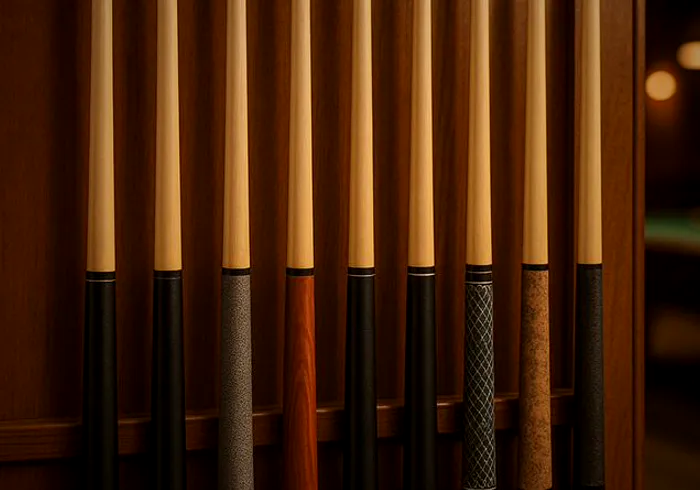
Best Budget Carbon Fiber Pool Cue Shafts
When carbon shafts cost five hundred dollars and there was one serious option, buying one was a big decision. That market is gone. There are now carbon shafts at two hundred dollars, at one hundred and fifty, and lower still from sellers you have never heard of. Some of them are genuinely good. Some are hollow tubes with a tip glued on.
This guide is about telling those apart: what actually differs between a cheap carbon shaft and an expensive one, which corners get cut, how to inspect one when it arrives, and how to decide whether to save the money or spend it.
What separates cheap carbon from expensive carbon
All carbon shafts share the fundamental advantages of the material. The differences are in engineering and quality control.
End mass management. Deflection depends on how much mass sits in the front few inches. Flagship shafts are engineered carefully here, with specific wall thicknesses and internal construction. Cheap shafts are often simpler, which usually means somewhat more deflection. Still less than standard maple, just not best in class.
Taper consistency. How the diameter changes along the shaft affects how it feels in your bridge. Precise, repeatable tapers cost money to produce.
Joint machining. The threaded insert has to be concentric and cleanly cut, or the shaft will not seat squarely against the butt. This is where the worst budget shafts fail, and it is not always visible.
Tip quality. Budget shafts ship with cheap tips. This is the easiest problem to fix and the one that most affects your first impression.
Finish. Surface texture and coating quality vary. A shaft that feels slightly tacky through the bridge is annoying, though it can often be improved.
Where the price tiers land
- Under $120: proceed with caution. Some are usable, many have joint or taper problems. Only buy with a return policy and inspect immediately.
- $150 to $250: the value zone. Established secondary brands, generally decent construction, tips that are worth replacing but not alarming.
- $250 to $350: mainstream brands with real quality control and warranty support. If you want carbon without risk, this is where to shop.
- $400 and up: flagship shafts, best in class deflection numbers, most model variants, best resale value.
The interesting observation is how flat the performance curve is above the value zone. Between a $220 shaft and a $500 shaft, the difference in deflection is small enough that most amateurs would not identify it blind. The differences you will notice are tip, finish and, honestly, the logo.
How to inspect a budget carbon shaft
Do this the day it arrives, while the return window is open.
- Check the joint seat. Thread it onto your butt. It should tighten smoothly and sit flush with no gap and no rocking. Grit, cross-threading resistance or a visible gap is a return.
- Roll it on a flat surface. Carbon should not warp, but a shaft can be assembled with a misaligned insert, which shows up as wobble.
- Look at the tip and ferrule. Square, centered, and the same diameter as the shaft end. A tip glued on off-center is a sign of careless assembly.
- Feel the surface. Run it through your bridge hand. Slightly slick is normal. Tacky or gritty is not.
- Measure the diameter. Sellers overstate. A shaft sold as 12.5mm that measures 12.1mm is a different product from the one you ordered.
- Hit fifty balls. Listen for rattles or buzzes, which indicate a loose internal structure.
Any failure on the first three is a return, not a repair. Carbon shafts are generally not fixable the way wood is.
Plan on a tip swap
The factory tip on a budget carbon shaft is usually the weakest part of the package, and it is also the part that determines how the shaft feels for the first month.
Budget for a quality layered tip in medium hardness and proper installation by someone who does it regularly. On a carbon shaft this matters more than on wood, because the tip has to be trimmed and shaped flush to a ferrule that is part of the shaft structure. A sloppy install on carbon is harder to correct.
Once you have a good tip on it, a $200 carbon shaft plays remarkably close to a shaft costing three times as much. That combination, a value-tier carbon shaft plus a proper tip, is the best price-to-performance package currently available in cue equipment.
When to spend more anyway
Three cases justify the flagship price.
You compete seriously. If you are playing for money or ranking points, the marginal deflection performance and the certainty of quality control are worth paying for, and you probably want the option to replace an identical shaft if something happens to yours.
You care about resale. Flagship carbon shafts hold value strongly on the used market. Budget shafts do not. If you expect to change your mind, the expensive shaft may cost less to own.
You want specific diameters or joint options. The established brands offer more variants. Budget makers often offer one or two diameters and a limited set of pins.
Otherwise, buy in the value zone, put a good tip on it, and spend the difference on table time. The equipment gap between a well-chosen budget carbon shaft and a flagship one is smaller than the gap between you today and you after twenty hours of focused practice.
Our picks
Links open the current selection and price on Amazon so you can compare real reviews before buying.
Value-tier carbon fiber shaft
Best price to performanceThe $150 to $250 zone delivers the core carbon benefits. Confirm your joint pin, buy with a return policy, and inspect on arrival.
Check price on Amazon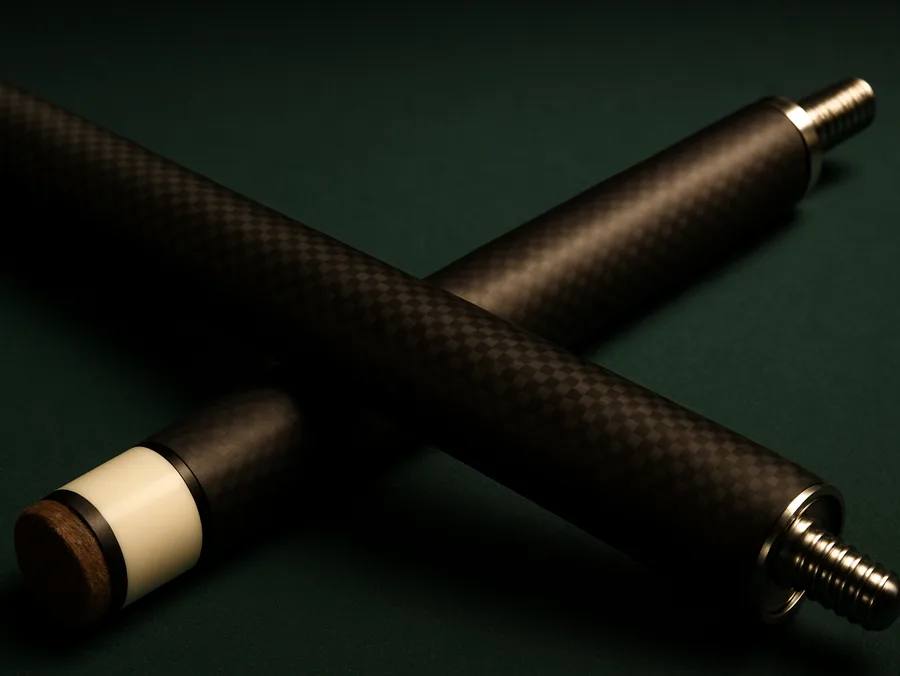
Mainstream brand carbon shaft
Carbon without riskAround $250 to $350 you get real quality control and warranty support from companies with a reputation to protect.
Check price on Amazon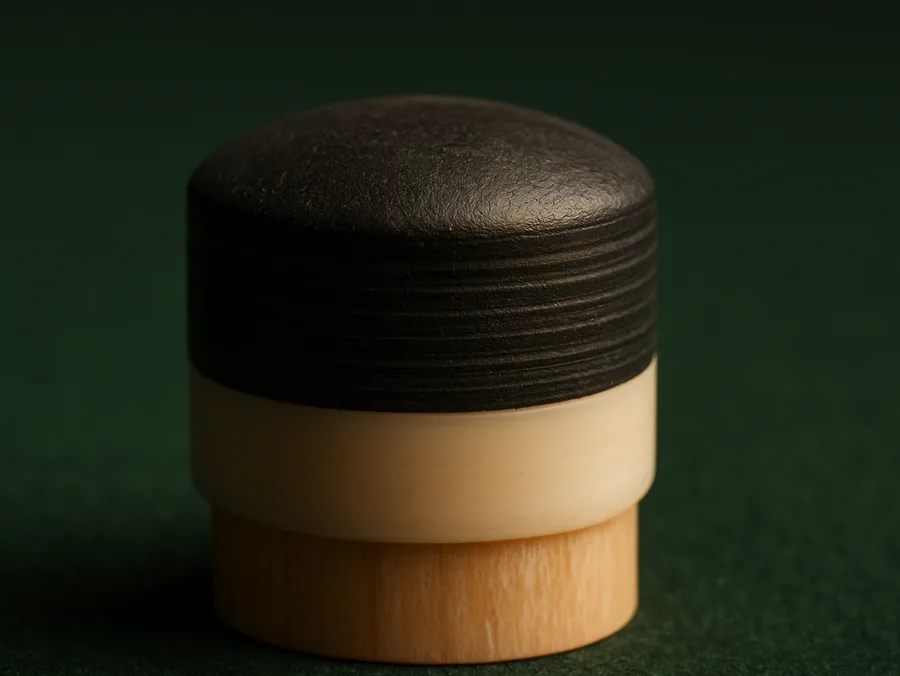
Layered leather tip
The necessary upgradeBudget carbon shafts ship with cheap tips. A quality layered tip properly installed is what makes the shaft feel like the real thing.
Check price on Amazon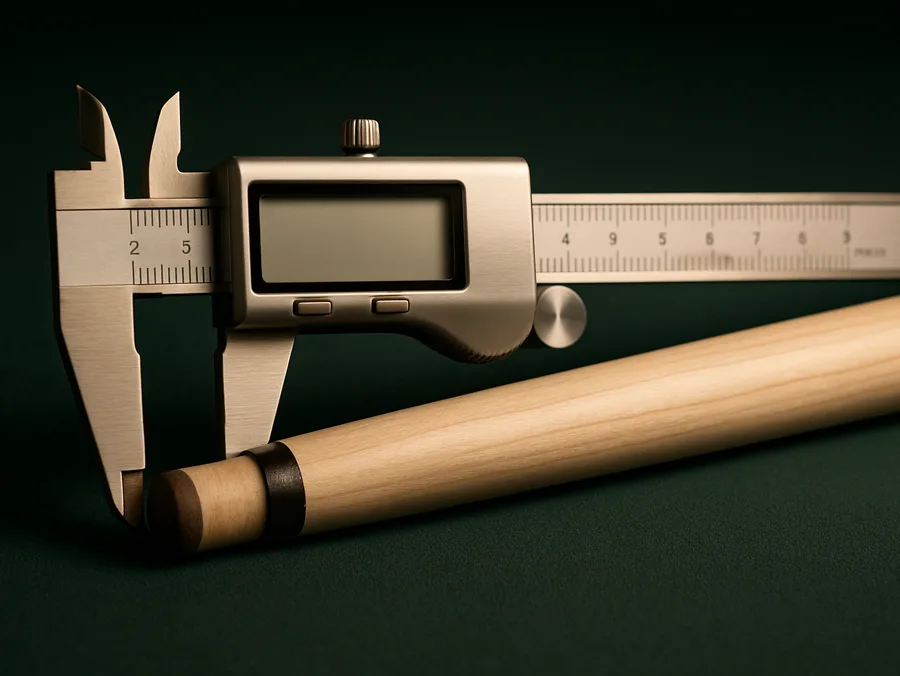
Digital caliper
Verifying what you gotBudget sellers overstate diameters. A cheap caliper confirms the shaft you received matches the shaft you ordered.
Check price on AmazonFrequently asked questions
Are cheap carbon fiber shafts any good?
In the $150 to $300 range, many are genuinely good and deliver the core benefits of carbon. Below about $120 quality control becomes unreliable, particularly at the joint. Always buy with a return policy and inspect the shaft immediately.
What do you give up with a budget carbon shaft?
Usually slightly more deflection than a flagship shaft, a cheaper factory tip, less consistent finish and taper, fewer diameter and joint options, and much weaker resale value. The core benefits of no warping and no maintenance are the same.
Will a budget carbon shaft fit my cue?
Only if you order the correct joint pin. Budget makers often support fewer pin types than the major brands, so confirm your pin, joint diameter and whether your joint is flat-faced or piloted before ordering.
Should I replace the tip on a new carbon shaft?
On a budget shaft, usually yes. The factory tip is the weakest part of the package and the biggest influence on how the shaft feels. Have a quality layered tip installed by someone who works on carbon regularly.
Related guides
LeaguePool is reader-supported. When you buy through links on this site we may earn an affiliate commission at no extra cost to you. As an Amazon Associate we earn from qualifying purchases.