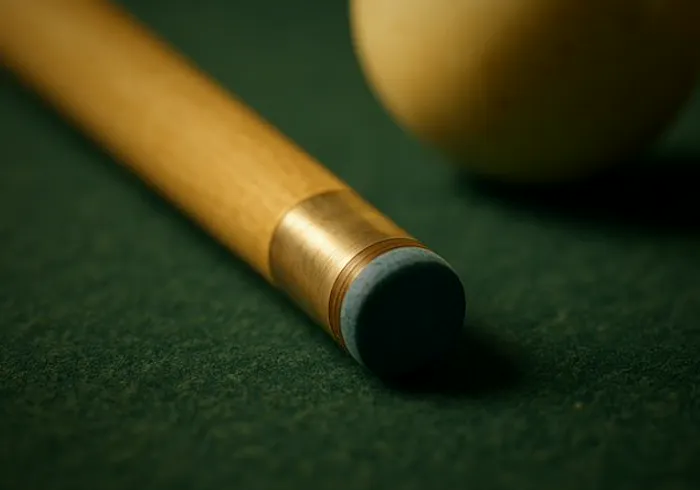
Wood vs Carbon Fiber Cue Shaft: Squirt, Feel, Cost
A carbon fiber shaft won't warp, wipes clean with a damp towel and usually squirts less than a standard maple shaft. A maple shaft costs a fraction as much, can be cleaned, sanded and repaired by any cue mechanic, and gives the hit most players learned on. On squirt, the gap is smaller than the marketing suggests: in Dr. Dave Alciatore's 2019 shaft test, a Predator Z-2 low-deflection maple shaft squirted about as little as a Predator Revo carbon shaft!
So the honest comparison isn't wood against carbon. It's standard maple, low-deflection maple and carbon, and each wins on something different.
Wood vs carbon fiber side by side
| Standard maple | Low-deflection maple | Carbon fiber | |
|---|---|---|---|
| Construction | Solid hard rock maple | Spliced or bored-out maple with a light front end | Carbon fiber in resin, hollow or foam-filled at the front |
| Squirt with side spin | The most of the three | Low; the best ones match carbon | Low, but varies by shaft |
| Warping | Can warp from heat, humidity or leaning | Same risk, though spliced builds hold straighter | Doesn't warp |
| Dings and scratches | Dents on table edges | Same | Very hard to ding |
| Cleaning | Clean, burnish, seal; fine sanding now and then | Same | Damp towel; no sanding |
| Repair and refinish | Easy, any cue mechanic | Easy | Tip work only, by someone who works on carbon |
| Tip sizes | Commonly 13mm | About 11.75 to 12.9mm | About 10.5 to 13mm |
| Price, shaft only | The cheapest option | Cuetec AVID $179 list; Predator lists 314-3 from $359 | Budget under $200; name brand about $425 to $570 |
Prices are list or retailer prices checked October 15, 2026; the product cards show live Amazon prices.
What each shaft is made of
A standard shaft is a turned piece of straight-grained hard rock maple with a plastic ferrule and a leather tip. Low-deflection maple shafts take weight out of the front. Predator's 314-3 is built from ten maple sections it matches for density and stiffness, and Cuetec's AVID bores out more than 10 inches of the front end and bonds glass composite layers over the maple.
Carbon fiber is a composite: thousands of carbon strands set in resin, laid up as a tube. Because the material is so stiff for its weight, makers can keep the front end thin-walled and light! The Cuetec Cynergy uses carbon over a polyurrethane foam core that stops five inches short of the tip. The Revo has no ferrule at all.
Hybrids sit in between. Predator's Centro has a carbon core inside maple, and Lucasi sells carbon-infused wood shafts. They aim for wood feel with less squirt, and they still need wood care on the outside.
Deflection: how much less does carbon squirt?
Squirt (also called deflection) is how far the cue ball pushes off your aiming line when you hit it off center for side spin. Dr. Dave's research shows it is set by the mass in roughly the last 5 to 8 inches of the shaft. Less mass there, less squirt. Taper and butt changes farther back don't change squirt at all.
Here is what his published testing found:
| Shaft tested (Billiards Digest, Jan 2019) | Material | Squirt result | Natural pivot length |
|---|---|---|---|
| Predator Revo 12.4 | Carbon | Lowest, tied with the Z-2 | 19 in |
| Predator Z-2 | Low-deflection maple | About the same as the Revo | 19 in |
| Cuetec CT-15K (Cynergy) | Carbon | More than the Revo and Z-2 | 13 in |
| Players cue, solid maple, large ferrule | Standard maple | The most | 9.5 in |
A longer natural pivot length means less squirt. A typical low-deflection shaft squirts about 1.8 degrees near the maximum tip offset, against about 2.5 degrees for a typical regular shaft, or roughly 30% less, per Dr. Dave in a separate article.
Three things follow from that. Carbon is not one number: two carbon shafts can differ more than a carbon and a good LD maple shaft. Carbon's stifness cuts both ways, because a stiff front end can raise the effective endmass, so a carbon shaft can squirt about as much as a slightly heavier wood one. And no shaft gives you more spin; a low-deflection shaft only changes where you have to hit the ball to get it. If you mostly hit center ball, squirt barely affects you. Our guide to low-deflection shafts goes deeper.
Feel and sound
This is where most of the argument lives, and it's preference. Maple has the warmer, more muted hit most players grew up with. Carbon is stiffer, and players describe it as crisper, louder or less communicative. Some love it from the first rack. Some strong players have tried carbon and gone back to wood.
Dr. Dave's work on cue feel explains why both camps can be right: the vibration and sound you notice arrive after the ball has already left the tip, so they don't steer the shot. What does change is efficiency. A stiffer shaft, especially with a hard tip, sends the cue ball a little faster for the same stroke, which most players adjust to within a few shots.
Two smaller differences:
- Friction. Carbon is slick in an open bridge. Some players love that; others with dry hands find it hard to control in a closed bridge until they get used to it.
- Extreme spin. Dr. Dave notes that a stiffer carbon front end flexes less, so on shots near the miscue limit the tip can double-hit the ball. Some LD shafts also make massé and jump shots with a playing cue harder.
A soft or medium layered tip takes some edge off carbon's hit. Our guide to soft and hard cue tips covers the trade-off.
Durability, care and repair
Carbon's real win is ownership. It doesn't absorb moisture, so it plays the same in a humid summer, a dry winter and a car trunk, and it doesn't ding when it bangs a table edge. Cleaning is a damp towel.
Maple needs more attention: wipe it after play, burnish it, keep it sealed, store it in a case and never lean it in a corner for weeks. Our guides to cleaning a pool cue and storing one cover the routine.
The flip side is repair. A maple shaft can be cleaned up, lightly sanded, re-ferruled and refinished by any cue mechanic for years. Carbon can't be sanded at all: McDermott says sanding voids the Defy's lifetime warranty, and Cuetec forbids abrasives on Cynergy shafts and requires a ferrule more than 1mm tall after a retip. Tip work on carbon is a different job from wood, so use a mechanic who does it regularly. A cracked or crushed carbon shaft is usually replaced, not repaired.
Warranties reflect this. Predator covers the Revo against warpage for life, McDermott gives the Defy a lifetime warranty, and Viking's Siege carries a limited lifetime warranty if you register it within 30 days. Wood is a different story: Cuetec, for one, covers wood warpage only when it comes from a defect, not from storage or humidity.
Price
| Option | Typical cost (Oct 2026) | Notes |
|---|---|---|
| Standard maple shaft | Lowest | Often comes with any decent cue |
| Cuetec AVID glass-bonded maple shaft | $179 list | 3/8x14 Cuetec joint only |
| Predator 314-3 LD maple | From $359 on Predator's site | Many joint pins |
| Budget carbon | About $140 to $200 | Quality varies; inspect on arrival |
| Name-brand carbon | About $425 to $570 | Cynergy, Defy, Siege, Revo |
The cheap carbon tier is covered in our budget carbon fiber shafts guide, and the name brands in best carbon fiber shafts. Whether the difference is worth paying for is a separate question with its own page: are carbon fiber shafts worth it.
What changes when you switch from wood to carbon
Your aim, mostly. Years with a standard maple shaft teach you to aim a little to compensate for squirt whenever you use english. A carbon or LD shaft squirts less, so that habit now over-corrects, and the first sessions usually bring misses on long shots with side spin. Dr. Dave lists this adjustment as one of the main drawbacks of switching. It also works in reverse: if you get used to a low-squirt shaft and then borrow a house cue, expect a few misses.
Bridge length plays into it. A shaft's natural pivot length (9.5 inches for the standard maple shaft in Dr. Dave's test, 19 for the Revo) affects how back-hand english aiming methods work for you, so players with short bridges may notice the change more.
Diameter changes too. Most players coming from 13mm maple should order a 12.4 to 12.5mm carbon shaft, because that keeps the bridge feel close. Thinner shafts feel skinny in a closed bridge. Our guides to tip sizes and Revo diameters cover the sizes.
And fit: the shaft must match your butt's joint pin, thread style and collar. Butts with a 3/8x8 pin, common on import cues, aren't offered name-brand carbon shafts. Check our guide to joint types before ordering.
Which shaft fits which player
- Your cue rides in a car, flies with you or lives in a damp room: carbon. Stability is the one thing wood can't match.
- You love the hit of wood and want less squirt: low-deflection maple, such as the Predator 314-3 or Lucasi Zero Flexpoint.
- You play center ball and keep your cue indoors: standard maple. Spend the money on a better tip.
- Straight pool or one-pocket players who play soft: Predator itself notes many top players in those games prefer maple's feel.
- You hate maintenance: carbon, or a glass-bonded AVID if you play a Cuetec.
- You're curious but unsure: a budget carbon shaft under $200 is the cheapest way to find out.
Sources
- Dr. Dave Alciatore: The Carbon Fiber Shaft Craze (Billiards Digest, Jan 2019)
- Dr. Dave Alciatore: Pool Myths Part 4, LD Shafts (Billiards Digest, Sept 2017)
- Dr. Dave Alciatore: shaft endmass and stiffness effects
- Dr. Dave Alciatore: carbon fiber shafts
- Dr. Dave Alciatore: low-squirt shaft advantages and disadvantages
- Dr. Dave Alciatore: cue feel and hit
- Predator: carbon, hybrid and maple shaft specifications and prices
- Cuetec: AVID shaft construction and care
- McDermott: Defy carbon shaft warranty and care
Our picks
Links open the current selection and price on Amazon so you can compare real reviews before buying.

Predator 314-3 Maple Shaft, 3/8x10
Low deflection, wood feelThe low-deflection maple shaft Predator built its name on: ten maple sections matched for density and stiffness and a light front end. Pick it if you want less squirt but won't give up the hit of wood. This listing is the 3/8x10 black-collar version.
Amazon price: $359.00 as of 7:12 AM EST. Price and availability can change; Amazon’s price at purchase applies.
Check price on Amazon
Lucasi Zero Flexpoint Shaft, 12.75mm Uni-Loc
LD maple for Uni-Loc buttsA solid-core low-deflection shaft with a 12.75mm Everest laminated tip and a pro taper Lucasi says Thorsten Hohmann designed. It keeps a near-13mm feel in the bridge, which makes the switch from standard maple easy.
Amazon price: $237.93 as of 6:48 AM EST. Price and availability can change; Amazon’s price at purchase applies.
Check price on Amazon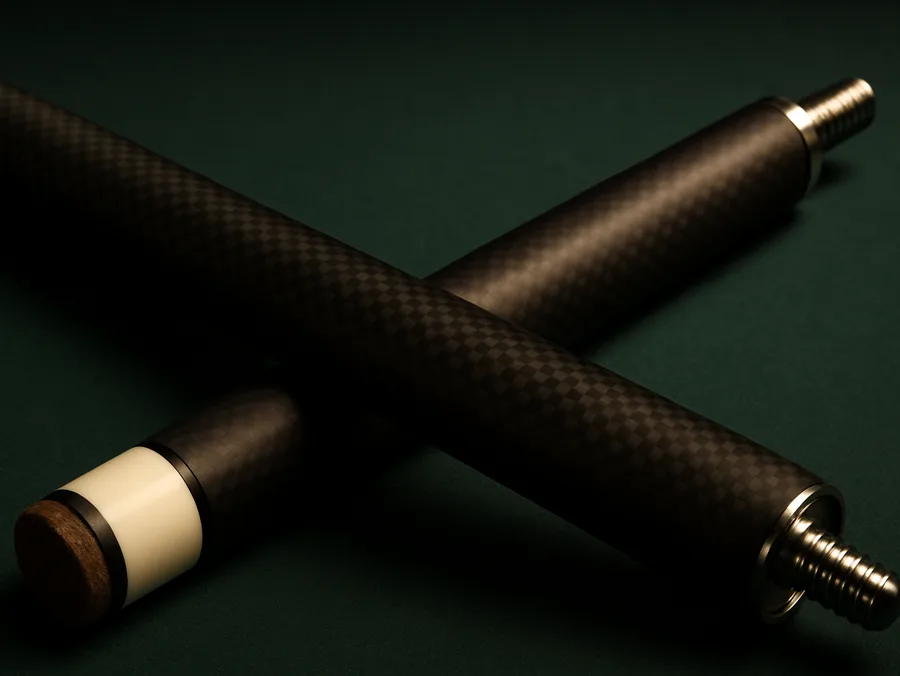
Cuetec Cynergy CT-15K Carbon Shaft
Carbon for most cuesCarbon over a foam core with a Tiger Sniper tip, in 10.5, 11.8 or 12.5mm and more joint pins than any other name-brand carbon shaft. Order the 12.5mm if you're coming from 13mm maple. This link goes to the 12.5mm in 3/8x10, and Cuetec lists other pins separately.
Check price on Amazon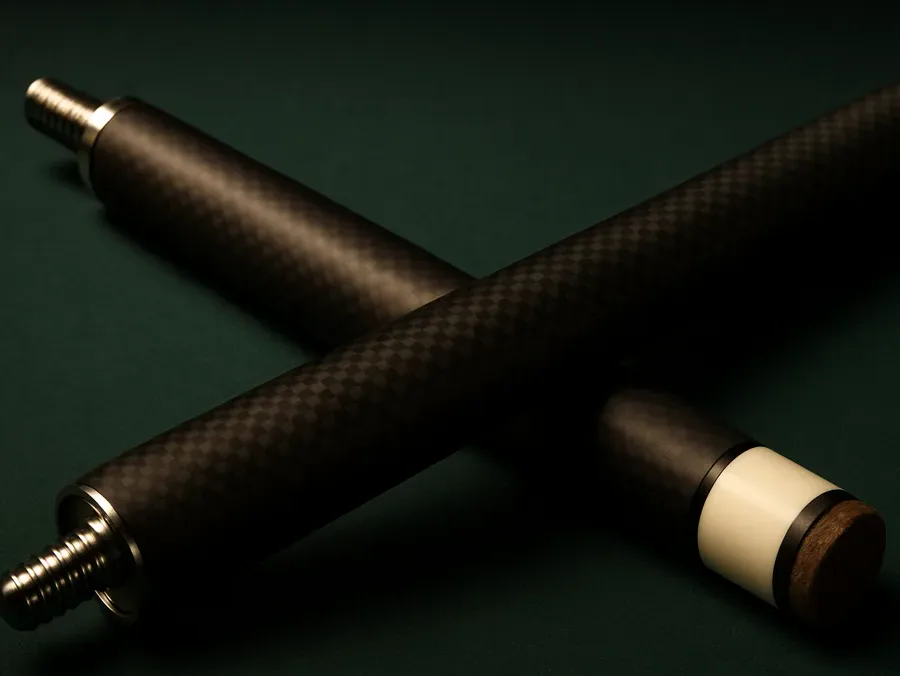
Predator REVO 12.4 Carbon Shaft, Radial
The carbon benchmarkFerruleless, with what Predator calls the lowest front-end mass in its lineup, and the shaft that tied a Z-2 maple shaft for the least squirt in Dr. Dave's 2019 test. This listing is the Radial pin.
Check price on Amazon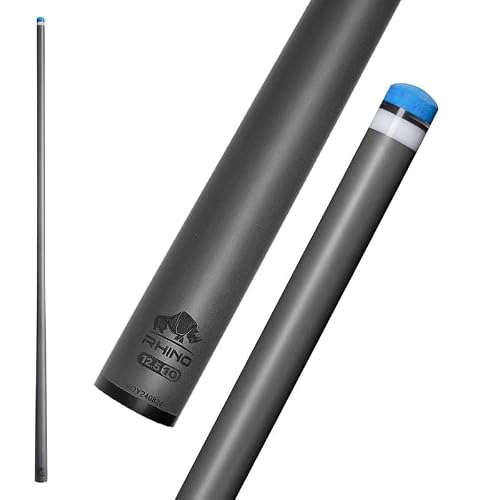
RHINO 3/8-10 Carbon Fiber Pool Cue Shaft
Trying carbon cheaplyA 30-inch pro-taper carbon shaft on a stainless 3/8-10 joint, offered with tips from 10.5 to 12.9mm. If you can't decide between wood and carbon, this costs a fraction of a name brand to find out.
Amazon price: $162.28 as of 6:48 AM EST. Price and availability can change; Amazon’s price at purchase applies.
Check price on AmazonFrequently asked questions
Is carbon fiber better than wood for a cue shaft?
Better for stability and upkeep: it won't warp, ding or need sanding. Usually lower in squirt than standard maple. Not better in feel, which is preference, and not cheaper. A good low-deflection maple shaft can match carbon on squirt for less money.
Do carbon fiber shafts deflect less than wood?
Than standard maple, usually yes. Than low-deflection maple, not always. In Dr. Dave Alciatore's 2019 test, a Predator Z-2 maple shaft squirted about the same as a Predator Revo, and a Cuetec CT-15K carbon shaft squirted more than both.
Do carbon fiber shafts warp?
No. Carbon doesn't absorb moisture, so humidity and heat don't bend it. Predator covers the Revo against warpage for life.
Why does carbon fiber feel different from wood?
It is stiffer, so the hit sounds louder and feels crisper, and a stiff shaft sends the ball slightly faster for the same stroke. The vibration you feel happens after the ball leaves the tip, so the difference is mostly about comfort and speed control.
Can you sand a carbon fiber shaft?
No. Clean it with a damp towel. Sanding damages the finish and voids warranties such as McDermott's on the Defy.
Do pros use carbon or wood shafts?
Both. Carbon has become common on the pro tours, mainly for consistency while traveling, but some top players still prefer maple, especially in slower games like straight pool and one-pocket.
How long does a maple shaft last compared to carbon?
A maple shaft stored well can stay straight for decades, but cleaning and sanding slowly remove wood and it can warp if neglected. A carbon shaft keeps its shape indefinitely; its life ends with damage, not age.
Will a carbon shaft fit my cue?
Only if it is made for your exact joint pin and thread. Many import cues use a 3/8x8 pin that name-brand carbon shafts aren't sold in, so check the pin before you order.
Is a carbon fiber shaft good for a beginner?
It won't hurt, but it won't fix a beginner's misses either. Most of them come from the stroke, not squirt. A maple cue with a warpage warranty is the better first buy.
Related guides
LeaguePool is reader-supported. When you buy through links on this site we may earn an affiliate commission at no extra cost to you. As an Amazon Associate we earn from qualifying purchases.