Best Replacement Cue Shafts (Maple and Hybrid)
Shafts get replaced for two reasons. Something went wrong with the one you have, or you want a better one. Both lead to the same shopping problem: a shaft is not a universal part, and the wrong one will not thread onto your cue at all.
This guide covers what you need to know before ordering, how maple, hybrid and carbon shafts differ in practice, what diameter to choose, and which replacement shafts are worth the money at each level.
Before you order: know your joint
This is where every failed shaft purchase starts. A shaft threads onto a pin in your cue's butt, and pins are not standardized across the industry.
Common pin types:
- 3/8-10 - a coarse thread found on many American cues.
- Radial - a rounded thread profile used widely by several major brands.
- Uni-Loc - quick-release, engages in a fraction of a turn.
- 5/16-18 and 5/16-14 - older and still common standards.
- Proprietary pins - some makers use their own, which limits your options to their shafts or a custom fit.
Also check: joint diameter, usually around 13/16 inch or 5/8 inch, and whether the joint face is flat or piloted, meaning it has a raised collar the shaft seats over. A flat-faced shaft will not seat correctly on a piloted joint.
If you do not know, take the cue to a billiards shop and ask. It takes them thirty seconds, and it saves you an ordering mistake that is annoying to unwind.
Maple, hybrid or carbon
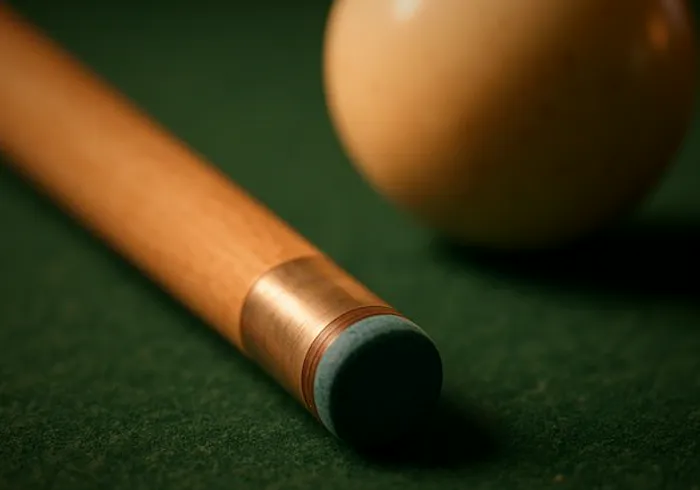
Plain maple. The traditional shaft. Warm feel, familiar sound, inexpensive to replace. It needs maintenance: cleaning, occasional burnishing, and protection from humidity. It can warp. For center-ball players and anyone who values classic feel, it remains a perfectly good choice.
Low-deflection maple. Built to reduce mass at the front end, often by hollowing or laminating the tip section. The cue ball squirts less when you use side spin, so your aim compensations shrink. Still wood, still needs care, meaningfully more expensive.
Hybrid. Wood with carbon or composite elements, aiming at low deflection and stability while keeping some wood feel. A reasonable middle path.
Carbon fiber. Does not warp, does not swell in humidity, needs essentially no maintenance, and delivers low deflection. Feels and sounds different from wood: brighter and firmer. The most expensive option, and the one with the fewest ongoing costs.
There is no correct answer here. A strong player can play brilliantly with any of them. Choose based on whether you use spin heavily, how much maintenance you want to do, and what feel you enjoy.
Choosing a diameter
Tip diameter changes how the shaft feels and how easily you reach extreme spin.
- 13mm: the traditional American size. Forgiving, solid in the bridge, plenty of contact area.
- 12.5mm to 12.9mm: the modern mainstream. Slightly more precise without feeling thin.
- 11.8mm to 12.4mm: the thin end, common on carbon shafts. Easier to reach the edges of the cue ball, less forgiving of an imprecise contact point.
The practical advice: do not change diameter dramatically in one step. Going from 13mm to 11.8mm is a bigger adjustment than most people expect, and it will feel wrong for a couple of weeks even if it is ultimately better for you. Move one step and reassess.
Also be aware that shafts get thinner over their lives if they are sanded. If your current shaft measures 12.4mm but started at 13mm, buying a 13mm replacement will feel like a change even though it is the original specification.
When a shaft needs replacing rather than repairing
Not every shaft problem needs a new shaft.
Repairable: a worn or mushroomed tip, a dirty or sticky surface, a slightly loose ferrule, minor dings that can be steamed out. All routine cue shop work at modest cost.
Sometimes repairable: a cracked ferrule, which can be replaced, though the cost approaches a cheap shaft. A minor warp, which can occasionally be corrected but often returns.
Replace it: a significant warp, a crack running into the shaft wood, a shaft sanded so thin it no longer suits your game, or a shaft that has been repaired repeatedly. At some point the sensible move is a new shaft, especially since a replacement can be an upgrade rather than a like-for-like swap.
That last point is the opportunity. If you are replacing a damaged maple shaft anyway, the incremental cost of stepping up to low deflection is often smaller than it looks, and it is the one equipment change that reliably improves results.
Buying two shafts
Many players end up with a second shaft, and there are two good reasons for it.
A spare. If your only shaft gets damaged the night before a tournament, you are playing with a house cue. A backup shaft, even a plain maple one, removes that risk.
Different jobs. Some players keep a low-deflection shaft for playing and a stiffer, thicker shaft for breaking, all on the same butt. That saves carrying a separate break cue while still keeping break impacts off the good tip.
If you go this route, get joint protectors for both, and make sure your case has room. A 2x2 case, meaning two butts and two shafts, is the standard configuration for exactly this reason.
One last note: keep both shafts on the same tip type if you can. Switching between a soft tip and a hard tip mid-session changes how the cue ball responds, and that is a variable you do not need.
Our picks
Links open the current selection and price on Amazon so you can compare real reviews before buying.
Maple replacement shaft
Like-for-like replacementPlain maple in your pin type and diameter. The straightforward fix when a shaft is damaged and you like how the cue already plays.
Check price on AmazonLow-deflection maple shaft
Upgrading while you replaceReduces squirt on shots with side spin. The one equipment change that reliably improves accuracy for players who use english.
Check price on Amazon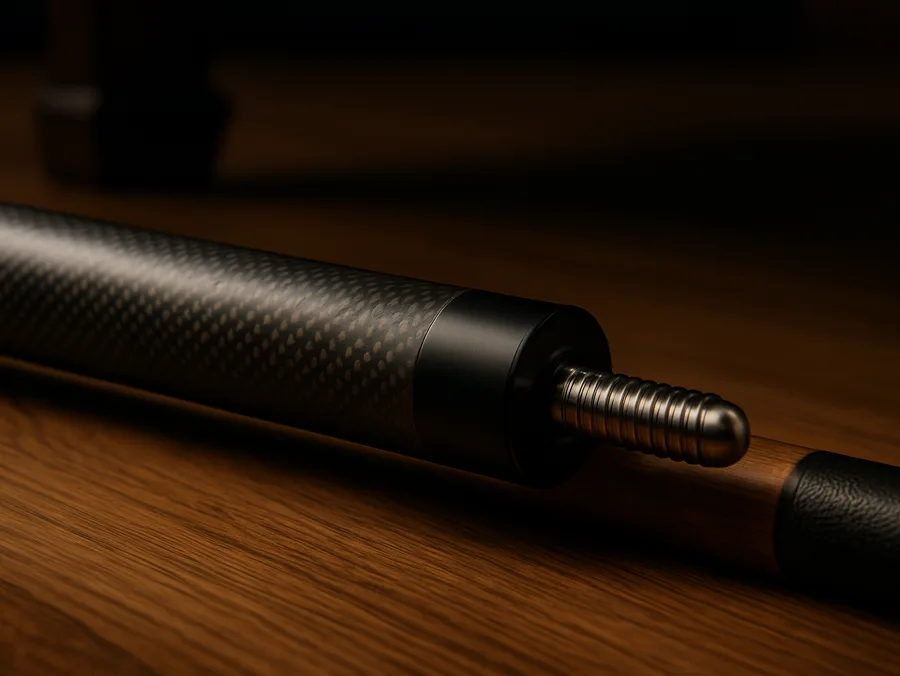
Carbon fiber shaft
No maintenance, no warpingStable in any humidity, needs no sealing or burnishing, and delivers low deflection. Confirm pin type and joint diameter before ordering.
Check price on Amazon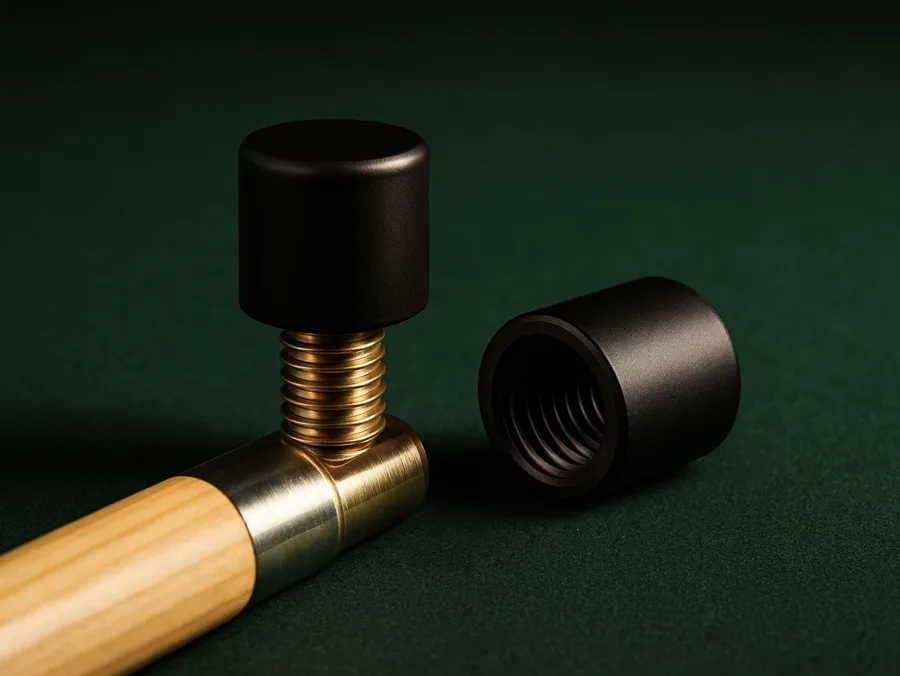
Joint protectors
Protecting the threadsOnce you own two shafts, thread protection stops the one in the case from getting damaged. Match them to your pin type.
Check price on AmazonFrequently asked questions
Will any shaft fit my cue?
No. You need the correct joint pin type, joint diameter and joint face style, flat or piloted. Common pins include 3/8-10, radial, Uni-Loc and 5/16-18. If you are unsure, a billiards shop can identify yours in seconds.
How much does a replacement cue shaft cost?
Roughly $60 to $150 for plain maple, $200 to $350 for a low-deflection maple or hybrid shaft, and $300 to $600 for carbon fiber. Buying a shaft is usually better value than replacing the whole cue.
Should I get the same diameter as my old shaft?
Usually, or one small step thinner. Large jumps in diameter feel wrong for weeks. Also check what your current shaft actually measures, since shafts get thinner over years if they have been sanded.
Can a warped shaft be fixed?
Minor warps can sometimes be corrected, but they often return, and a significant warp is not worth chasing. If the shaft is badly bowed, cracked or sanded very thin, replace it and treat that as a chance to upgrade.
Related guides
LeaguePool is reader-supported. When you buy through links on this site we may earn an affiliate commission at no extra cost to you. As an Amazon Associate we earn from qualifying purchases.