
Can You Put a Pool Table Upstairs?
Ask about putting a pool table upstairs and someone will confidently tell you the floor will cave in. It almost never works that way. Residential floors are built to codes with real safety margins, and a pool table, heavy as it is, spreads its weight over a big footprint. The genuine obstacle is not the floor holding the table, it is you holding three pieces of slate on a staircase.
The load math, in plain terms
Modern residential building codes require bedroom and living floors to carry a live load of 40 pounds per square foot, on top of the structure itself. An 8-foot slate table weighs roughly 800 to 1100 pounds and its cabinet covers about 4.5 feet by 7.5 feet, call it 32 to 34 square feet. Even at the heavy end, that is around 30 to 33 pounds per square foot, and the load passes through legs near the corners into the floor structure, not one concentrated point in the middle of a joist bay.
For perspective, four adults standing together around a small table exert similar or higher pressure. A waterbed, which floors handled for decades, runs heavier per square foot than most pool tables. The physics are on your side.
Joists, spans, and where to place the table
That said, not all floors are equal. A few things tilt the odds further in your favor:
- Run the table across the joists, not parallel to them, so the legs load several joists instead of one or two.
- Shorter spans are stiffer. A room over a beam or load-bearing wall mid-span flexes less than a long clear span.
- Position near a bearing wall when you can. The closer the legs sit to supported structure, the less deflection you get.
Deflection matters more than collapse. A bouncy floor will not fail, but it can let a poorly framed table drift out of level, and you may feel a slight tremor in the cue ball when someone walks past. Solid framing keeps the roll true.
When to actually consult someone
Call a structural engineer or at least a good contractor if the house is old enough to predate modern codes, if the floor already bounces noticeably when you walk it, if joists have been cut up for plumbing or HVAC runs, or if you are eyeing a 9-foot commercial table north of 1500 pounds. Manufactured homes and additions built without permits also deserve a look. An hour of an engineer's time is cheap next to a slate table, and most of the time the answer is a quick yes.
What the engineer actually checks is simple: joist size, spacing, span, and species, run against standard load tables. In many cases the fix for a marginal floor is equally simple, a beam or a couple of adjustable columns in the basement or crawl space below, sistered joists, or blocking between them, all modest carpentry jobs compared to giving up on the room. Knowing that going in changes the conversation from can I to what would it take.
The real problem: getting slate up the stairs
Each slate piece on a three-piece 8-foot table weighs 150 to 250 pounds, is brittle, and has no handholds. Carrying one up a switchback staircase is genuinely dangerous for amateurs, and a dropped slate is destroyed, along with whatever it lands on. This is why professional billiard movers exist. They bring stair-climbing dollies, straps, and crews who have done it hundreds of times, and an upstairs install typically adds a modest stair fee to the standard move price.
Do not let a general moving crew improvise it, and never move a slate table assembled. It must come apart: pockets, rails, felt, slate, then frame, and it needs professional leveling after reassembly anyway.
The MDF alternative upstairs
If the stairs, the budget, or an iffy floor give you pause, a good MDF table is a legitimate upstairs answer. A 7-foot MDF table weighs 200 to 350 pounds, two people can carry the box up, and the floor barely notices it. Play quality is a step down from slate and MDF hates humidity, but for a kids' room or casual bonus-room table it removes every structural and moving headache in one decision.
One more upstairs consideration either way: sound. Break shots and dropped balls transmit through a wood-framed floor into the rooms below far more than they do through a basement slab. A thick low-pile rug under the whole table footprint takes the edge off, and it protects the flooring at the same time.
Our picks
Links open the current selection and price on Amazon so you can compare real reviews before buying.
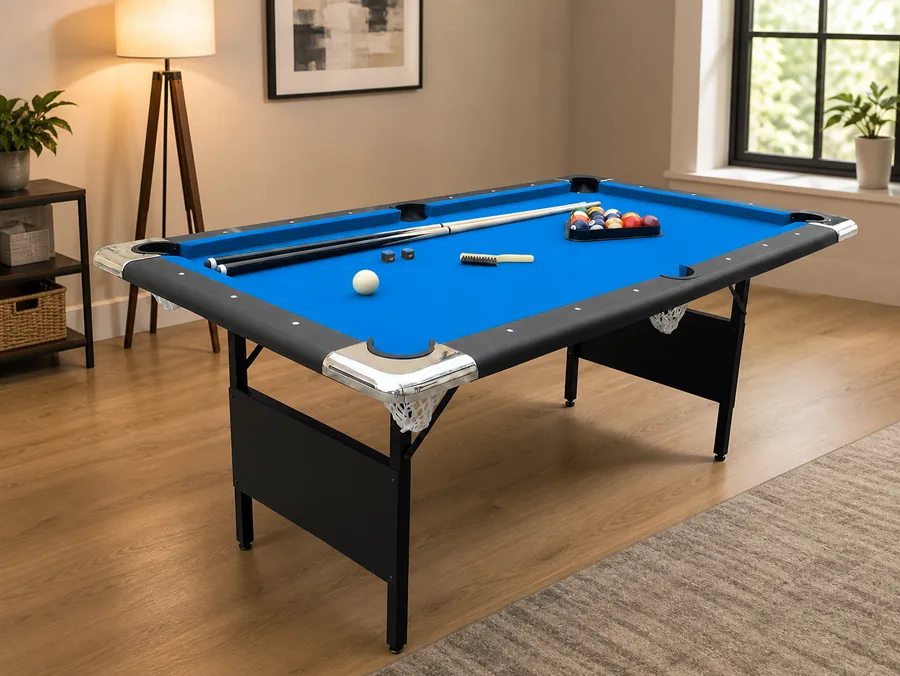
Hathaway Fairmont Portable Pool Table
Lightweight upstairs alternativeA folding 6.3-foot table two people can carry upstairs in the box, sidestepping the slate problem entirely for casual play.
Check price on Amazon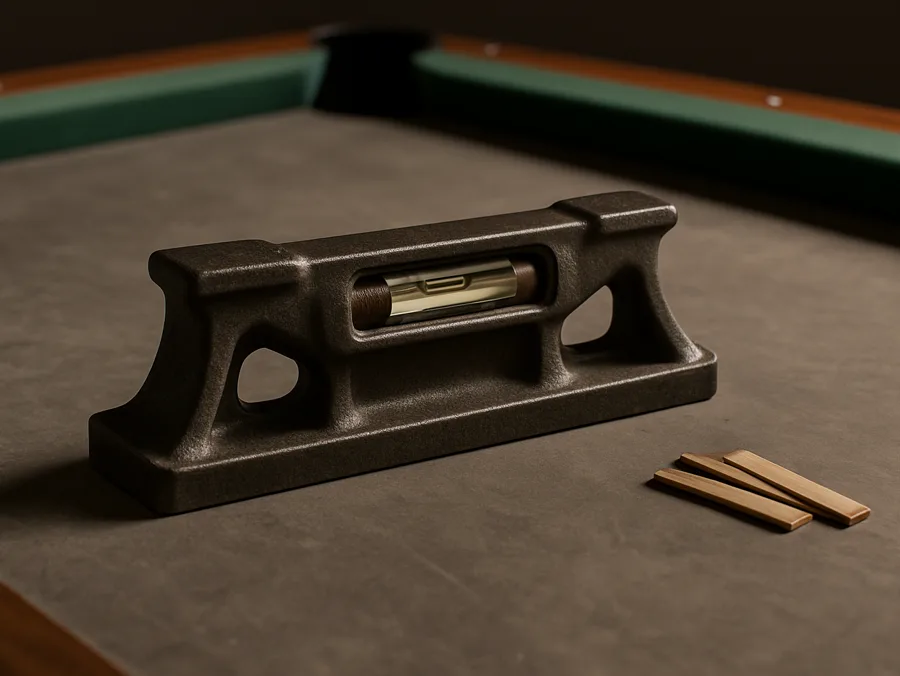
Machinist Level 12 Inch
Keeping the table true on wood floorsUpstairs wood-framed floors move with the seasons, so a precision level lets you check and correct the table a couple of times a year.
Check price on AmazonHeavy Duty Moving Straps
Carrying frame pieces safelyShoulder lifting straps take the strain off your back for the cabinet and rail sections you can move yourself, before the pros handle the slate.
Check price on AmazonFrequently asked questions
How much does a pool table weigh?
A 7-foot slate table runs about 700 to 900 pounds, an 8-footer 800 to 1100, and a 9-footer 1200 pounds or more. MDF tables are far lighter, usually 200 to 350 pounds. Nearly all the slate weight is in the three slate pieces.
Can an apartment floor hold a pool table?
Structurally, a code-built apartment floor handles the load the same way a house does. The practical issues are the lease, noise transfer to the unit below, and moving slate through halls and stairwells. Check with the building before committing.
How much does it cost to move a pool table upstairs?
Professional billiard movers typically charge 400 to 800 dollars for a standard disassemble, move, and reinstall with new leveling, and stairs usually add 50 to 200 dollars depending on the flight. Get a mover who does tables specifically, not general furniture.
Related guides
LeaguePool is reader-supported. When you buy through links on this site we may earn an affiliate commission at no extra cost to you. As an Amazon Associate we earn from qualifying purchases.