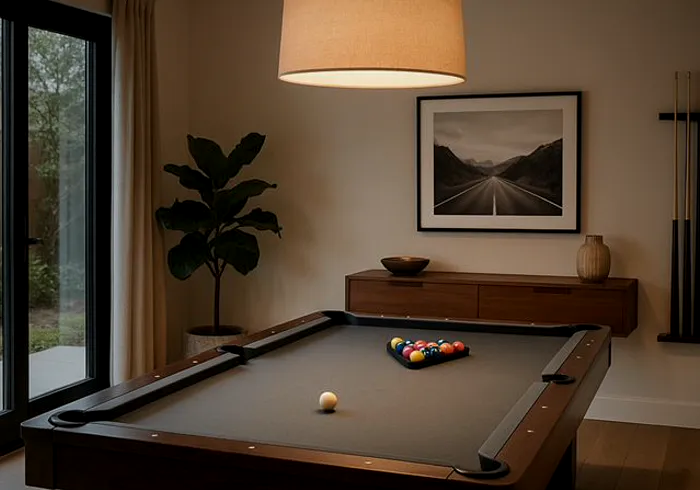
Best Levels for Leveling a Pool Table
Every problem people blame on their stroke is sometimes actually the table. A pool table that is out of level makes balls drift, turns straight shots into slight cuts, and quietly teaches you to compensate for something that should not exist. It is also invisible until you measure it.
Measuring it properly is the issue. A hardware store bubble level is not accurate enough to detect the drift that matters on a pool table, and a phone app is not close. Here is what accuracy you actually need, which tools deliver it, and how to use them.
Why a normal level is not enough
A standard carpenter's level is built for framing walls. Its accuracy is typically in the range of a fraction of a degree, which is fine when you are hanging a door and useless on a pool table.
The reason is scale. A ball rolling slowly across nine feet of cloth will visibly drift on a slope far too small for a carpenter's bubble to register. Players notice roll-off well before a construction level does, which is why owners often insist the table is level and the table still plays wrong.
The traditional tool for this job is a machinist level, designed for setting up machine tools where tiny deviations matter. These read in the range of half a thousandth of an inch per foot, which is roughly a hundred times more sensitive than a construction level.
Modern digital levels have closed much of the gap and are far easier to read, though the best machinist levels remain more sensitive. For a home table, a good digital level with 0.1 degree resolution or finer is generally adequate, and it removes the skill of interpreting a very sensitive vial.
Machinist levels
What they are: a precision ground steel or iron body with a very sensitive vial, typically 6 to 12 inches long. Used to set up lathes and milling machines.
Sensitivity: commonly quoted around 0.0005 inches per foot, which means the bubble moves visibly for deviations far too small to see or feel.
Cost: $60 to $250 depending on length and quality. Good used ones appear regularly, since machinists upgrade.
Advantages: extremely sensitive, no batteries, no calibration drift, and they last forever.
Disadvantages: they are so sensitive that reading them takes patience. The bubble responds to the slightest touch and to temperature. You must let it settle, and you should reverse the level end for end at each position to cancel any error in the tool itself.
This is what professional table mechanics carry, and it is the right tool if you want the job done to the highest standard.
Digital levels
What they are: an electronic inclinometer in a box or bar level body, showing a numeric reading.
Resolution: look for 0.1 degree or better. Some units offer 0.05 degrees or finer, which is genuinely useful here.
Cost: $40 to $150 for a good one.
Advantages: easy to read, no interpretation required, many can be zeroed on a reference surface, and the numeric output makes it simple to compare readings across the table and record them.
Disadvantages: less sensitive than a good machinist level, batteries, and calibration can drift over time. Cheap units are often less accurate than their advertised resolution suggests.
For most home table owners this is the practical choice. The numeric readout makes a grid survey straightforward, and 0.1 degree resolution catches the deviations that produce noticeable roll-off.
What to avoid: phone apps. Phone sensors are not designed for this and the readings are not reliable at the precision required, regardless of what the app claims.
How to check a table properly
Do not just put a level in the middle and declare victory.
- Survey in a grid. Divide the bed into a grid, roughly a third of the table's width and length apart, and take readings at every point in both directions, lengthwise and crosswise.
- Reverse the level at each point. Take a reading, then rotate the level 180 degrees in place and read again. If the readings differ, the average is closer to truth and the difference reveals error in the tool.
- Check across the slate seams specifically. On a three-piece slate, the seams are where sections most often sit at slightly different heights.
- Let it settle. A sensitive level needs a moment. So do you, since your body heat can affect a metal level you have been holding.
- Record the readings on a sketch of the table. Patterns tell you whether the problem is a leg, a frame twist or a slate section.
Corrections are made with shims under the legs or under the slate, depending on where the deviation is. Frame-level problems get shimmed at the legs; slate section differences get shimmed between slate and frame, which means removing the cloth.
The ball roll test
Before buying anything, do the free test.
Place a ball on the table and roll it very slowly, at a speed where it barely makes it across, along several lines: down the length, across the width, and diagonally. Watch whether it consistently drifts the same direction. Repeat from both directions on each line to rule out your own stroke.
A ball that consistently curves the same way is telling you the table is off. A ball that rolls true in every direction means the table is close enough that you have a stroke problem, not a table problem.
This test detects meaningful roll-off well, which is why some experienced mechanics use it as the first and last check around whatever the level says. Where the ball test is not enough is diagnosing where the problem is, which is what the grid survey with a real level tells you.
Do this test seasonally regardless. Tables move, floors settle, and humidity changes wood. Ten minutes twice a year keeps a good table honest, and it prevents you from unknowingly building compensations into your aim.
Our picks
Links open the current selection and price on Amazon so you can compare real reviews before buying.
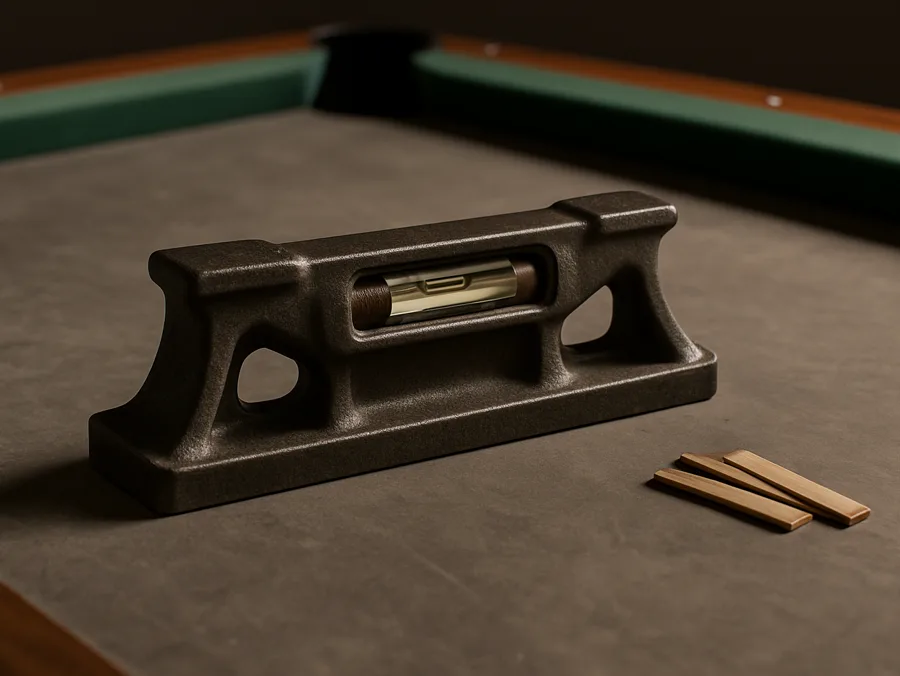
Machinist precision level
The professional standardAround 0.0005 inches per foot sensitivity, no batteries, lasts forever. What table mechanics carry, and demanding to read.
Check price on AmazonDigital box level
Practical home useLook for 0.1 degree resolution or finer. Numeric readout makes a grid survey easy and removes the skill of reading a sensitive vial.
Check price on Amazon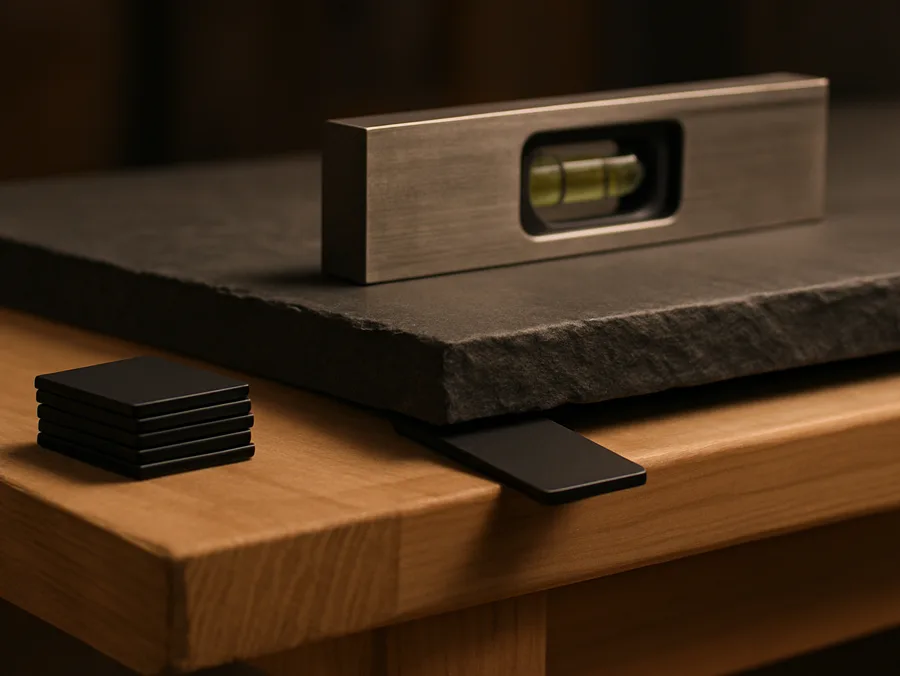
Slate and leg shim set
Making the correctionThin shims of varying thickness for under legs or between slate and frame. Measuring is only useful if you can correct what you find.
Check price on Amazon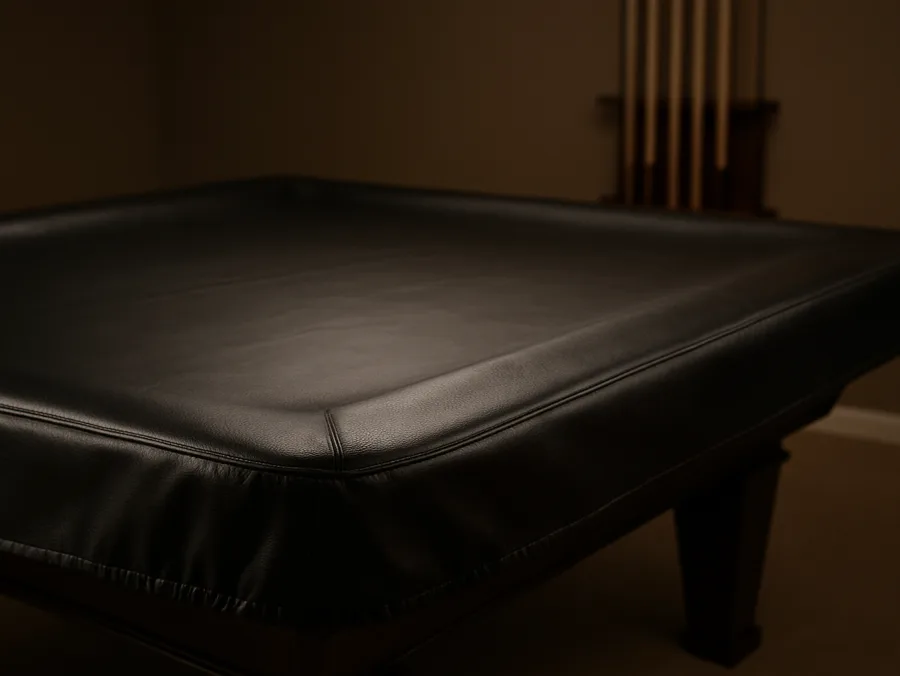
Table cover
Stability between checksKeeping sun and moisture off the table reduces how much the frame and cloth move seasonally, which reduces how often you relevel.
Check price on AmazonFrequently asked questions
What kind of level do you need for a pool table?
A machinist level, ideally around 0.0005 inches per foot, or a digital level with 0.1 degree resolution or better. A carpenter's bubble level is not sensitive enough to detect the slope that causes noticeable roll-off, and phone apps are not reliable.
How do I know if my pool table is level?
Roll a ball very slowly along several lines, lengthwise, crosswise and diagonally, from both directions. Consistent drift in the same direction means the table is off. Then use a proper level in a grid pattern to find where the problem is.
How often should I check my table level?
Seasonally, twice a year for most tables. Floors settle, wood frames move with humidity, and slate sections can shift slightly. Ten minutes of checking prevents you from unknowingly compensating for a table fault in your aim.
Can I use a phone app to level a pool table?
No. Phone accelerometers are not designed for this precision and the readings are not dependable at the resolution required, regardless of the app's claims. Use a machinist level or a quality digital level.
Related guides
LeaguePool is reader-supported. When you buy through links on this site we may earn an affiliate commission at no extra cost to you. As an Amazon Associate we earn from qualifying purchases.