How to Replace a Pool Cue Tip
A worn, glazed, or mushroomed tip is worth replacing, and you can do it at home with a few inexpensive tools. This walkthrough covers removing the old tip, gluing the new one, and shaping it to play.
Tools you will need
- Replacement tip sized slightly larger than your ferrule.
- Cyanoacrylate (super glue), thin or medium viscosity. Some players prefer a dedicated tip glue.
- A sharp razor or tip trimmer to cut the tip flush.
- Sandpaper (around 220 to 400 grit) and a flat block.
- A tip shaper or scuffer for the final radius.
Remove the old tip and prep the ferrule
Slice the old tip off with a razor, cutting toward the tip and away from your hand, or peel it if the glue lets go. Then sand the ferrule top perfectly flat on sandpaper laid on a hard, level surface, keeping the shaft square so you do not round the ferrule. Remove all old glue and leather residue. A flat, clean, lightly abraded ferrule is critical; any gap or contamination causes the new tip to pop off later.
Glue on the new tip
Dry-fit first to confirm the tip fully covers the ferrule. Apply a thin, even coat of glue to the ferrule (and lightly to the tip base if using thin CA), then press the tip on straight and centered. Hold firm, steady pressure for 30 to 60 seconds and let it cure fully before trimming, typically several minutes for CA. Avoid using too much glue; a thick glue line is weak and hard to trim.
Trim flush and shape
Once cured, trim the tip's overhang down flush with the ferrule using a razor or trimmer, rotating the shaft and taking thin passes so you do not cut into the ferrule. Finish the sides so tip and ferrule are seamless. Then shape the crown to a dime radius (more curved, more spin margin) or a nickel radius (flatter, more forgiving on center hits) using a shaper. Finally, lightly scuff the surface so it holds chalk.
Common mistakes to avoid
- Skipping the flat sand: An uneven ferrule guarantees a loose tip.
- Too much glue: Weakens the bond and leaves a visible line.
- Trimming into the ferrule: Go slow and rotate.
- Forgetting to scuff: A glossy new tip will not hold chalk and will miscue.
Our picks
Links open the current selection and price on Amazon so you can compare real reviews before buying.
Cue tip replacement tool kit
BeginnersA kit with a trimmer and shaper takes the guesswork out of getting a flush, correctly radiused tip.
Check price on AmazonCyanoacrylate cue tip glue
Strong bondA thin CA glue made for tips cures fast and holds firmly when the ferrule is prepped correctly.
Check price on Amazon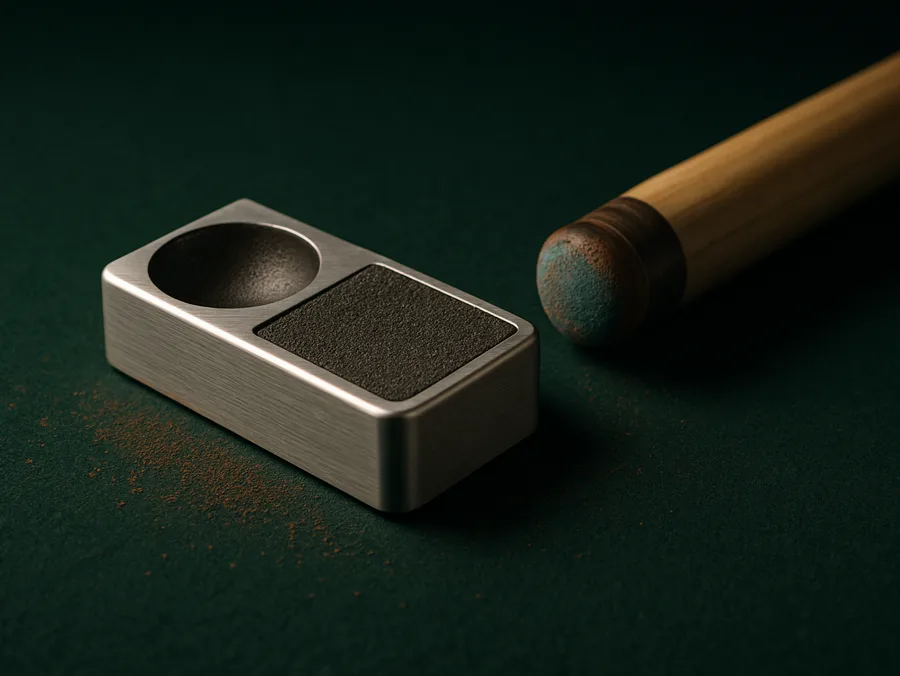
Tip shaper and scuffer tool
Final shapingSets a clean dime or nickel radius and roughs the surface so the new tip takes chalk right away.
Check price on AmazonFrequently asked questions
Can I really replace a tip myself?
Yes. With a few dollars of tools and some patience it is a very doable home job. The trickiest parts are sanding the ferrule flat and trimming the tip flush without nicking the ferrule.
What glue is best for cue tips?
A cyanoacrylate (super glue) or a purpose-made tip glue works well. Use a thin, even layer on a clean, flat, lightly sanded ferrule and press straight for the strongest bond.
How do I know if my tip needs replacing?
Replace it when it is worn down near the ferrule, mushroomed over the sides, glazed and slick so it will not hold chalk, or if it has come loose. Frequent miscues despite good chalking are a strong hint.
Related guides
LeaguePool is reader-supported. When you buy through links on this site we may earn an affiliate commission at no extra cost to you. As an Amazon Associate we earn from qualifying purchases.