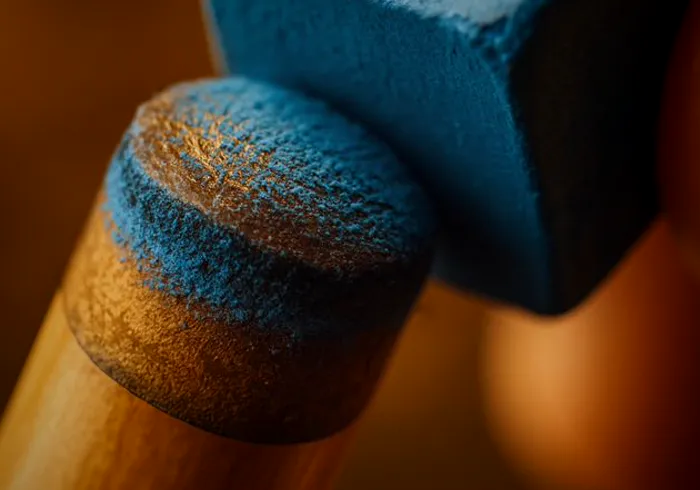
Taom Chalk: Pyro vs V10 vs 2.0 Compared
Taom chalk is a Finnish low-dust cue chalk sold in several formulas, and the question most people bring here is which one to buy. Short version: buy Taom V10 unless you have a reason not to. Taom calls V10 its latest formula and "the chalk of the pros," and it is rated for every tip hardness. Pyro is Taom's all-round chalk and the one many pool players started on. Pool Chalk 2.0 is the older classic and the cheapest of the three. All three leave very little residue, which is the whole reason Taom costs what it does.
Below is the side-by-side comparison, what the only controlled chalk test we know of found, which color suits your cloth, and how to avoid the fakes that turn up on marketplaces.
Taom Pyro vs V10 vs 2.0 at a glance
The manufacturer's descriptions come from Taom's product pages. The feel column is what players commonly report, and players disagree, so treat it as a tendency.
| V10 | Pyro | Pool Chalk 2.0 | |
|---|---|---|---|
| How Taom describes it | Latest formula, "the chalk of the pros" | Best all-round chalk for any level | Pool version of the 2.0 snooker chalk, kick-free claim |
| Tips Taom lists | All, soft to hard | All, soft to hard | Any cue sport (no tip guidance) |
| Colors sold | Green, blue (V10 Blue) | Blue, pink (Pink Edition) | Blue on Amazon |
| Taom shop price, single piece | About €16 | About €16 | About €15 |
| Commonly reported feel | Driest, cleanest | Slightly grippier, can cake | Between the two |
| Pro names on Taom's page | John Higgins | None listed | None (Snooker 2.0 lists Mark Williams, Shaun Murphy) |
| Our pick for | Most players, any tip | Blue-cloth players who like more bite | Budget Taom |
US billiards shops we checked list single pieces of V10 and Pyro at roughly $19 to $23. The product cards below show the live Amazon price.
Taom Pyro vs V10: which should you buy?
V10, for most people. It is the newer formula, Taom rates it for every tip hardness, and the most repeated player opinion is that it leaves the least behind on the cue ball and cloth. A Taom representative told the reviewer at Snooker Hub that V10 is a different formula, not Pyro in a new color, so the two really are separate chalks.
Pick Pyro instead if one of these fits you:
- You play on blue cloth and want a blue chalk that has been around for years. (V10 Blue now exists too, but Taom's page doesn't say whether it is the identical recipe to green V10.)
- You have tried V10 and found it too dry. Some players say V10 doesn't stick to the tip as readily as Pyro. Pyro has a slightly firmer, grippier feel by most accounts, at the cost of a little more residue and a greater tendency to cake on the tip.
- You play on red or pink cloth. Pyro Pink Edition is the only Taom chalk made in that color.
You will read on forums that V10 behaves better on laminated tips and that Pyro miscues more on hard tips. That claim is disputed, Taom rates both chalks for all tips, and the controlled testing described below found no difference in miscue limit between chalks. If you miscue with either one, look at your tip first.
Taom V10 vs 2.0
Pool Chalk 2.0 is the classic Taom chalk, the one that made the brand's name for low dust. V10 came later as the new formula. The practical differences:
- Price: 2.0 is the cheapest Taom chalk in Taom's own shop (singles about €15 against about €16 for V10).
- Feel: players who use both tend to put 2.0 between V10 and Pyro: a bit stickier than V10, a bit cleaner than Pyro.
- Positioning: Taom pitches V10 as its top pro chalk. The 2.0 line splits into a pool version and a snooker version; the snooker one is the chalk Taom says Mark Williams and Shaun Murphy like.
If you already use 2.0 and it works, there is no performance reason you must switch. If you are buying your first Taom, spend the extra euro or two on V10.
Taom chalk differences across the whole range
Taom's shop currently sells seven chalks, which explains much of the confusion in searches like "taom chalk difference":
- V10 (green) and V10 Blue: the newest formula.
- Pyro (blue) and Pyro Pink Edition.
- Pool Chalk 2.0 and Snooker Chalk 2.0: the classic line, one tuned for each game.
- Soft: a snooker-leaning chalk. Its page contradicts itself, saying both "all types of tips" and "best suited for hard tips," so we can't tell you which it is meant for.
Older Taom chalks (the original and other editions) still circulate. If you see a model not on that list, it is discontinued, a regional edition, or a fake.
What independent testing found
Almost everything written about Taom is opinion. The exception is Dr. Dave Alciatore's chalk testing at Colorado State, which included Taom original, Taom 2.0, Pyro and V10 alongside Master, Kamui, Predator and others. His findings:
- He could not detect any difference in miscue limit among the chalks. How far off center you can hit before miscuing depends on the tip and stroke, not the brand of chalk, as long as the tip is chalked.
- Taom was one of three chalks (with Kamui Roku and Predator 1080 Pure) that were best at not sticking to the cue ball. Less chalk on the cue ball means fewer and milder skids, the bad contacts that throw a ball off line.
- In his shots-per-chalking follow-up on a hard layered tip, Taom original managed 5 and 6 shots before a miscue, Taom 2.0 5 and 5, and Master 7 and 6. On a softer tip, Taom 2.0 and Master tied at 4 and 4.
His conclusion is blunt: if you chalk before every shot, the brand doesn't seem to matter for grip. What Taom buys you is cleanliness and fewer chalk-caused skids, not extra spin. We think that is worth paying for on a table you own. It is a weaker case for a player who mostly shoots on bar boxes.
Is Taom chalk worth the price?
A piece of Master costs about a dollar. A piece of Taom costs close to twenty. Whether that is worth it comes down to who cleans the table.
It is worth it if you own a table and care about the cloth, since less chalk dust means less blue grime ground into the nap and fewer marks on the balls. It is worth it if you play weekly and skids cost you shots. And it is worth it as a gift for a league player, because most people won't spend twenty dollars on chalk for themselves.
It is not worth it if you play a few times a year, or if your miscues come from hitting too far off center or from a glazed tip. Chalk fixes neither. Our guide to why a cue miscues covers the usual causes.
How long does a piece last? Taom claims its Snooker 2.0 lasts twice as long as any other chalk, and reviewers talk about months of regular play from one piece. Nobody has published a measurement, so take both as rough. For how Taom stacks up against Kamui and Predator, see premium pool chalk compared.
Matching the color to your cloth
Low-dust chalk still leaves a little on the cloth, so color matters less with Taom than with Master. It still matters on light or unusual cloth. Green V10 on green cloth and blue Pyro or V10 Blue on tournament blue keep what residue there is invisible. On red, burgundy or pink cloth, Pyro Pink is the only Taom match. On gray or tan, no color hides perfectly; blue is the common compromise. Our felt colors guide covers the cloth side.
Spotting fake Taom chalk
Fakes are common enough that players trade tips on spotting them. What helps:
- Buy from Taom's own shop, an established billiards retailer, or an Amazon listing sold by a reputable seller. Be wary of general bargain marketplaces.
- Distrust a price far below the $19 to $23 that US shops charge for a single piece. Genuine Taom rarely sells at half price.
- Compare the packaging with the photos on taombilliards.com and on the retailer's listing. Spelling errors, blurry printing or a box design that matches none of Taom's current photos are reasons to send it back.
- Watch it in use. The point of Taom is that it leaves almost nothing on the cue ball. If a new piece coats the ball and your fingers like Master does, you probably didn't get the real thing.
How to apply Taom chalk
Brush it on with light strokes across the tip, turning the cue so the whole surface gets an even coat, including the edges you hit with for heavy english. Grinding the tip into the chalk like a drill wastes a twenty-dollar piece and digs a crater that makes even coverage harder.
Chalk before every shot anyway. The tests above showed only five or six shots per chalking with any brand before a hard-sidespin miscue, so the habit matters more than the label. Keep the tip scuffed as well: no chalk holds on a glazed tip. See how to chalk a pool cue and how to scuff and shape a tip.
A fitted holder is worth having for chalk this expensive. A loose piece rattling in a case pocket chips and picks up grit. Taom sells its own magnetic Magnetite holder; our chalk holder guide lists other options.
Sources
- Taom V10 chalk and V10 Blue (Taom Billiards)
- Taom Pyro chalk (Taom Billiards)
- Taom Pool Chalk 2.0 and Snooker Chalk 2.0 (Taom Billiards)
- Taom Soft chalk and the Taom shop (current range and euro prices)
- Does the brand of chalk really make a difference? (Dr. Dave Alciatore, chalk test results)
Our picks
Links open the current selection and price on Amazon so you can compare real reviews before buying.
Taom V10 chalk
Most players, any tipTaom's newest formula and the one we would buy first. Taom rates it for soft through hard tips, and the green color disappears on green cloth. It leaves very little on the cue ball, which is what cuts down chalk-caused skids.
Check price on AmazonTaom Pyro chalk
Blue cloth, firmer biteThe blue all-rounder that built Taom's following among pool players. Pick it over V10 if you want a chalk that blends into tournament blue cloth or you found V10 too dry to apply.
Check price on AmazonTaom 2.0 chalk
Budget TaomThe classic Taom formula in blue, and the cheapest of the three in Taom's own shop. You get the low-dust benefit that made the brand famous without paying for the newest recipe.
Check price on AmazonTaom Magnetite Chalk Holder
Protecting the pieceTaom's own magnetic holder. A twenty-dollar piece of chalk should not ride loose in a case pocket where it chips and collects grit.
Check price on Amazon
Master Billiard Chalk, 12-Cube Box
Occasional playersThe dollar-a-cube benchmark. Dr. Dave's tests found no miscue-limit difference between chalks, so if you chalk every shot and don't mind blue dust, twelve cubes cover a lot of league nights.
Check price on AmazonFrequently asked questions
What is the difference between Taom Pyro and V10?
V10 is Taom's newer formula, sold in green and blue, and rated for all tip hardnesses. Pyro is the all-round chalk sold in blue and pink. Players usually describe V10 as drier and cleaner and Pyro as slightly grippier with a little more residue. Taom says V10 is a different formula, not a recolored Pyro.
Is Taom V10 better than 2.0?
V10 is the newer chalk and the one Taom markets to pros, and most players who have used both find it cleaner. 2.0 is cheaper and feels slightly stickier. Neither will change your miscue limit, so if 2.0 already works for you there is no need to switch.
Which Taom chalk is best?
V10 for most players. Choose Pyro or V10 Blue for blue cloth, Pyro Pink for red or pink cloth, and Pool Chalk 2.0 if you want Taom at the lowest price.
Is Taom V10 Blue the same as green V10?
Taom presents V10 Blue as V10 in blue and lists the same tip rating and price, but its page does not say outright that the formula is identical. Players report similar feel.
Is Taom chalk worth the money?
If you own a table or play weekly, yes, mainly for the cleaner cue ball and cloth. Testing by Dr. Dave Alciatore found it does not raise the miscue limit compared with Master, so it will not add spin. Occasional players can stick with Master.
Where is Taom chalk made?
Taom is a Finnish brand, and Amazon listings for Pyro describe it as handmade in Finland.
How can I tell if Taom chalk is fake?
Buy from Taom's shop or an established billiards retailer, be wary of prices far below about 19 dollars a piece, compare the packaging with Taom's photos, and watch for blue or green marks on the cue ball. Genuine Taom leaves very little.
Does Taom chalk work on laminated or phenolic tips?
Taom rates V10 and Pyro for all tip hardnesses from soft to hard. Some players claim V10 suits laminated tips better than Pyro, but that has not been shown in controlled testing.
Related guides
LeaguePool is reader-supported. When you buy through links on this site we may earn an affiliate commission at no extra cost to you. As an Amazon Associate we earn from qualifying purchases.