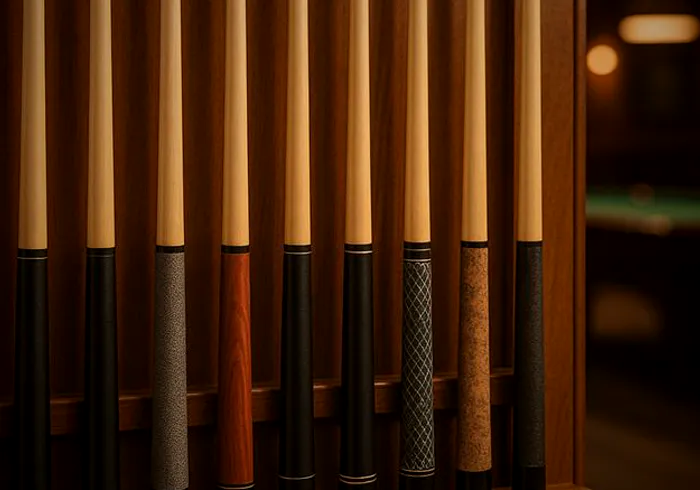
Rage Break and Jump Cues Reviewed
Rage sits in a specific spot in the market: cheap break and jump cues that do a job most players do not want to spend real money on. Nobody buys a Rage because they love the brand. They buy it because they finally got tired of mushrooming the tip on their playing cue every time they broke, and they wanted a dedicated breaker for the price of a tank of gas.
That framing is the fairest way to review these cues. Judged against a $500 break cue, they are unremarkable. Judged against what they cost and what they replace, several models are genuinely good buys. Here is what the lineup does well, where the corners are cut, and how to decide which version you actually need.
Why a dedicated break cue matters at all
The break is the single most violent thing you do to a cue. Every break sends a shock through the tip, the ferrule and the joint. Over a season, that shows up as a mushroomed tip, a tip that stops holding chalk, a hairline crack in the ferrule, or a joint that has loosened.
Using your playing cue to break is not going to destroy it overnight. It just means you are spending money on retips and ferrule work that you would not otherwise spend, and you are putting your best equipment through the hardest use it will ever see. A $70 break cue pays for itself in avoided repairs within a year for anyone who plays weekly.
There is a performance argument too, though it is smaller than marketing suggests. Break cues use a very hard tip, which transfers energy into the cue ball more efficiently and puts less spin on it, so the cue ball tends to stay in the middle of the table rather than skidding around. A stiffer shaft helps for the same reason. You will not gain twenty percent more power, but you will get more consistent, more controlled breaks.
What Rage gets right at the price
Judged as budget equipment, these cues do the important things.
- Hard tips as standard. The models ship with phenolic or very hard tips, which is exactly what a break cue needs and what generic cheap cues get wrong.
- Stiff shafts. Break shafts are usually thicker and stiffer than playing shafts, which is what you want for power transfer.
- Weight in useful places. The break models are built heavier at the butt, which is the standard approach for break power.
- They survive. Break equipment lives a hard life, and cues in this range hold up better than their price suggests because there is not much to go wrong.
What you are not getting is refinement. Finishes are basic, wraps on the cheaper models are synthetic, and the cosmetics are loud in the way budget cues usually are. None of that affects how the cue breaks.
Break cue vs jump-break
Rage sells both dedicated break cues and jump-break combinations, and the choice comes down to how you actually play.
A dedicated break cue is one piece of equipment doing one job. It can be heavier, longer and built purely for power. If your league does not allow jumping, or you never jump, this is the obvious pick and usually the cheaper one.
A jump-break unscrews into a short jump cue and reassembles into a full-length breaker. The convenience is real, especially if you already carry a playing cue and do not want a third stick in your case. The compromise is also real: the jump portion is heavier and less nimble than a purpose-built jumper, and the break portion is usually shorter and lighter than a purpose-built breaker.
My honest read is that most league players are better served by a dedicated break cue plus, if they jump often, a separate jump cue later. But a jump-break is a perfectly reasonable single purchase when you are starting out and want to cover both bases cheaply.
How to break with it once you own one
A break cue does not break the balls for you. Two adjustments matter more than the equipment.
Hit the head ball square. Power that arrives off-center scatters instead of spreading. Most players who complain their break is weak are actually hitting the rack slightly off, and no cue fixes that.
Accelerate, do not lunge. The stroke should still be a stroke. Players who throw their whole body at the break lose contact accuracy and cue ball control, which is how you end up with a big spread and the cue ball in a pocket. Speed at contact is what matters, not effort.
Also, chalk a phenolic tip lightly or not at all depending on the tip. Hard tips are not designed to grip like a playing tip, and grinding chalk into one does nothing except make a mess.
Finally, get the cue ball position right for your table. On a bar table with a heavier or oversized cue ball, breaking from slightly off center is often more productive than dead center, and a few sessions of experimenting will teach you more about your break than any equipment change.
Is it worth upgrading later?
Eventually some players move up to a premium break cue with an adjustable weight system and a laminated phenolic tip. Whether that is worth it depends on how much your break is actually costing you.
If you are consistently making a ball on the break and controlling the cue ball, a more expensive breaker will not add much. If your break is scattering unpredictably, the fix is almost always technique and rack quality rather than equipment. Racking matters enormously, which is why template racks changed how seriously players take the break in the first place.
The one upgrade that reliably pays off at any level is a better tip, and on a budget break cue you can have one installed for the cost of a couple of coffees. That gets you most of the benefit of a premium breaker without replacing the cue.
Our picks
Links open the current selection and price on Amazon so you can compare real reviews before buying.

Rage heavy hitter break cue
Keeping break impacts off your playing cueA heavier butt and a stiff shaft with a hard tip. Does the one job a break cue exists to do, at a price where there is no reason to hesitate.
Check price on Amazon
Rage jump-break cue
One cue for both jobsUnscrews into a short jump cue and back into a full-length breaker. A compromise at each job, but a sensible single purchase when you are starting out.
Check price on AmazonPhenolic break tip
Upgrading a budget breakerThe cheapest meaningful upgrade to any break cue. Harder energy transfer, less unwanted spin, and it will outlast the cue it is glued to.
Check price on AmazonCue case with a third slot
Carrying a breaker to leagueThe moment you own a second cue, you need somewhere to put it. A 2x2 or 3x4 case covers a playing cue plus a breaker with room for chalk.
Check price on AmazonFrequently asked questions
Are Rage cues any good?
For break and jump duty at a budget price, yes. They ship with the hard tips and stiff shafts that break cues need, and they hold up to hard use. They are not refined cues and are not meant to be playing cues.
How much does a Rage break cue cost?
Generally in the $60 to $150 range depending on the model and whether it is a straight break cue or a jump-break. That is well under the cost of the retips and ferrule repairs you avoid by not breaking with your playing cue.
Do I need a break cue if I only play casually?
If you play a few times a year on house cues, no. If you own a cue you care about and play weekly, yes. Break impacts are what mushroom tips and crack ferrules, and a cheap breaker keeps that damage off your good stick.
Is a jump-break as good as separate cues?
No, and it is not meant to be. It jumps less easily than a dedicated jump cue and breaks with less authority than a dedicated breaker. What it offers is one purchase and one slot in your case, which is a reasonable trade when you are starting out.
Related guides
LeaguePool is reader-supported. When you buy through links on this site we may earn an affiliate commission at no extra cost to you. As an Amazon Associate we earn from qualifying purchases.