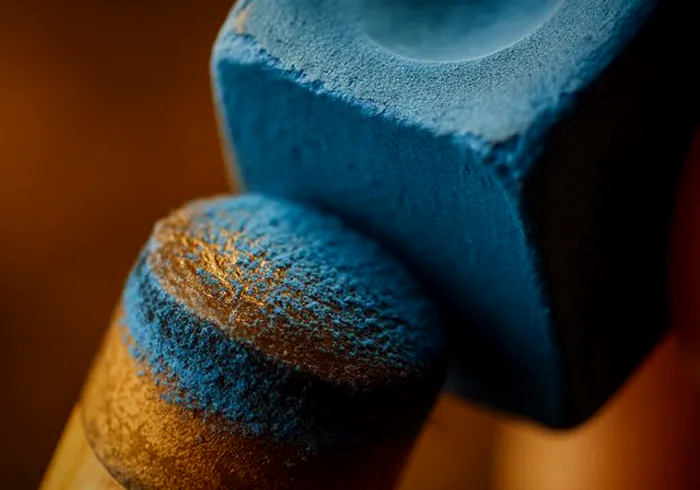
Best Cue Tips for Draw and English
If you have decided your tip is holding back your spin, you are probably half right. Tips do affect how much draw and english you can reliably apply, but they affect it less than technique and less than chalk. The tip's job is to grip the cue ball for the fraction of a millisecond it is in contact, and a tip that does that job well simply removes an obstacle. It does not create spin.
That said, the obstacle is real. A glazed, over-hard, badly shaped tip will genuinely limit you. Here is what actually matters in a tip for spin shots, how hardness and layering work, and which tips spin-heavy players tend to install.
How a tip creates spin
Spin comes from hitting the cue ball off center. The further from center you strike, the more spin and the greater the chance of a miscue, because at some point the tip slips off the curve of the ball instead of gripping it.
The tip affects that boundary in two ways. First, friction: a chalked tip grips, and how well it holds chalk depends on the leather's surface and how recently it was scuffed. Second, deformation: a softer tip flattens slightly against the ball, increasing contact area and dwell time, which extends how far off center you can hit before slipping.
That is the entire mechanism. Which means the tip properties that matter are hardness, how well the leather takes and holds chalk, and how consistently it is shaped. Everything else in tip marketing is downstream of those three.
It also means the two cheapest interventions are the strongest: chalk properly, and keep the tip scuffed and rounded. A worn-in medium tip in good condition will out-spin a brand-new premium tip that has glazed over.
Hardness: what to choose
Soft. Grips heavily, deforms most, gives the most access to extreme spin. Wears fast, mushrooms at the edges, needs frequent trimming and reshaping. Some strong spin players love them and accept the maintenance.
Medium and medium-soft. The mainstream answer and the right default for almost everyone. Enough deformation for good spin access, enough durability to hold shape for months. If you are unsure, this is the answer.
Hard. Holds shape a long time, gives firm feedback, transfers energy efficiently. Less forgiving on shots struck well off center. Break cues use very hard tips for exactly this reason, which is also why breaking with a hard tip and playing with a softer one is a common setup.
One caution: hardness ratings are not standardized across brands. One maker's medium may feel like another's soft. Treat the label as a rough guide and judge by how the tip actually plays after a week.
Layered versus single-layer
Layered tips are built from several thin sheets of leather bonded together. The advantages are consistency, resistance to mushrooming, and predictable hardness through the tip's life. Because the layers hold the shape, they keep their radius better and they do not soften unevenly as they wear.
Single-layer tips are cut from one piece of leather. Traditional, less expensive, and capable of playing beautifully. The trade is variability: a single-layer tip can be great or mediocre depending on the piece of hide it came from, and it will change character as it compresses over time.
For a player who cares about spin and wants repeatable behavior, layered is the safer buy. For a player who retips often, does their own work, or simply likes the feel of a classic tip, single-layer remains perfectly valid and much cheaper.
Shape matters more than brand
Two radii are standard, and the difference is bigger than most tip upgrades.
Dime radius is the tighter curve, roughly the curvature of a dime. It reduces the contact area and lets you strike further off center before slipping, so it is the standard choice for spin-heavy play.
Nickel radius is flatter. More contact area, more forgiveness on center-ball shots, slightly less access to extreme english.
If you use a lot of draw and english, shape your tip to a dime and keep it there. A tip that has flattened out over months will lose you more spin than switching brands will gain you.
Keep it scuffed as well. A tip that has been polished smooth by use will not hold chalk properly no matter how expensive it was. A few passes with a scuffer restores the surface texture in seconds, and doing that regularly is the single most effective spin maintenance there is.
What to install, practically
For most players who want reliable draw and english, this is the setup:
- A quality layered leather tip in medium or medium-soft.
- Shaped to a dime radius.
- Scuffed regularly so it holds chalk.
- Good chalk, applied by brushing rather than grinding.
- Installed properly, flush with the ferrule, by someone who does it often.
That combination removes equipment as an excuse. If you still cannot draw the ball three feet, the answer is stroke mechanics: hitting low enough, following through, and delivering the cue level rather than jacked up.
One more point about installation. A tip glued on off-center or left proud of the ferrule edge will play badly no matter how good the tip is, and it will also chip. If you do not do this work yourself, pay someone who does it every day rather than the nearest available person with glue.
Our picks
Links open the current selection and price on Amazon so you can compare real reviews before buying.
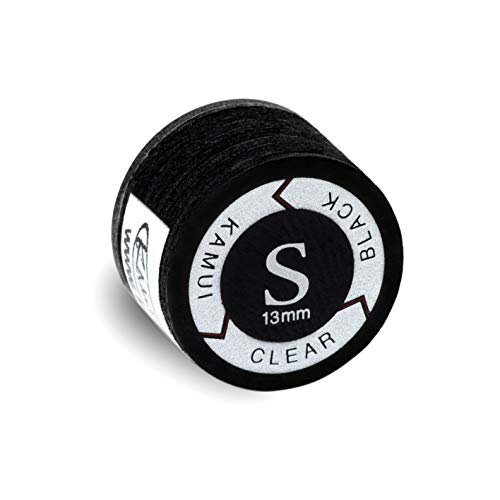
Medium layered leather tip
The default choiceConsistent hardness, resists mushrooming and holds its radius. The right answer for the large majority of players who want reliable spin.
Amazon price: $30.90 as of 3:59 AM EDT. Price and availability can change; Amazon’s price at purchase applies.
Check price on Amazon
Medium-soft layered tip
Maximum spin accessDeforms a little more for extra grip on extreme english and draw, at the cost of faster wear and more frequent reshaping.
Amazon price: $30.90 as of 3:59 AM EDT. Price and availability can change; Amazon’s price at purchase applies.
Check price on Amazon
Tip scuffer and shaper tool
Keeping spin availableRestores the surface texture so the tip holds chalk and maintains a dime radius. Cheaper and more effective than any tip upgrade.
Amazon price: $12.95 as of 3:43 AM EDT. Price and availability can change; Amazon’s price at purchase applies.
Check price on AmazonTaom Pyro Chalk
Removing the other variableGrip comes from the chalk as much as the leather. Good chalk applied by brushing rather than grinding is half the spin equation.
Check price on AmazonFrequently asked questions
What is the best cue tip for draw?
A medium or medium-soft layered leather tip, shaped to a dime radius and kept scuffed. Softer tips grip more and give slightly better access to extreme draw, but they wear faster and need reshaping more often.
Do soft tips really give more spin?
Slightly. A softer tip deforms more against the cue ball, increasing contact area and dwell time, which extends how far off center you can hit before miscuing. The effect is real but smaller than the effect of tip shape and chalk.
Dime or nickel radius for english?
Dime. The tighter curve reduces contact area and lets you strike further off center before the tip slips, which is exactly what spin shots require. Nickel is flatter and more forgiving on center-ball play.
Why do I still miscue with a good tip?
Usually because the tip has glazed over and needs scuffing, because you are hitting lower on the cue ball than you think, or because the cue is jacked up rather than level. Equipment is rarely the limiting factor once the tip is shaped and chalked.
Related guides
LeaguePool is reader-supported. When you buy through links on this site we may earn an affiliate commission at no extra cost to you. As an Amazon Associate we earn from qualifying purchases.