Template Racks vs Triangle: Magic Rack Explained
If you have watched any professional pool in the last decade, you have seen the referee lay a thin plastic sheet on the cloth, place the balls on it, and walk away without ever touching a triangle. That sheet is a template rack, sold under names like Magic Rack and Accu-Rack, and it has quietly replaced the wooden triangle at nearly every serious event. Here is what template racks are, why they work so much better than the triangle hanging under your table, and how to use one without annoying everyone in your league.
What a template rack is and why tight matters
A template rack is a sheet of plastic, about the thickness of a credit card, with circular cutouts arranged in the rack pattern. You set each ball into its cutout, the cutouts hold the balls pressed against each other, and every ball is frozen to its neighbors. That word frozen is the whole point. When balls in a rack are touching, break energy transfers cleanly through the pack and the balls spread. Every tiny gap in a rack absorbs energy, which is why a loose triangle rack can eat a huge break and leave a cluster. Gaps also cause the wild, unpredictable action where one ball squirts sideways off a gap while the rest barely move. Racking tight is the single biggest factor in whether breaks behave, and templates make tight automatic.
Why triangles struggle
A wooden triangle only pushes balls inward from the outside. Whether the interior balls actually freeze depends on the cloth condition, the table being level, ball cleanliness, and the racker patiently massaging the pack, and even then the spots where balls sit break in over time and develop small divots that hold gaps open. Watch a bar table rack: the back corners are almost always loose. Skilled players learn to rack tight with a triangle, tapping balls and pressing from behind, but it takes time each rack and still fails on worn cloth. A template skips all of it. Set the balls in, done, identical every time. That consistency is why the pro tours and most big amateur events standardized on them.
The leave it under debate
The template stays on the table during the break, under the balls, and gets removed at the first opportunity when no ball is resting on it. This is the one genuine controversy. A ball that rolls back and stops on the template sits a millimeter high, which can subtly change a shot, and some players simply dislike shooting over it. Tournament rules handle this cleanly: the referee or player removes the template as soon as it is clear, and if a ball rests on it there are procedures to lift and replace. In casual play and leagues, agree on the house rule before you start. Common practice is to remove it after the break if possible, and if a ball sits on it, either play through or mark and lift, whichever the room prefers. It is a small price for never arguing about a loose rack again.
Using one properly
- Place the template so the apex cutout centers on the foot spot, or on the spot your rules use for 9-ball.
- Set the balls into the cutouts in the correct pattern for your game, pressing each gently so it seats.
- Check the pack visually from low across the table. Every ball should touch its neighbors with no daylight.
- Break as normal. The template does not affect the break in any meaningful way.
- Remove the template as soon as no ball rests on or near it, sliding it out flat rather than lifting balls around it.
Templates eventually wear where the break hammers them, and a curled or torn template starts sitting the balls unevenly. They cost little, so replace them once the edges deform. Keep it stored flat, not folded into a drawer.
Should you switch
For home tables, the case is close to airtight: perfect racks, no racking arguments, and cheaper than a decent wooden triangle. For league night on bar boxes, carry one in your case, since many leagues now allow them and everyone breaks better on tight racks. The one place the triangle still earns its keep is speed. Racking casual games back to back, tossing balls into a triangle is faster than seating fifteen balls into cutouts one by one. Plenty of rooms use the triangle for messing around and the template when the games start counting. That is about the right balance.
Our picks
Links open the current selection and price on Amazon so you can compare real reviews before buying.
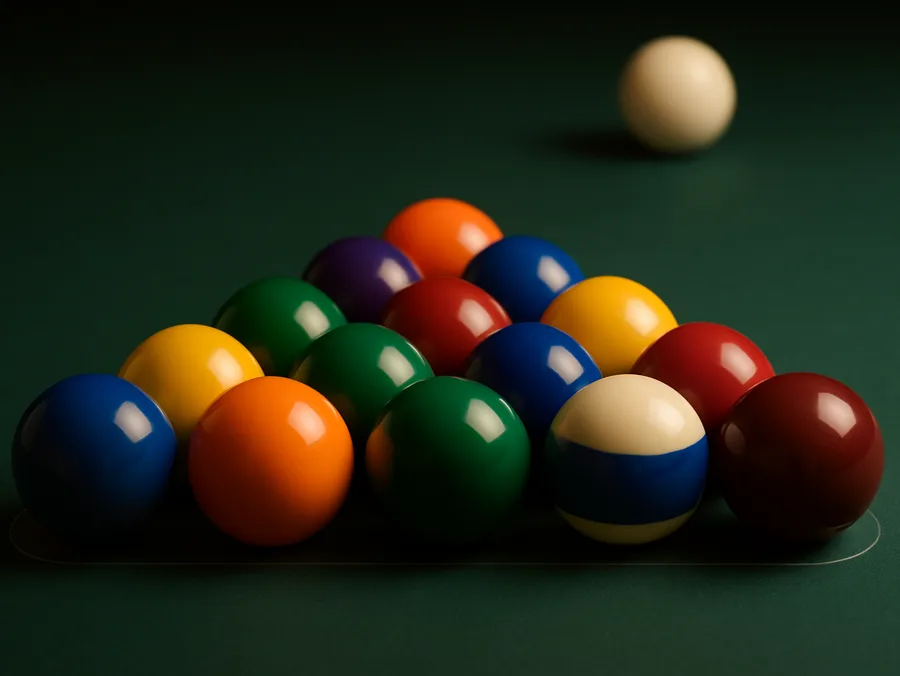
Magic Ball Rack Combo Pack
The original template rackThe template that started the shift, usually sold as a set covering 8-ball, 9-ball, and 10-ball patterns. Thin, effective, cheap to replace.
Check price on AmazonOutsville Accu-Rack
Tournament grade templateA refined template design used at serious events, with variants for each game. Durable material that seats balls cleanly and slides out easily.
Check price on AmazonDelta-13 Elite Rack
Best traditional triangleIf you want tight racks without leaving anything on the table, a precision aluminum triangle racks far tighter than the warped wood most tables come with.
Check price on AmazonFrequently asked questions
Are template racks legal in tournaments?
Yes, most professional and major amateur events use them as the standard, and many leagues permit them. Rules cover removing the template once no ball rests on it. Always check your specific league rulebook before bringing one to match night.
Does the template affect the break or damage the cloth?
The break plays essentially the same since the sheet is thinner than a millimeter. Over many breaks the template can leave a faint outline on the cloth where it sits, similar to normal racking wear in the same spot, but it does not damage the cloth.
What happens if a ball stops on the template?
The ball sits slightly raised. Under tournament rules the template is removed by marking the ball position, lifting the ball, sliding the template out, and replacing the ball. In casual play just agree on this procedure ahead of time and it is a non issue.
Related guides
LeaguePool is reader-supported. When you buy through links on this site we may earn an affiliate commission at no extra cost to you. As an Amazon Associate we earn from qualifying purchases.