Can You Put a Pool Table in a Garage?
Garages are the most common overflow space in American homes, so it is no surprise that people eye that empty bay and picture a pool table in it. The short answer is yes, you can put a pool table in a garage, and plenty of league players practice on one every day. The longer answer is that a garage is a harsher environment than a living room, and the table will punish you if you ignore that.
Why the Concrete Floor Is a Plus
A three-piece slate table wants a rigid, stable base, and a poured concrete slab is about as rigid as residential floors get. There is no joist flex, no seasonal sag, and no worry about a 900 pound table sitting over a span rated for furniture. Installers generally have an easier time getting a table dead level on concrete than on a wood-framed second floor.
Two caveats. Many garage slabs are sloped an inch or two toward the door for drainage, so expect the installer to shim the legs, which is routine. And bare concrete wicks moisture from the ground, so a vapor-sealed slab or a coat of garage floor epoxy under the table is worth having.
Humidity Is the Real Enemy
Wood rails, wooden frames, and the cloth itself all react to moisture. In a humid garage the rails swell, the cloth absorbs water and slows down, and glue joints work themselves loose over a few seasons. In a very dry winter garage the opposite happens: wood shrinks, seams open slightly, and cushion rubber ages faster.
The fix is not complicated. Keep relative humidity somewhere in the 40 to 60 percent range. In most climates that means running a dehumidifier through the summer and not much else. If you live somewhere with hard winters, a small heater that keeps the space above roughly 50 degrees prevents the worst of the seasonal swing. What kills tables is not any single condition, it is the repeated back and forth. A $15 hygrometer on the wall turns guessing into knowing, and knowing is most of the battle.
The MDF Warning
If you are considering a budget table with an MDF or particleboard bed instead of slate, a garage is close to the worst place you can put it. MDF drinks humidity and it does not recover. Once the bed swells or sags, the table rolls off and no amount of leveling brings it back. Plenty of secondhand MDF tables are for sale cheap precisely because they spent two summers in a garage.
Slate does not care about moisture at all. The wood around the slate does, but the playing surface itself is stone. If a garage is the only spot you have, that is a strong argument for spending more on a slate table up front. A used slate bar box often costs less than a new MDF table anyway, and it will still be flat in ten years.
Dust, Cars, and Covers
Garages are dusty. Every time the door rolls up, grit blows in, and fine dust settles into the cloth where it acts like sandpaper on the balls and speeds up wear. If you park a car in the next bay, add exhaust film and road grime to the list.
A fitted vinyl or leatherette cover, used every single time you finish playing, is the cheapest insurance there is. Brush the table before play rather than after, so you are sweeping fresh dust off instead of grinding it in, and brush in straight lines from the head of the table toward the foot. Wipe the balls down regularly too, since they carry grit back onto clean cloth otherwise.
Space and Setup Checklist
Before the table shows up, check the room math. A 7 foot table wants a space of roughly 13 by 16 feet to swing a standard 58 inch cue; an 8 foot table wants about 13.5 by 17. A single car bay is usually too tight, a double bay is usually fine if the second car sleeps outside. Measure to obstacles like the water heater and the garage door tracks, not just the walls, and remember the door opener rail often hangs right where a light fixture wants to go.
- Confirm ceiling height and hang lighting before delivery day.
- Seal or epoxy the slab if it is bare concrete.
- Put a thermometer and hygrometer on the wall so you actually know your numbers.
- Budget for a professional setup; leveling three pieces of slate is not a first-timer job.
Our picks
Links open the current selection and price on Amazon so you can compare real reviews before buying.
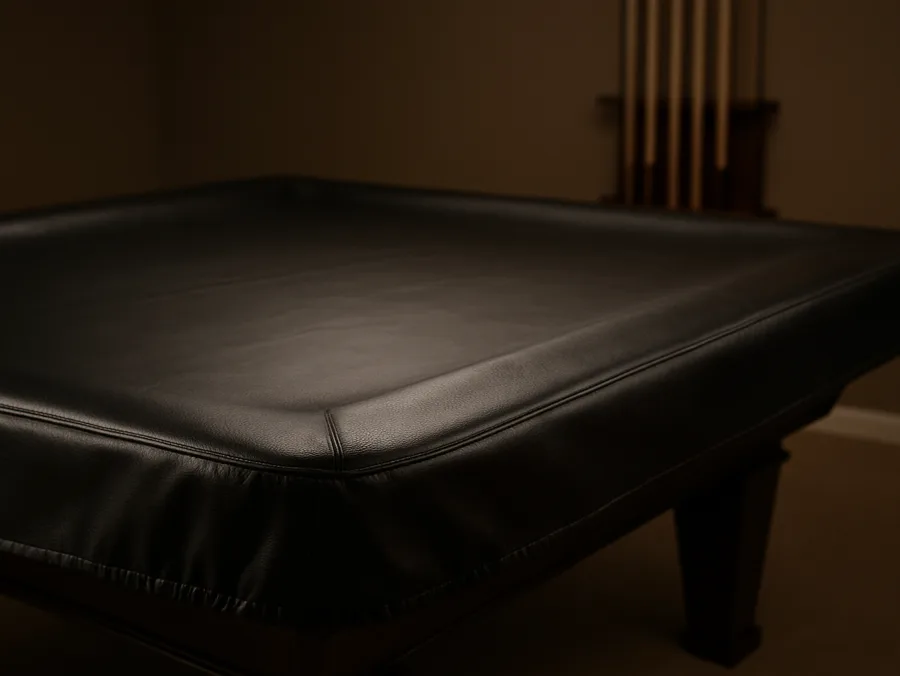
Leatherette Fitted Pool Table Cover
Daily dust and moisture protectionA fitted heavy-duty cover keeps garage dust, exhaust film, and stray moisture off the cloth. In a garage this is the one accessory that is genuinely non-negotiable.
Check price on AmazonhOmeLabs 4500 Sq Ft Dehumidifier
Summer humidity controlA mid-size dehumidifier with a drain hose port will hold a garage in the safe 40 to 60 percent range without daily tank emptying.
Check price on Amazon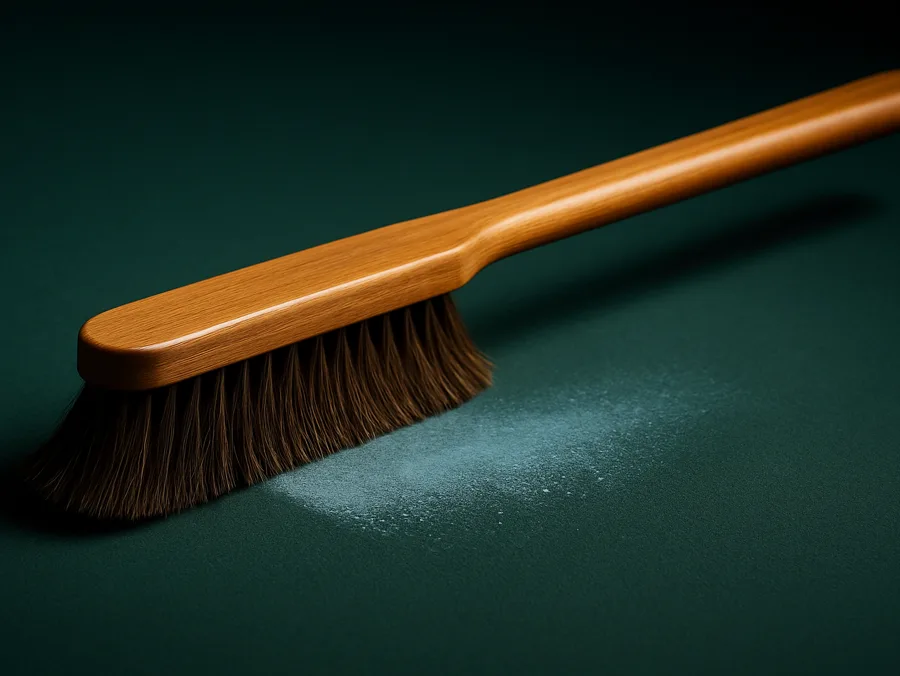
Horsehair Pool Table Brush
Cleaning cloth without wearSoft horsehair bristles lift grit out of the cloth instead of grinding it in, which matters twice as much in a dusty garage.
Check price on AmazonFrequently asked questions
Will an unheated garage ruin a slate pool table?
Cold alone will not hurt slate, but repeated large temperature and humidity swings stress the wood rails and glue joints over time. Keeping the space above roughly 50 degrees in winter and dehumidified in summer prevents nearly all of it.
Can a garage floor hold the weight of a slate table?
Easily. A residential slab handles cars that weigh 4000 pounds, so a 700 to 1000 pound table spread across four or six legs is trivial. Sloped slabs just need shimming during setup.
Is it okay to park a car next to the pool table?
It works if you keep the table covered whenever you are not playing. Exhaust residue and door dings are the practical risks, so leave a walking lane and never lean cues against the car side of the table.
Related guides
LeaguePool is reader-supported. When you buy through links on this site we may earn an affiliate commission at no extra cost to you. As an Amazon Associate we earn from qualifying purchases.