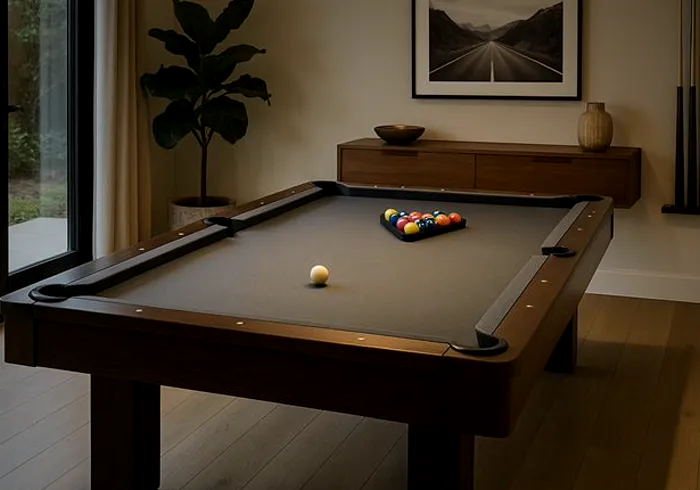
Best Dining Pool Tables (Convertible Tops)
A dining pool table solves a specific problem: you want a pool table and you do not have a room to give it. The pitch is that the table earns its floor space twice, as furniture during the week and as a pool table when you want to play. It is a genuinely good idea, and it is executed well by some manufacturers and badly by others.
The differences that matter are not the ones the marketing photographs emphasize. Here is how these tables actually work, the compromises built into the concept, and what separates a dining table you can play pool on from a pool table you can eat at.
How the conversion works
Almost all dining pool tables use the same principle: a rigid top, usually in two or three sections, that rests on the rails and turns the table into a flat surface.
Top materials vary. Solid wood tops look best and weigh most. Veneered MDF is lighter and cheaper. Some manufacturers offer padded or leather-look tops.
Section count matters more than people expect. A three-piece top is easier to lift and store than a two-piece one, at the cost of an extra seam. A single-piece top is beautiful and nearly unusable, since it takes several people to move.
Storage is the design problem nobody solves elegantly. Some tables come with a wall rack or a rolling cart. Most leave it to you. Sections need to stand upright, off the floor, in a dry place, and they are large.
Before buying, ask specifically how many people the manufacturer expects to move the top, and where they expect you to keep it. Vague answers are informative.
The height problem
This is the compromise built into the concept and the one that surprises buyers.
A regulation pool table plays at roughly 29.25 to 31 inches to the top of the rails. A standard dining table is about 30 inches to the tabletop. Those numbers sound compatible, but the pool table's rails and the added thickness of the conversion top push the dining surface up, typically to 32 to 34 inches.
The consequences are practical. Standard dining chairs feel low. Elbows sit at an awkward height. Children in particular find the surface high. Manufacturers who have thought this through supply matching chairs at a taller seat height, which solves it neatly. Manufacturers who have not leave you buying counter-height chairs separately.
Ask for the exact converted height before buying, then measure against your existing chairs. This is the single most common source of disappointment with these tables and it is entirely avoidable with a tape measure.
Slate or not
The same question that governs every pool table purchase applies here, with an extra wrinkle.
Slate models play properly. The bed is flat, it stays flat, and balls roll true. They are heavy, which matters for a table that lives in a dining room with a floor that has to carry it, and they cost considerably more.
MDF-bed models are much lighter and cheaper. They never roll perfectly true, they respond to humidity, and over years they can develop a slight sag. For a family that plays a few times a month, that is tolerable. For anyone who cares about the game, it is not.
The wrinkle: a dining pool table spends most of its life covered by a rigid top with weight on it. That makes bed rigidity more important, not less. A slate bed does not care. An MDF bed carrying dinner for eight several times a week is being asked to do something it was not designed for.
If the table will genuinely be used as a dining table regularly, the case for slate is stronger than usual.
Sizes and room planning
Dining pool tables are commonly 7 feet, with 8-foot models available. The 7-foot size is popular because it doubles as a plausible dining table for six to eight people, while an 8-foot table seats more but needs a bigger room.
Remember that a pool table needs cue clearance, not just table space. For a standard 58-inch cue you want around 5 feet of clear space on every side. In a dining room, that usually means the table must sit centrally with no sideboard, no chairs pushed back, and no wall closer than the clearance figure.
Two practical answers when the room is tight. First, short cues, typically 48 or 52 inches, cover the tight sides. Most owners of dining pool tables end up with a couple in the rack. Second, accept that one side will be awkward and plan which side that is, ideally the one that gets the fewest shots.
Also consider the chairs. Six chairs around a table need somewhere to go during a game. If they end up stacked in a corner every time, the table will get played on less than you imagine.
Is it the right purchase?
Yes if: you have one room that must serve both functions, you want a pool table you will actually see and use daily, and you are realistic about the height and storage compromises. In that situation these tables are excellent and there is no better solution.
Consider a conversion top instead if: you have room for a dedicated pool table and merely want occasional extra surface. Buying a proper pool table and a separate dining or utility top is cheaper and better at pool.
No if: you want a serious playing table. Dining models are usually 7 feet, often with compromises in cushion and pocket design to accommodate the furniture styling. A dedicated 8 or 9-foot table plays better in every respect.
Also no if nobody in the household will help lift the top. A conversion that requires two people and five minutes will happen less often than you think, and a dining pool table that never converts is just an expensive dining table.
Our picks
Links open the current selection and price on Amazon so you can compare real reviews before buying.
Slate dining pool table
One room, both functionsReal slate bed with a multi-piece dining top. The proper version of the concept, and the one that still plays like a pool table.
Check price on AmazonDining top for an existing table
Adding dining functionIf you already own a pool table, a separate dining or conversion top is far cheaper than replacing it with a dining model.
Check price on AmazonCounter-height dining chairs
Fixing the height problemA converted pool table usually sits 32 to 34 inches high. Taller chairs make it comfortable rather than awkward.
Check price on Amazon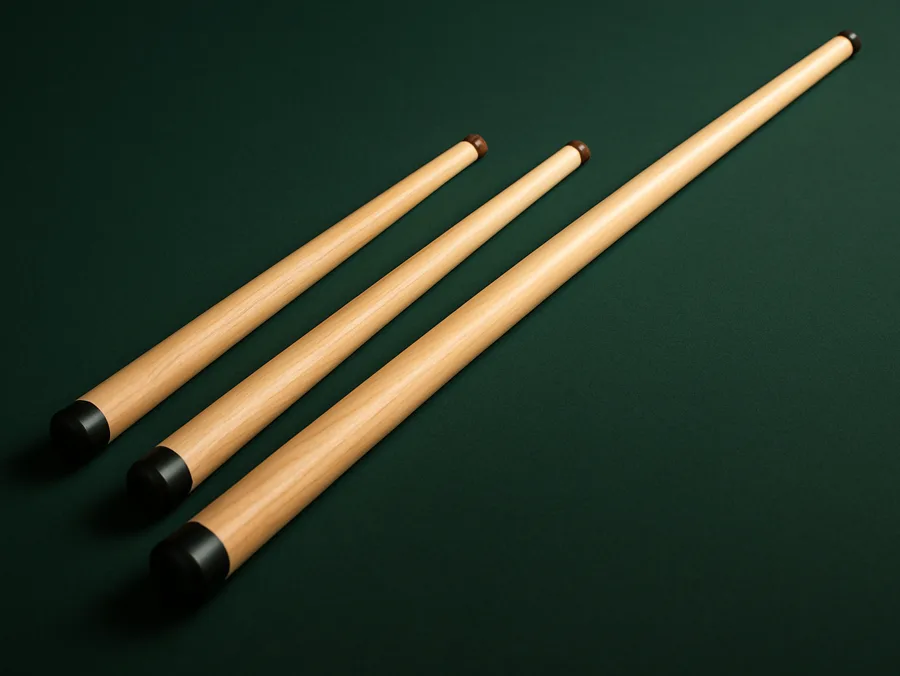
Short pool cues, 48 and 52 inch
Tight dining roomsWhen the table sits close to a wall, short cues cover the shots a full-length cue cannot. Most owners end up with a pair.
Check price on AmazonFrequently asked questions
How much does a dining pool table cost?
Roughly $2,000 to $6,000 for a quality slate model with a proper dining top, and $600 to $1,500 for lighter MDF-bed versions. Slate is worth it if the table will genuinely be used for dining regularly, since the bed carries weight constantly.
How tall is a pool table with a dining top on it?
Typically 32 to 34 inches, which is taller than a standard 30-inch dining table. Standard chairs feel low at that height, so check whether the manufacturer offers matching taller chairs or plan to buy counter-height seating.
Can you really play pool on a dining pool table?
On a slate model, yes, and it plays properly. Most are 7 feet, so it is a bar-box sized game rather than a full-size one, and cue clearance in a dining room is usually tight enough that you will want a couple of short cues.
Where do you store the dining top?
This is the design problem nobody solves elegantly. Sections need to stand upright, off the floor, somewhere dry. Some tables include a wall rack or cart, most do not. Confirm the storage plan before buying, because it decides how often you convert.
Related guides
LeaguePool is reader-supported. When you buy through links on this site we may earn an affiliate commission at no extra cost to you. As an Amazon Associate we earn from qualifying purchases.