
Best Pool Cues on Amazon (What to Buy and Skip)
The best pool cues on Amazon are the ones billiards companies put there themselves: the Valhalla 100 by Viking for a first cue, the Players Classic if you want the best warranty in the price range, a Players Pure X when you are ready for a low-deflection shaft, and a McDermott G-Series when you want an American-made cue you keep for good. Each listing names its wood, joint, tip and warranty, and each maker stands behind its cues, as long as the seller is one the maker recognizes.
What actually sells most on Amazon is different: four-packs of cues from sellers like HMQQ, GARSEN and AKLOT. Those are fine for a game room. This page covers which pool cues for sale on Amazon are worth buying, how to read a listing you can't hold in your hand, the seller check that protects your warranty, and what to do the day the box arrives.
The best pool cues to buy on Amazon
Every pick below is a real model from a billiards company, and every spec comes from its Amazon listing as we read it on October 15, 2026. The product cards further down show live prices.
| Cue | Buy it if | What the listing gives you | Warranty per listing |
|---|---|---|---|
| Valhalla 100 by Viking | It's your first cue | Hard rock maple pro-taper shaft, stainless joint and pin, resin ferrule, weight system set at 18 oz | Lifetime against warpage (Viking repairs or replaces a Valhalla once) |
| Players Classic | You want the strongest warranty under $200 | Grade A hard rock maple, 5/16x18 stainless joint, Irish linen, 58 in, 18 to 21 oz | Lifetime, warpage included; ferrule guaranteed against cracking |
| Cuetec AVID Chroma Hydra | You like a slimmer shaft | 12.25mm shaft, Tiger Everest medium tip, 3/8x14 Cuetec joint, adjustable 18 to 21 oz | Not stated on the listing |
| Players Pure X (HXT shaft) | You use side spin every rack | HXT low-deflection shaft with a polymer core, Kamui tip, 58 in, 18 to 21 oz | Lifetime, warpage included |
| McDermott G-Series (G338) | You want to buy once | Made in the USA, G-Core shaft, Navigator Black 13mm tip, 3/8x10 joint, about 19 oz, 1x1 hard case | Lifetime including warpage, from an authorized dealer |
On a tight budget, the Viper Elite is the cheapest single cue we would buy there; it has a real Le Pro leather tip but only a 30-day warranty. See cheap pool cues for it and its neighbors, and best pool cues for beginners for the full first-cue spec.
What pool cue should I buy?
Pick the row that sounds like you. If two fit, take the cheaper one; you'll know more about what you want after a season.
| You | Buy | Budget at billiards retailers |
|---|---|---|
| Play a few times a year at home or a bar | A Valhalla, or a cheap single cue with a leather tip | Under about $120 |
| Starting a weekly league | Valhalla 100, Players Classic or McDermott Lucky | About $110 to $200 |
| Use english on most shots | A cue with a low-deflection shaft, such as a Pure X | Pure X runs about $240 to $450 at Seybert's |
| Know you're staying with the game | McDermott G-Series | From $445 at McDermott's list prices |
| Stocking a home table for guests | A matched four-pack | See pool cue sets |
Price ranges are retailer listings checked October 15, 2026. If you want the reasoning behind each spec (weight, tip size, joint, shaft), how to choose a pool cue walks through it, and best pool cues for the money shows where extra spending stops paying off.
What actually sells on Amazon (and who it suits)
Amazon's own "bought in past month" badges on October 15, 2026 tell a clear story. The top sellers for "pool cue" are multi-packs: HMQQ at about 800 a month, GARSEN's four-pack about 500, AKLOT's about 300, and LOTKEY and Kmise about 200 each. They are cheap per cue and come in a spread of weights, which is what a game room needs. They are not what a league player needs, because you can't tell from the listings what the tip is (HMQQ calls it "fiber leather") and some name only "solid hardwood" for the wood. Our cue sets guide sorts the packs.
The best-selling single cue is the HomeSeason 58-inch maple cue at about 300 a month. Its listing gives a 19 oz weight, a 13mm four-layer cowhide tip, a nylon thread handle and a leather bag. The title says low deflection, but the bullets never describe how the shaft is built, and real low-deflection shafts (Players HXT, McDermott G-Core, Predator 314) always say what is inside. Treat it as a budget maple cue. There's no warranty term on the listing beyond customer service.
How to buy a pool cue online: read the listing
You can't roll a cue on a table through a screen, so the listing has to do the work. A billiards company's listing answers these without being asked.
- Who makes it. A maker you can look up (Viking, Players, McDermott, Cuetec, Predator) has a warranty page and a service department. A brand that exists only on one marketplace is effectively unbranded.
- The shaft wood, named. Hard rock maple or Canadian maple, or a named low-deflection or carbon shaft. "Hardwood" alone usually means a cheaper species.
- The joint, named: 5/16x18, 3/8x10, 3/8x14, Uni-Loc or a quick-release. A named joint means replacement shafts and extensions fit.
- The tip, named, with a size. Le Pro, Elk Master, Kamui, Tiger and Navigator are real leather tips. An unnamed tip is one you should plan to replace.
- Weight per cue. Real lines offer 18 to 21 oz, often with a weight bolt.
- A warranty that mentions warpage. Warp is how most cues die. Players, Viking and McDermott's own line put warpage in writing; McDermott's Lucky line and most no-name cues do not.
Two Amazon habits to read past. Variant listings share one rating pool, so four HMQQ listings all show the same 1,305 ratings and AKLOT's two-pack and four-pack share 1,171; the stars describe the brand's whole line. And some listings reuse bullet points across models. Our Valhalla guide found a linen-wrapped cue whose bullets described a wrapless one, so trust the title and model number over the bullets.
Check the seller, or lose the warranty
This is the step most Amazon buyers skip, and it's the one that matters most on a cue over $100. Look at the "Ships from" and "Sold by" lines under the buy button before you order.
- McDermott's warranty page says its lifetime warranty requires purchase from an authorized McDermott dealer, and that McDermott disclaims all warranties on products bought from other sellers. It covers the original purchaser only.
- Viking's warranty, which covers the Valhalla line, also requires an authorized dealer, registration within 60 days and the original receipt.
- Both makers treat a used or resold cue as uncovered.
If the seller is a billiards retailer, check it against the maker's dealer locator or call the maker. If the price is far below every dealer, ask why. Save the order confirmation as your receipt; for Viking, register the cue the week it arrives. Our McDermott guide covers that brand's online buying in more detail.
Red flags in pool cue listings
Bundles with everything in them. A cue, case, glove, chalk, tip kit and bridge for very little money means every piece was built to a few dollars. Buy the cue, then the one or two accessories you actually need.
No weight stated. Weight is the most basic cue spec. A seller who leaves it out isn't selling a designed product.
Photos of graphics only. Makers who are proud of the joint and tip photograph them up close.
A screw-on tip. The rec.sport.billiard FAQ quoted on Dr. Dave's cue-selection page at Colorado State says to shun any cue with a screw-on tip, and we agree: they skid and can't be shaped. A glued-on leather tip, even a basic one, is the minimum.
Big performance claims with no construction behind them. "Low deflection" or "pro taper" with nothing about the shaft's core or taper length is marketing copy.
Amazon or a billiards retailer?
| Amazon | Billiards retailer (Seybert's, PoolDawg and similar) | |
|---|---|---|
| Selection | Wide, mixed with many unbranded cues | Brand cues only; Seybert's carries over 100 Players models alone |
| Warranty | Depends on the seller; check "Sold by" | Usually an authorized dealer, so the maker's warranty applies |
| Returns | Easy, within the window shown on the listing | Varies by store |
| Weights | Sometimes one listing per weight, sometimes a dropdown | Chosen at checkout on most brand cues |
| Advice | Reviews | Staff who play |
Our approach: buy on Amazon when a brand cue is sold by a billiards retailer or the maker, and the price is in line with dealers. For a cue over a few hundred dollars, or anything custom, buy from a dealer you can call.
The day it arrives: a ten-minute check
- Roll the shaft by itself across a flat table, watching the tip end. A slight even wobble is normal; a hop is warp.
- Roll the butt by itself, then the assembled cue.
- Sight down the assembled cue from the butt while turning it slowly. wikiHow's guide makes a fair point: a table that isn't flat can fool the roll test, so use both checks.
- Screw the joint together hand-tight. The halves should meet flush with no gap or wiggle.
- Look at the tip and ferrule: no cracks, an even glue line, a tip that isn't glazed.
- Weigh it on a kitchen scale if you have one. A cue far off its stated weight is a listing problem.
If it fails, return it the same day. Our warp check guide shows what normal and bad look like.
Pool cue holders on Amazon
A cue is cheaper to keep straight than to replace. For one or two cues, a case is enough; for a home table, a wall rack with 6 to 8 slots, such as the oak EXTCCT rack, or a floor stand if you can't drill. Our pool cue racks guide covers mounting height and slot types, and pool cue cases covers carrying one.
Sources
- McDermott Cue: warranty terms and authorized dealers
- Viking Cue: lifetime warranty terms, including Valhalla
- Dr. Dave Pool Info (Colorado State University): how to select a pool cue
- Seybert's: Pure X cue listings (checked October 15, 2026)
- Seybert's: Players cue listings (checked October 15, 2026)
- McDermott Cue: G-Series list prices
- Specifications, warranty terms and "bought in past month" figures: the Amazon listings named above and linked from each product card (checked October 15, 2026)
Our picks
Links open the current selection and price on Amazon so you can compare real reviews before buying.

Viking Valhalla 100 Series 2-Piece 58" Cue
Best first cue on AmazonA hard rock maple shaft with a pro taper, a stainless joint and pin, and a resin ferrule, backed by Viking's lifetime warranty against warpage. The weight system ships at 18 oz and can be changed later. Check that the seller is an authorized Viking dealer and register the cue within 60 days.
Check price on Amazon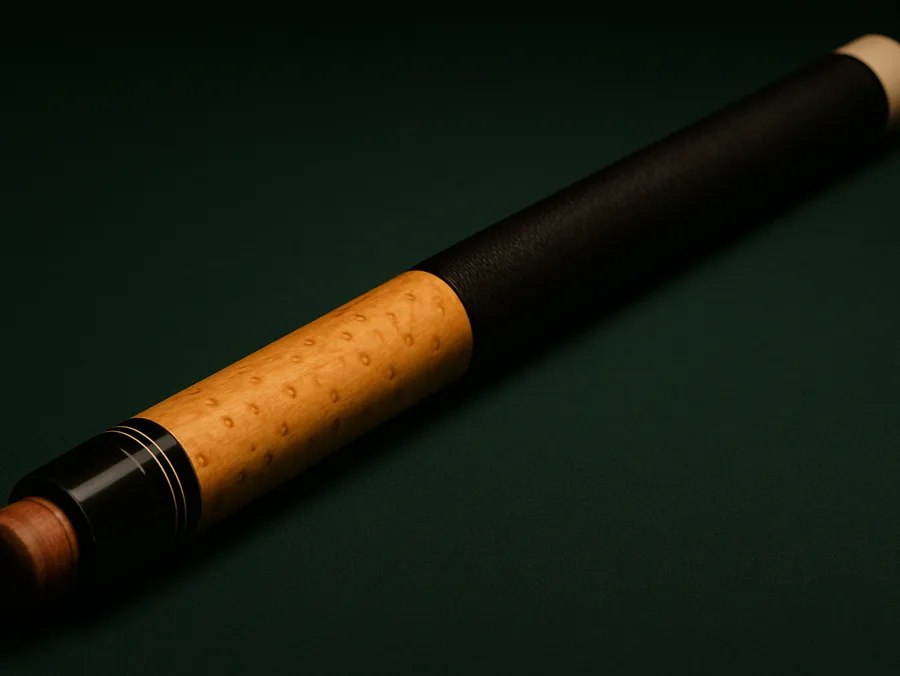
Players Classic Birds-Eye Maple Cue
Best warranty under $200Grade A hard rock maple treated with Nelsonite, a 5/16x18 stainless joint collar and double-pressed Irish linen, in 18 to 21 oz. The listing promises a lifetime warranty on cue and shaft even against warpage, and a separate guarantee that the ferrule won't chip or crack.
Check price on Amazon
Cuetec AVID Chroma Hydra Pool Cue
A slimmer shaftA 12.25mm shaft with a medium Tiger Everest tip, Cuetec's 3/8x14 joint and adjustable weight from 18 to 21 oz. The slimmer shaft suits players who like a pro-taper feel. It is a new listing with very few ratings, so read the return terms before ordering.
Check price on Amazon
Players Pure X Cue with HXT Shaft
Low deflection on a budgetThe HXT low-deflection shaft uses a lightweight polymer core so the cue ball pushes off line less when you use english, with a Kamui tip, 58-inch length and 18 to 21 oz options. Warranty is lifetime, warpage included. The title and bullets name different model numbers, so confirm the design in the photos.
Check price on Amazon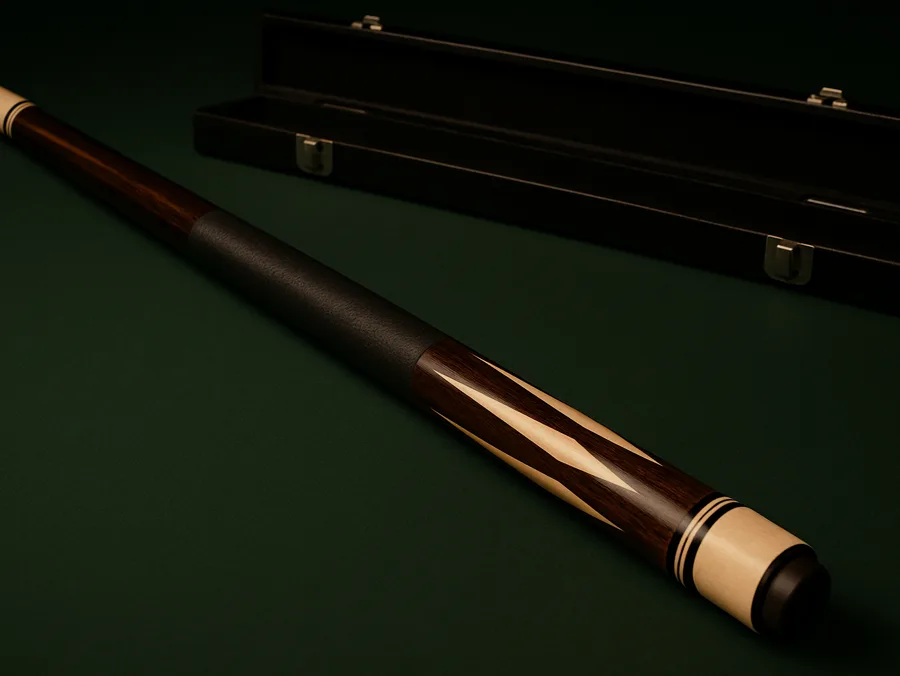
McDermott G338 with G-Core Shaft and Hard Case
Buy once, American-madeA U.S.-made G-Series cue with the G-Core shaft, a Navigator Black 13mm medium tip, a 3/8x10 joint and Irish linen wrap at about 19 oz, packed in a 1x1 hard case. G-Series cues carry McDermott's lifetime warranty including warpage when bought from an authorized dealer, so check the seller first.
Check price on Amazon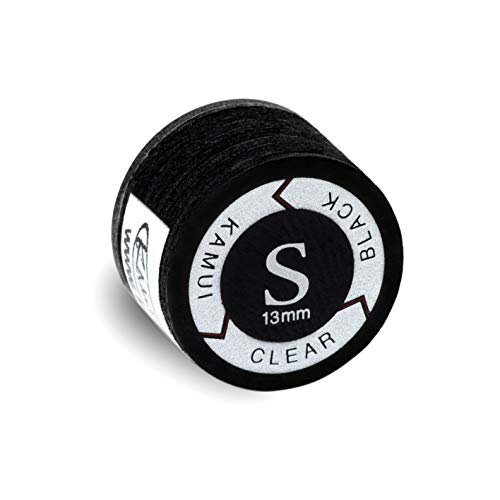
Kamui Clear Black Layered Tip, 13mm Soft
Fixing any budget cueA layered tip with a flat, shielded base that limits how much glue soaks in, so installs come out consistent. The factory tip is the weakest part of most cues bought online, and a cue shop can fit this one in minutes.
Amazon price: $30.90 as of 8:34 PM EDT. Price and availability can change; Amazon’s price at purchase applies.
Check price on AmazonFrequently asked questions
What is the best pool cue on Amazon?
For a first cue, the Valhalla 100 by Viking: hard rock maple, a stainless joint and a lifetime warpage warranty. Step up to a Players Pure X for a low-deflection shaft, or a McDermott G-Series to buy once.
Are pool cues on Amazon good?
The brand cues are the same cues dealers sell. The risk is the seller and the unbranded listings, so check who makes the cue and who sells it.
What pool cue should I buy?
A 58-inch maple cue at 19 oz with a 13mm leather tip and a warranty that covers warpage. Spend about $110 to $200 if you play weekly, and add a low-deflection shaft later if you use side spin.
Does buying a cue on Amazon void the warranty?
It can. McDermott and Viking both require purchase from an authorized dealer. Check the Sold by line and confirm the seller with the maker.
Are the Amazon pool cue four-packs worth it?
For a home game room, yes. For your own cue, a single cue from a billiards maker with a written warpage warranty is better.
How do I check a cue I bought online?
Roll the shaft and butt separately on a flat table, sight down the assembled cue, check that the joint seats flush, and inspect the tip and ferrule. Return anything that hops.
Is a low-deflection cue on Amazon worth it for a beginner?
Not as a first cue. Learn a straight stroke on maple first, then buy a named low-deflection shaft such as Players HXT when side spin starts costing you position.
Related guides
LeaguePool is reader-supported. When you buy through links on this site we may earn an affiliate commission at no extra cost to you. As an Amazon Associate we earn from qualifying purchases.