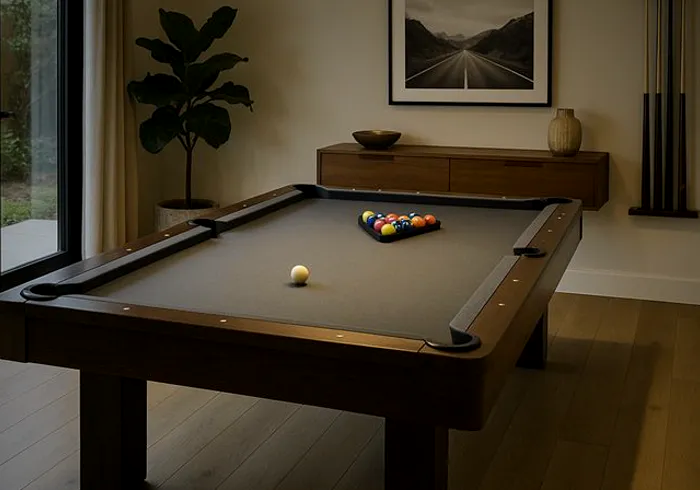
Is a Pool Table Worth It?
A pool table is one of the biggest recreational purchases most people ever make for their home: real money, a permanent claim on a whole room, and a thing that weighs as much as a piano. So the question deserves an honest answer, not a sales pitch. Some tables become the center of a household for twenty years. Others become the world's most expensive laundry folding station within six months. The difference is almost never the table. It is the buyer.
The laundry shelf test
Before any money talk, answer the usage question honestly. Tables get used when playing is already a habit: you shoot at a bar weekly, you are in a league, your kids keep asking, or your friends actually come over. Tables gather dust when the purchase is aspirational, bought for the person you imagine becoming rather than the one you are.
Good signs you will use it: you play in a league or want to join one, you find yourself watching pool videos, your kids are old enough to reach the table and interested, or you regularly host. Bad signs: you have not played in a year, the room is inconvenient to reach, or the main motivation is filling an empty basement.
The real math against pool hall visits
Run the numbers over the life of the table rather than the sticker price. A quality slate table costs roughly $2,000 to $4,000 new with delivery and installation, or $500 to $1,500 used. Add a refelt every 5 to 10 years at $300 to $500 and the occasional accessory. Over ten years, a $3,000 table works out to about $25 to $30 a month.
Pool hall table time commonly runs $10 to $15 an hour, and a family or a couple of friends playing a few hours a week can easily spend $80 to $150 a month. If your household would genuinely play weekly, the home table pays for itself in two to four years, plus every game after that is free and thirty seconds from the couch. If you would play monthly, the pool hall is cheaper forever.
What a table gives you that money math misses
The strongest argument for a table is not financial. It is that pool is one of the few games that works across generations and skill levels in the same room. A ten year old and a grandparent can play a real game together. Teenagers bring friends home instead of disappearing. Parties drift toward the table. And unlike a console, it never needs an update and never becomes obsolete; a table maintained even casually outlives its owner.
The counterweight is the space commitment. An 8 foot table wants roughly 13.5 by 17 feet of clear room, and that room stops being a guest room, gym, or office. If space is scarce in your home, that opportunity cost is real and ongoing.
The home value myth
A pool table does not raise your home's resale value. Appraisers do not count it, and buyers more often see a moving problem than an amenity. Some sellers end up including the table for free just to avoid paying movers. Buy a table because you will play on it, never as an investment in the house. The table itself holds value separately if it is slate and from a known maker, which leads to the best hedge available.
Buy used to cut the risk
The used market is the cheat code for the uncertain buyer. Quality slate tables from brands like Brunswick, Olhausen, and Connelly regularly sell secondhand for $500 to $1,500, often a third of their new price, because sellers need them gone before a move. Buy one of those, pay a professional $300 to $600 to move and set it up, and your downside is small: if the table becomes a shelf, you can resell it in a few years for close to what you paid. Skip cheap new MDF tables for this strategy, since they have almost no resale value and rarely survive a move.
One warning on used buying: never accept the seller's offer to help you move it yourself. Slate tables must be disassembled, moved in pieces, and releveled, and a well-meaning weekend crew can crack a $1,000 slate in one stairwell. The professional setup fee is part of the purchase price. Budget it from the start and the used route is still the cheapest path to a table that plays properly.
Our picks
Links open the current selection and price on Amazon so you can compare real reviews before buying.
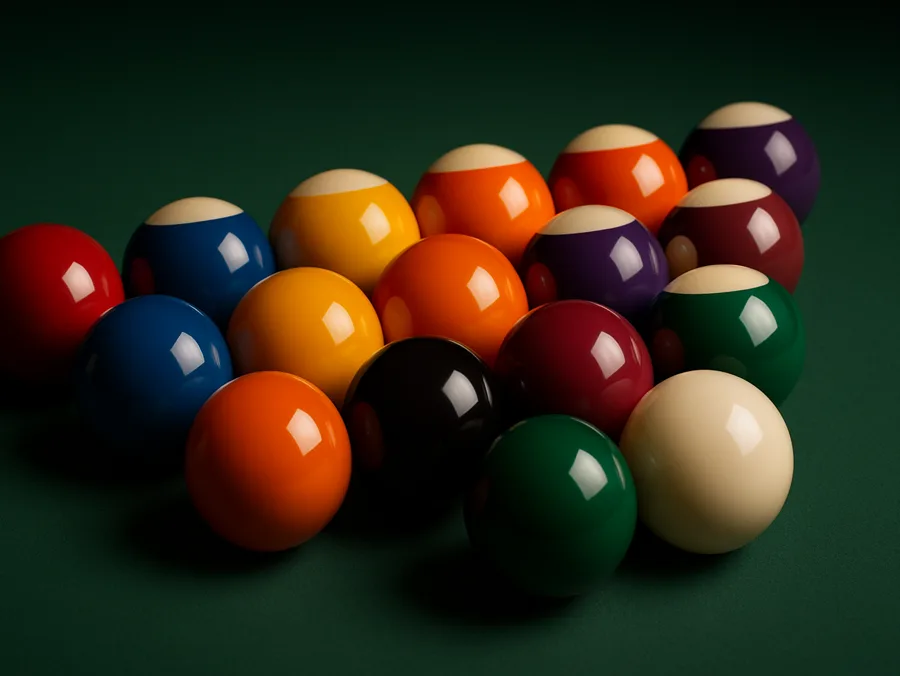
Aramith Crown Standard Ball Set
First upgrade for any tableUsed tables usually come with chipped, mismatched balls. A phenolic Aramith set plays true, resists burn marks, and outlasts several sets of cheap polyester balls.
Check price on Amazon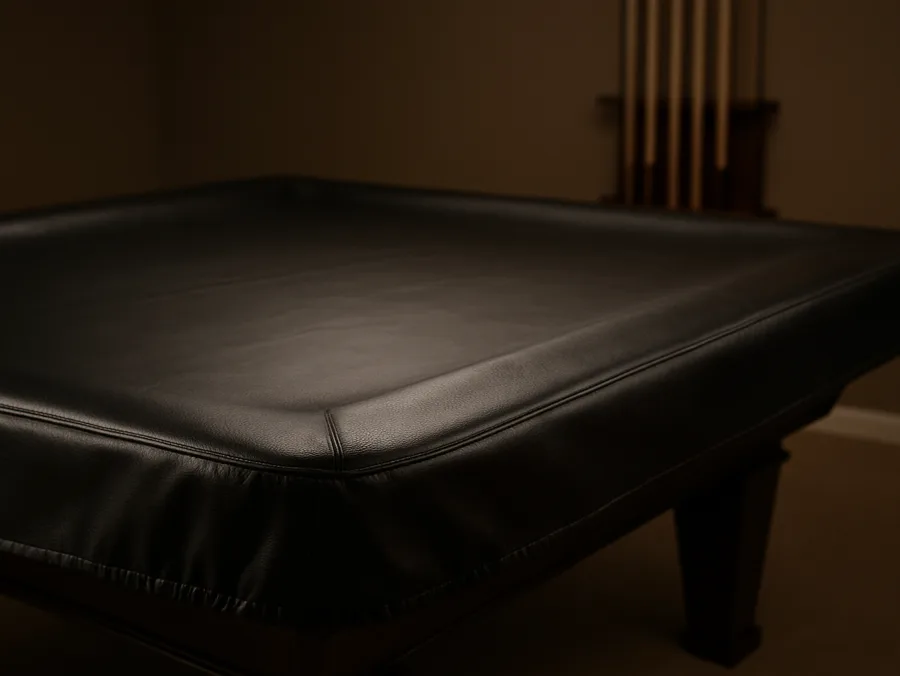
Fitted Leatherette Table Cover
Keeping the felt aliveDust and sunlight age cloth faster than play does. A fitted cover is the cheapest insurance on the whole table, and it politely discourages the laundry pile too.
Check price on AmazonPool Table Accessory Kit
Outfitting a used tableA kit with a bridge head, chalk, brush, and tally supplies fills the gaps a secondhand table always has, for less than buying pieces one at a time.
Check price on AmazonFrequently asked questions
Does a pool table increase home value?
No. Appraisers do not factor it in, and many buyers see a large item that must be moved rather than a perk. A quality slate table holds its own resale value as furniture, but it does not add to the house price.
How much does owning a pool table cost per year?
Spread over ten years, a $3,000 new slate table with a mid-life refelt runs roughly $300 to $375 a year. Buying a good used table can cut that in half. There are no ongoing costs beyond occasional cloth, tips, and chalk.
Should my first pool table be new or used?
Used, in most cases. A secondhand slate table from a known brand costs a fraction of new, plays just as well after professional setup, and can be resold for close to what you paid if you stop using it.
Related guides
LeaguePool is reader-supported. When you buy through links on this site we may earn an affiliate commission at no extra cost to you. As an Amazon Associate we earn from qualifying purchases.