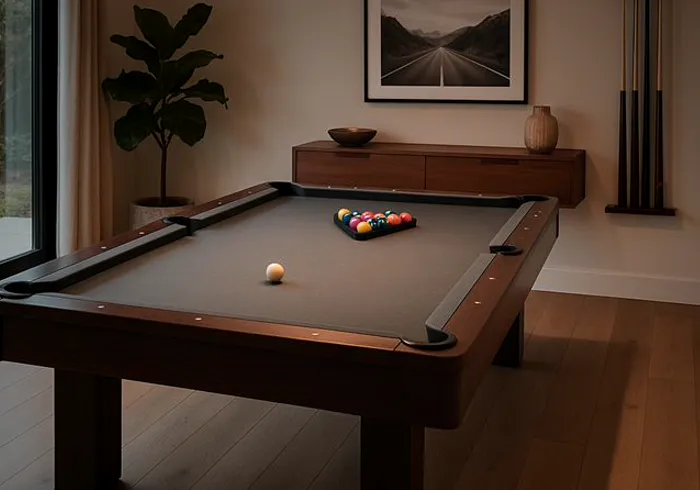
Pool Tables on Wheels: Rollaway and Folding Options
A pool table on wheels sounds like cheating physics. Real tables weigh 700 pounds precisely so they never move, and here is a category built around rolling the table into a closet. And yet rollaway and folding tables solve a genuine problem: rooms that cannot give up their floor space permanently. A playroom that is also a guest room, an office that hosts game night once a month, a kids space that changes purpose every year. The category works as long as you go in with honest expectations about what a 200 pound folding table can and cannot do.
Who rollaway tables actually suit
The honest customer for this category is someone whose room has a schedule. The table comes out Friday night, and Sunday the space goes back to being a home gym or guest room. Families with kids in the 8 to 15 range are the sweet spot: the table gets real use, nobody is muscling into a shot hard enough to shift it, and by the time the kids outgrow it, you have learned whether the household deserves a permanent slate table.
Who they do not suit: anyone expecting bar box feel, league players wanting practice that transfers, and rooms where the table would live set up permanently anyway. If the table will never actually fold, buy a regular MDF table with a stouter frame for the same money.
How the folding designs work
Most rollaway tables use one of two designs. Fold-leg tables have legs that hinge flat against the underside, letting the whole table stand vertically on end-mounted casters and roll against a wall, occupying about a foot of depth. Pedestal rollaway designs, like the Mizerak Space Saver style, keep the table assembled and tilt it vertically on a wheeled base. Either way, setup takes one or two adults a few minutes, and the table stores in the footprint of a bookcase.
Sizes cluster at 6 and 7 feet, with playing surfaces from roughly 32 by 64 up to 38 by 76 inches. Remember clearance math still applies when the table is deployed: even a 6 footer wants about 11 by 14 feet of space with the short cues these tables ship with.
The stability tradeoff, stated plainly
No folding table has slate, because a folding frame cannot carry 500 pounds of stone, and that single fact defines the play experience. The surfaces are MDF, usually 12 to 19 millimeters thick, which plays acceptably when new and flat but is sensitive to humidity over the years. The bigger issue is mass. A table weighing 150 to 250 pounds moves when a teenager leans a hip into the rail on a stretch shot, and a moved table means every leveling job is temporary.
Locking casters are the difference between a usable table and a maddening one. Every wheel should lock, the locks should be foot-operated, and you should lock all of them every session. Check leveler feet too; the better designs put adjustable feet on the legs so the table rests on feet, not wheels, during play.
Do not put wheels on a real table
A tempting shortcut shows up in every forum: bolt casters onto a proper slate table so it can slide around the room. Do not. Slate tables are leveled to fractions of a millimeter in one position, and rolling one across a floor twists the frame, opens the slate seams, and can crack a slate outright. The frames were never engineered for point loads at wheel mounts, and even furniture dollies under the legs stress joints that expect purely vertical load. If a heavy table must move within a room, the answer is professional movers or proper table lifters, followed by releveling. Rolling is for tables designed to roll.
Making a folding table play its best
A little ritual goes a long way with these tables. Deploy it on the same spot of floor each time, ideally marked with tape, so the leveling you did last session mostly carries over. Lock every caster, then check level with a phone app or a ball rolled slowly down the center, and adjust the leveler feet before the first rack rather than after the first argument. Store the table fully dry and out of damp basement corners, because MDF drinks humidity through any chipped edge and a swollen surface never flattens again.
Teach players the one house rule that matters: no sitting or leaning on the rails. On a slate table that is etiquette. On a 200 pound folding table it is structural, and the frames that fail almost always fail from being used as a bench, not from pool.
Our picks
Links open the current selection and price on Amazon so you can compare real reviews before buying.
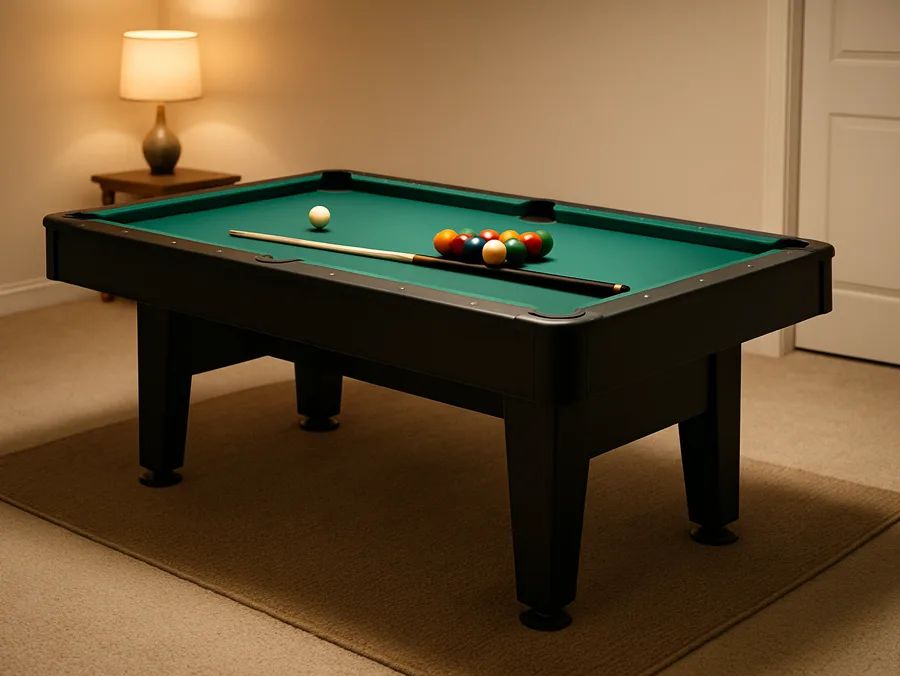
Mizerak Dynasty Space Saver 6.5 Ft
Best playing rollawayThe pedestal design with leg levelers is the most stable in the category, and the 6.5 foot surface plays noticeably better than the 6 foot field.
Check price on Amazon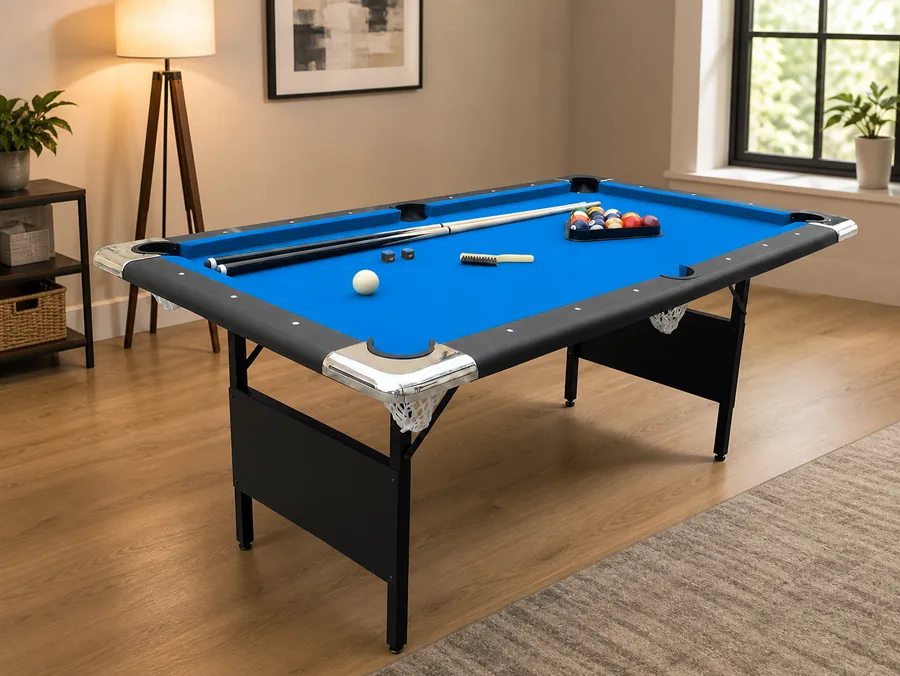
Hathaway Fairmont 6 Ft Folding Table
Easiest to stowFolding legs and built-in casters let one adult tilt and roll it to a wall. It ships with the short cues its clearance-friendly size assumes.
Check price on AmazonGoSports 7 Ft Rollaway Table
Biggest folding surfaceA rare folding table at bar box length, for rooms that can host a bigger deployed footprint. Lock every caster and level it each time it comes out.
Check price on AmazonFat Cat Tabletop Pool Set
Zero floor commitmentA tabletop set drops onto a dining table and stores in a closet. It is the honest bottom rung: real practice for aim and bridge, no room required at all.
Check price on AmazonFrequently asked questions
Are pool tables on wheels any good?
Good ones are fine for casual play and kids, and they solve the shared-room problem nothing else solves. They are all MDF rather than slate, and lighter frames can shift during play, so lock the casters and keep expectations at rec-room level.
Can I put casters on my regular pool table?
No. Rolling a slate table twists the frame, breaks the level, opens slate seams, and can crack the slate. If a table needs to move, use professional movers or table lifters and relevel it afterward.
How much space does a folding pool table need when stored?
Stored upright, most 6 and 7 foot folding tables occupy roughly 12 to 18 inches of depth against a wall, about the footprint of a bookcase. Deployed, clearance math still applies, so plan around 11 by 14 feet for a 6 footer with short cues.
Related guides
LeaguePool is reader-supported. When you buy through links on this site we may earn an affiliate commission at no extra cost to you. As an Amazon Associate we earn from qualifying purchases.